Author
Books like J. M. Coetzee
19 books we recommend to J. M. Coetzee readers, drawn from Disgrace, Waiting for the Barbarians, Life & Times of Michael K, Elizabeth Costello, Foe, Age of Iron and In the Heart of the Country — each with the reason why.
If you loved Disgrace
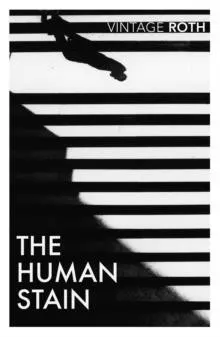
Like Disgrace, this begins with a professor ruined by a charged encounter between language, sex, and institutional judgment. Coleman Silk believes he understands the story of his downfall; Roth’s great subject is how little even a fiercely intelligent man knows about the identities and desires governing his life.
Roth is more expansive and combustible than Coetzee, but the novels share a refusal to divide guilt neatly between the accused and the accusers. The Human Stain, winner of the PEN/Faulkner Award, turns public scandal into a ferocious inquiry into self-invention, shame, and the violence of being interpreted by others. Its momentum is immense, its ironies merciless, and its final emotional weight makes it one of Roth’s indispensable novels.
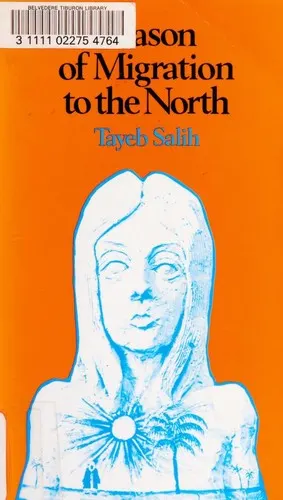
A young Sudanese narrator returns from Europe to his village and encounters Mustafa Sa’eed, an enigmatic stranger whose sophistication gradually acquires a disturbing charge. Salih makes erotic conquest, colonial education, and cultivated masculinity impossible to separate—just as Coetzee makes David Lurie’s romantic self-image inseparable from power.
This is a short novel with an astonishing undertow. Its nested voices continually unsettle who is confessing, who is judging, and who has the right to turn another person into a symbol. Widely regarded as a landmark of modern Arabic fiction, Season of Migration to the North has the density of a much longer book: its images and moral questions keep expanding after its famously forceful ending.
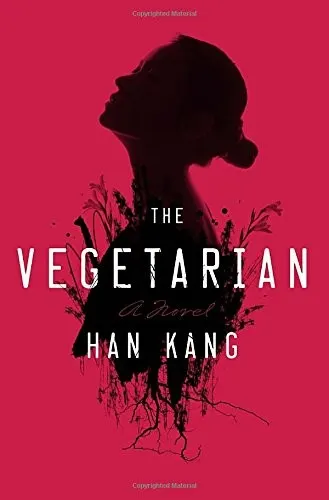
Where Disgrace asks what human dignity might mean through damaged bodies and unwanted animals, The Vegetarian begins with one woman’s refusal to eat meat and follows the shock waves through those who believe they possess her. Han Kang keeps the woman herself partly beyond explanation; the surrounding voices reveal, with chilling precision, how concern becomes coercion and desire becomes entitlement.
The prose is lucid, dreamlike, and increasingly severe. Rather than offering a comfortable moral position, the novel forces the reader to feel both the appeal and the terror of absolute refusal. Winner of the International Booker Prize, The Vegetarian has become a contemporary classic because its strangeness is never ornamental: every haunting image sharpens its questions about appetite, autonomy, and violence.
If you loved Waiting for the Barbarians
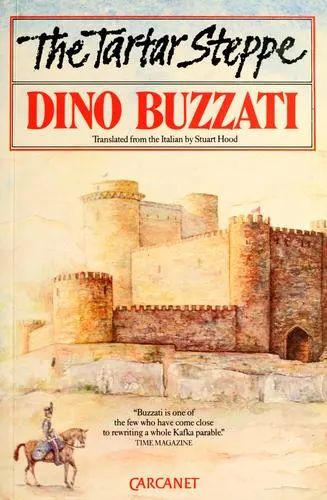
Lieutenant Giovanni Drogo arrives at a remote fortress facing an apparently empty frontier and gradually submits to its rituals of vigilance. As in Coetzee, the anticipated enemy matters less than the psychology of waiting: fear gives an institution purpose, while hope of crisis quietly consumes a life.
Buzzati’s acknowledged masterpiece turns repetition, barren landscapes, and military routine into an existential spell. Its sadness arrives almost imperceptibly, then becomes devastating. Anyone haunted by Coetzee’s frontier as both a political invention and a state of mind should not miss this eerily beautiful novel.
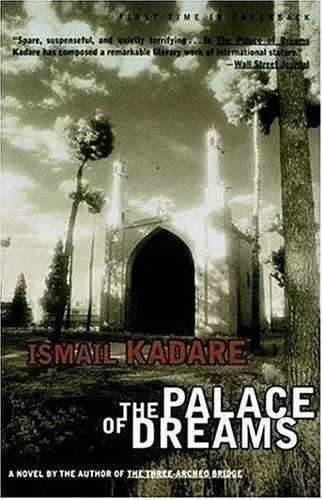
A young man enters an imperial bureaucracy charged with collecting and interpreting the dreams of the realm. Kadare makes that fantastic premise feel horribly practical: private fears become state property, interpretation becomes accusation, and clerical work acquires the force of violence.
The kinship with Coetzee lies especially in the protagonist’s compromised position. He is neither a heroic dissident nor a simple monster, but someone learning how privilege, obedience, and dread bind him to an incomprehensible machine. Written under Albania’s dictatorship and suppressed soon after publication, this major novel by the inaugural Man Booker International laureate is political allegory at its most elegant and dangerous.
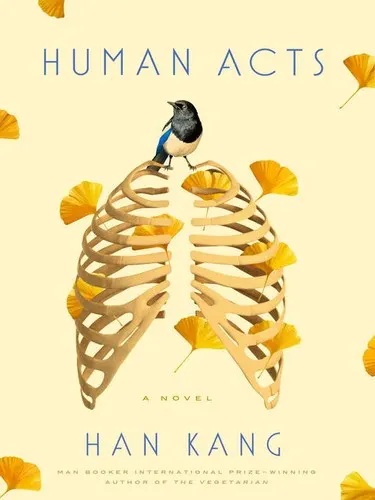
Han Kang begins amid the bodies left by the violently suppressed Gwangju uprising, following a boy searching for his missing friend. From there, her precise, restrained prose confronts what state brutality does to bodies, memories, and those forced to witness it.
Like Coetzee, Han refuses the consolations of moral distance. Shame and courage coexist; suffering is neither beautified nor reduced to an argument. Yet Human Acts also asks how tenderness can survive terror, giving its severity an emotional force all its own. Now central to Nobel laureate Han Kang’s international reputation, it is a brief novel with the afterlife of a much larger one.
If you loved Life & Times of Michael K
Coetzee’s debt to Beckett runs deep, and Molloy reveals why. Its wandering narrator is physically vulnerable, socially illegible, and stubbornly resistant to every demand that he explain himself. His journey turns bicycles, stones, hunger, and bodily indignities into the materials of a bleakly comic philosophy.
Where Michael K answers power with silence, Molloy answers it with language that circles, contradicts, and undermines itself. Beckett’s comedy is more grotesque than Coetzee’s, but the same question burns underneath: how can a person remain free when institutions insist on defining what a person is? The first novel of Beckett’s great postwar trilogy, Molloy is one of the central achievements of the writer who later received the Nobel Prize—and an indispensable ancestor of Michael K.
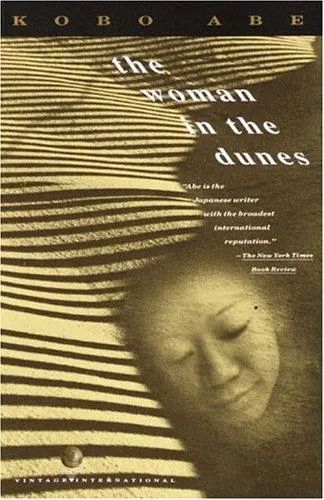
An amateur entomologist searching for insects finds himself in a village consumed by sand, where survival depends on endless, repetitive labor. Kobo Abe makes the sand startlingly tangible: it enters food, clothes, sleep, and thought, becoming at once landscape, prison, and way of life.
A reader who admired Coetzee’s ability to make digging, eating, and enduring carry philosophical weight will recognize a kindred power here. Yet Abe’s vision is feverish and sensuous where Coetzee’s is spare; his trapped protagonist argues, improvises, and gradually confronts the unstable meaning of freedom itself. Long established as a modern Japanese classic, The Woman in the Dunes is the rare allegorical novel whose ideas never detach from sweat, grit, and skin.
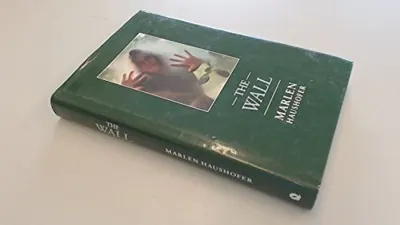
While staying at an Alpine hunting lodge, an unnamed woman discovers an invisible barrier separating her from the rest of the world. What follows begins not with grand explanation but with practical attention: food, weather, tools, animals, and the work required to continue living.
That attention is precisely what gives The Wall its kinship with Michael K. Both novels distrust the abstractions by which society measures a life; both locate dignity in care, manual labor, and an existence pared down to necessity. Haushofer’s narrator is more reflective than K, and her bonds with animals give the book an aching tenderness distinct from Coetzee’s severity. Once underappreciated, the novel has become a fiercely loved feminist and ecological classic. Its quietness is deceptive: few books so radically reconsider what solitude, civilization, and human freedom might mean.
If you loved Elizabeth Costello
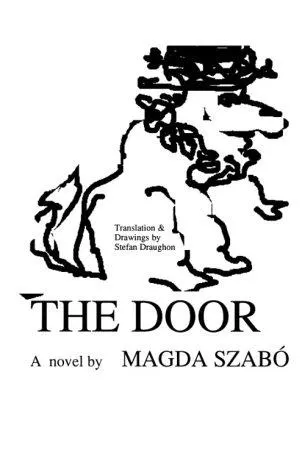
A celebrated writer hires Emerence, a fiercely private housekeeper who rejects polite society, organized religion, and nearly every assumption her employer lives by. Their intimacy becomes a contest between incompatible forms of pride, care, loyalty, and power.
Like Coetzee, Szabó refuses to let intelligence serve as an alibi. The narrator can interpret everything except the full moral meaning of her own behavior; Emerence, meanwhile, is both magnificent and impossible. The result is less a story about guilt than an ordeal of judgment in which every apparent kindness acquires a troubling underside. Long revered in Hungary, The Door found a wider English-language readership through Len Rix’s translation and was named one of The New York Times Book Review’s ten best books of 2015. Its final moral blow is unforgettable.
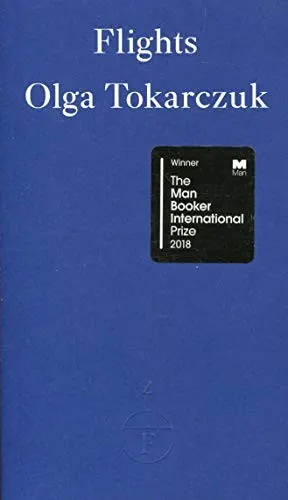
Flights is for the reader who loved Elizabeth Costello’s refusal to choose between fiction, lecture, parable, travel narrative, and philosophical inquiry. Tokarczuk moves through brief stories, anatomical histories, eccentric theories, and meditations on motion, asking what happens when human beings try to preserve bodies, escape identities, or make knowledge out of mortality.
Yet the book never feels like a miscellany. Images and questions recur until its fragments form a strange, living nervous system. Tokarczuk has Coetzee’s ability to make an idea physically unsettling, but her imagination is more expansive and playful. Winner of the 2018 International Booker Prize, Flights helped introduce English-language readers to the audacity that later earned Tokarczuk the Nobel Prize. Few novels make thought itself feel so adventurous.
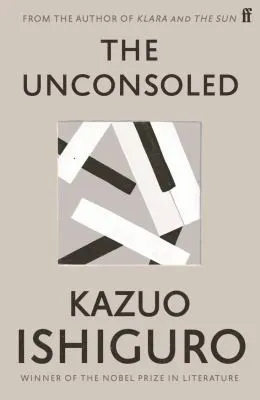
A renowned pianist arrives in an unnamed European city for an important performance and discovers that everyone expects something from him. Appointments multiply, distances distort, and strangers speak with the intimacy of family. Ishiguro builds the novel according to dream logic, yet every absurd demand carries the sting of a recognizable obligation.
A reader drawn to Elizabeth Costello as an uneasy portrait of the artist in public will recognize the pressure here: the famous creator is treated as oracle, servant, symbol, and disappointment at once. But where Coetzee uses lectures and confrontations, Ishiguro creates a vast anxiety dream about artistic prestige, neglected intimacies, and the impossibility of satisfying every claim upon us. Initially notorious for bewildering reviewers, The Unconsoled has acquired devoted defenders who regard it as the Nobel laureate’s boldest achievement. Surrender to its logic and ordinary life may never look entirely solid again.
If you loved Foe
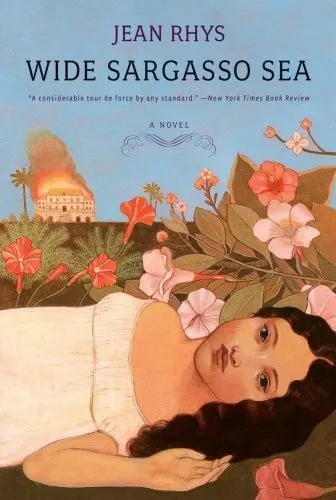
Rhys does to Jane Eyre what Coetzee does to Robinson Crusoe: she enters a canonical novel through one of its silences and exposes the power concealed inside storytelling. Yet this is no corrective footnote. Antoinette’s sensuous, unstable voice makes the Caribbean world feel fiercely present even as other people begin renaming and narrating her.
Its kinship with Foe lies in the troubling question beneath both books: can restoring a voice ever undo the violence that made it necessary? Rhys’s modernist masterpiece revived her career and permanently changed how generations read Jane Eyre. After it, the original novel’s margins can never look empty again.
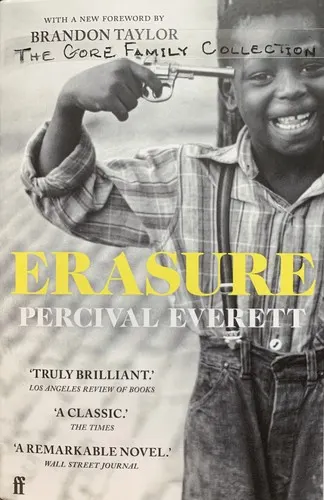
Thelonious Ellison is a Black novelist whose formally ambitious books are dismissed as insufficiently marketable. In fury, he writes a grotesque parody of the stereotyped fiction the publishing world expects from him—and discovers that the joke may be taken seriously.
Where Foe is austere, Erasure is ferocious and very funny, but both scrutinize who is permitted to represent whom. Everett dramatizes the struggle between an author and the identity readers, editors, and institutions impose upon him; even parody becomes a trap once others control its meaning. Winner of the Hurston/Wright Legacy Award and now widely regarded as one of Everett’s defining novels, it makes literary authority feel at once absurd, lucrative, and dangerous.
Aboard a spacecraft, human and humanoid workers give a sequence of statements to an unseen committee. Their numbered testimonies gradually suggest a crisis involving strange objects brought aboard—but the real subject is the archive itself: what the interrogators ask, what the witnesses omit, and how an institution manufactures a coherent account from incompatible voices.
Readers drawn to Foe’s spare prose and haunted gaps will recognize the pleasure of having to read silence as evidence. Ravn never settles comfortably what counts as human, authentic, or free; tenderness and bureaucratic menace occupy the same clipped sentences. This International Booker finalist is tiny, crystalline, and inexhaustibly discussable—the rare experimental novel that can be read in an evening and remain unresolved for years.
If you loved Age of Iron
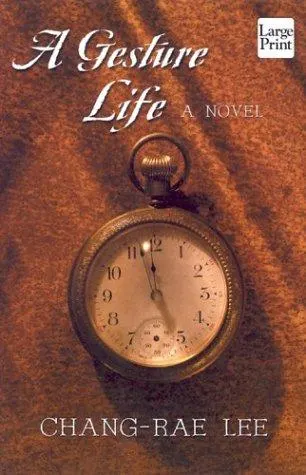
Franklin Hata is an elderly, impeccably courteous man whose prosperous American life appears composed to the point of serenity. But his polished narration gradually reveals the evasions beneath that composure, including memories of his wartime service and the injuries embedded in his attempts to be honorable.
Readers who admired Mrs Curren’s self-scrutiny will recognize Lee’s mastery of the compromised first person: every elegant sentence both discloses and conceals. Hata is not reduced to a verdict; instead, the novel asks whether refinement, remorse, and belated kindness can ever answer for complicity. A Gesture Life is one of the finest American novels about the perilous distance between seeming good and doing good.
If you loved In the Heart of the Country
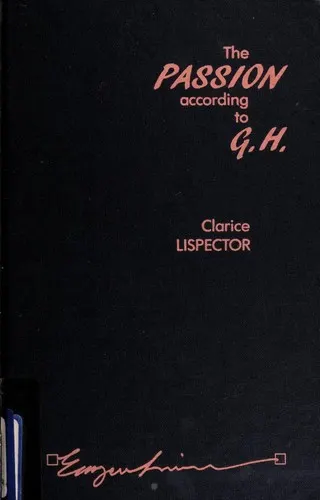
A wealthy woman enters her maid’s vacated room and encounters something that begins to dismantle her sense of self. From that stark opening, Lispector creates a monologue as feverish, recursive, and intellectually ruthless as Magda’s numbered testimony.
The kinship lies in how both novels turn isolation into an ordeal of language. Their narrators speak because speech is the only structure keeping them intact—even as every sentence corrodes the identity it tries to preserve. Lispector’s Brazilian masterpiece is stranger and more metaphysical than Coetzee’s novel, but it has the same terrifying intimacy: you do not observe a breakdown from outside; you inhabit the mind performing it. Few novels make existential terror feel so immediate or so sensuous.
At a dance, Lol Stein watches the man she loves become absorbed by another woman. Duras does not treat this as a conventional betrayal. She makes it the enigmatic center of a life—a scene repeatedly approached, reconstructed, and possessed by narrators who can never establish exactly what Lol felt.
Anyone captivated by Magda’s unstable versions of events will recognize Duras’s mastery of absence: what matters most is precisely what cannot be verified or fully said. The prose is cool, spare, and hypnotic, while desire becomes a struggle over who may imagine whom. One of Duras’s defining novels, it leaves an afterimage disproportionate to its brevity; skipping it would mean missing one of modern fiction’s purest demonstrations of uncertainty as seduction.
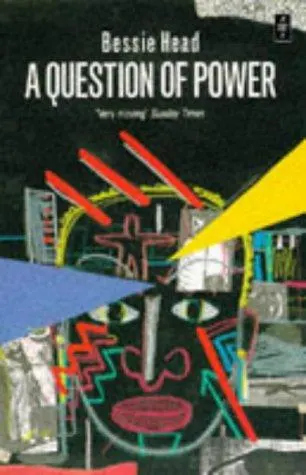
Elizabeth, a racially mixed South African exile living in Botswana, begins to experience nights dominated by two persecuting male figures. Her psychic crisis is inseparable from racism, sexual domination, displacement, and the question of who has the authority to define another person’s reality.
Head’s novel has less of Coetzee’s icy control and more visionary heat, but that difference makes it electrifying. Like Magda, Elizabeth is both victim and fierce interpreter, trapped among voices that may be social, supernatural, psychological, or all three. Head drew on her own breakdown without reducing it to confession, producing a ferocious novel about surviving systems of power after they have entered the mind. Long regarded as her masterpiece, it is a difficult, compassionate book whose final hard-won clarity feels genuinely earned.