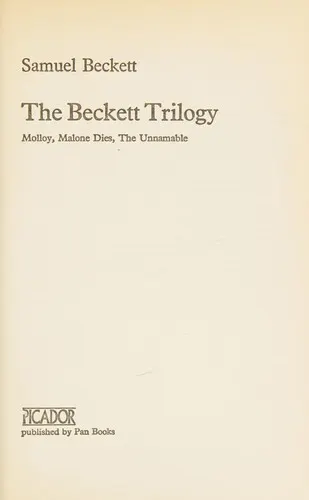
Books like Molloy
A mind keeps talking because stopping would be worse: it doubles back, disputes its own evidence, and turns bodily misery and metaphysical panic into pitiless comedy. These three novels sustain that strange exhilaration while taking it in sharply different directions.
If you liked Molloy, you’ll love these
Not lookalikes — kindred books. Each one shares something essential with Molloy, and we tell you exactly what.
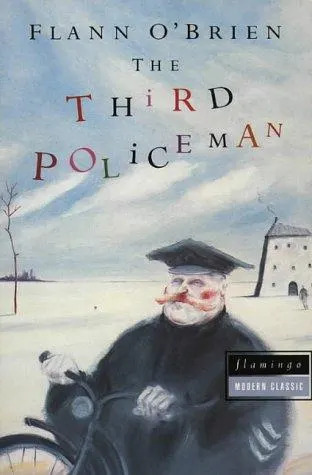
O’Brien offers the purest match for Beckett’s ability to make philosophical bewilderment irresistibly funny. An unnamed narrator enters an Irish police station where bicycles acquire alarming metaphysical importance and every explanation makes the world less explicable. The prose remains serenely logical even as logic becomes a trap.
Written in 1940 but published only after O’Brien’s death, it grew into a fiercely loved cult classic. Its deadpan inventions are memorable, but its deeper kinship with Molloy lies in the dread beneath the jokes: identity, causation, and even ordinary objects will no longer hold still. Missing it means missing one of the twentieth century’s funniest nightmares.

If Molloy’s self-interrupting monologues were what seized you, Bernhard’s Correction is essential. A narrator sorts through the papers of Roithamer, an obsessive intellectual who designed an uncompromising cone-shaped house for his sister. Every judgment is revised, intensified, attacked, and revised again; thought proceeds not toward certainty but toward annihilation.
Bernhard, one of the defining postwar Austrian novelists, turns repetition into pressure and syntax into a form of captivity. Yet the ferocity is exhilarating, and often brutally comic. Correction does not imitate Beckett’s spareness: it answers it with torrents. Few novels show so concretely how perfectionism, love, and self-correction can become indistinguishable from destruction.
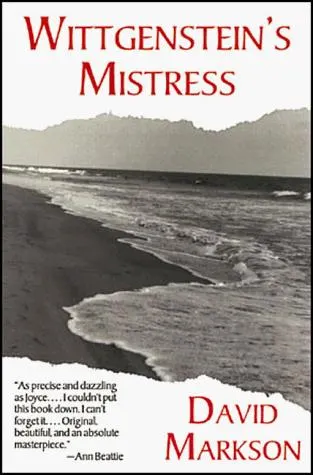
Markson begins with a woman who may be the last person alive, typing fragments about art, history, memory, and the places she has wandered. Her claims contradict one another; names and facts migrate; loneliness appears indirectly, through the obsessive rearrangement of cultural debris. As in Molloy, unreliability is not a puzzle to solve but the very substance of consciousness.
This formally radical novel earned a devoted following among experimental writers and readers, with David Foster Wallace among its most ardent champions. Its pages look airy, but the cumulative effect is devastating: jokes, corrections, and stray recollections slowly disclose a mind trying to keep itself company. It is one of those rare cult novels whose admirers sound evangelical because no other book quite does what it does.