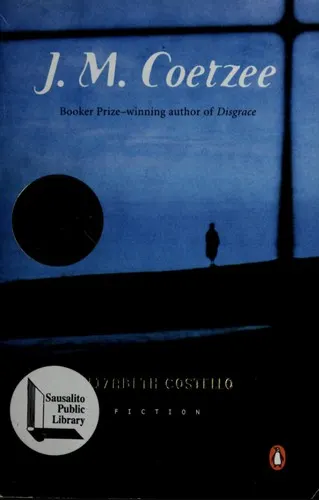
Books like Elizabeth Costello
Elizabeth Costello belongs beside Magda Szabó’s The Door: both turn an encounter with an uncompromising older woman into a merciless examination of moral authority.
If you liked Elizabeth Costello, you’ll love these
Not lookalikes — kindred books. Each one shares something essential with Elizabeth Costello, and we tell you exactly what.
A celebrated writer hires Emerence, a fiercely private housekeeper who rejects polite society, organized religion, and nearly every assumption her employer lives by. Their intimacy becomes a contest between incompatible forms of pride, care, loyalty, and power.
Like Coetzee, Szabó refuses to let intelligence serve as an alibi. The narrator can interpret everything except the full moral meaning of her own behavior; Emerence, meanwhile, is both magnificent and impossible. The result is less a story about guilt than an ordeal of judgment in which every apparent kindness acquires a troubling underside. Long revered in Hungary, The Door found a wider English-language readership through Len Rix’s translation and was named one of The New York Times Book Review’s ten best books of 2015. Its final moral blow is unforgettable.
Flights is for the reader who loved Elizabeth Costello’s refusal to choose between fiction, lecture, parable, travel narrative, and philosophical inquiry. Tokarczuk moves through brief stories, anatomical histories, eccentric theories, and meditations on motion, asking what happens when human beings try to preserve bodies, escape identities, or make knowledge out of mortality.
Yet the book never feels like a miscellany. Images and questions recur until its fragments form a strange, living nervous system. Tokarczuk has Coetzee’s ability to make an idea physically unsettling, but her imagination is more expansive and playful. Winner of the 2018 International Booker Prize, Flights helped introduce English-language readers to the audacity that later earned Tokarczuk the Nobel Prize. Few novels make thought itself feel so adventurous.
A renowned pianist arrives in an unnamed European city for an important performance and discovers that everyone expects something from him. Appointments multiply, distances distort, and strangers speak with the intimacy of family. Ishiguro builds the novel according to dream logic, yet every absurd demand carries the sting of a recognizable obligation.
A reader drawn to Elizabeth Costello as an uneasy portrait of the artist in public will recognize the pressure here: the famous creator is treated as oracle, servant, symbol, and disappointment at once. But where Coetzee uses lectures and confrontations, Ishiguro creates a vast anxiety dream about artistic prestige, neglected intimacies, and the impossibility of satisfying every claim upon us. Initially notorious for bewildering reviewers, The Unconsoled has acquired devoted defenders who regard it as the Nobel laureate’s boldest achievement. Surrender to its logic and ordinary life may never look entirely solid again.