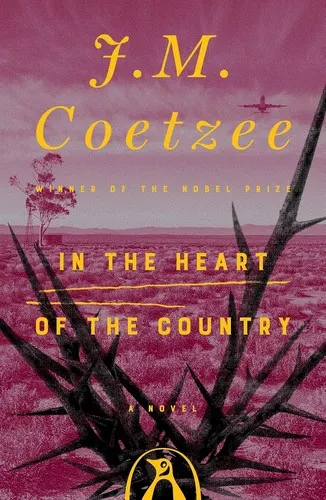
Books like In the Heart of the Country
A cart approaches through the dust carrying Magda’s father and his young bride, and almost at once her imagination turns the farmhouse into a theater of murder. These novels share Coetzee’s deeper achievement: consciousness made claustrophobic, language made dangerous, and power exposed inside desire itself.
If you liked In the Heart of the Country, you’ll love these
Not lookalikes — kindred books. Each one shares something essential with In the Heart of the Country, and we tell you exactly what.
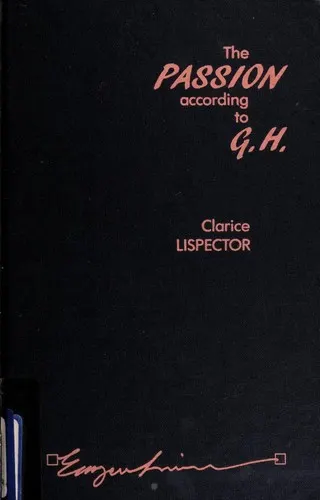
A wealthy woman enters her maid’s vacated room and encounters something that begins to dismantle her sense of self. From that stark opening, Lispector creates a monologue as feverish, recursive, and intellectually ruthless as Magda’s numbered testimony.
The kinship lies in how both novels turn isolation into an ordeal of language. Their narrators speak because speech is the only structure keeping them intact—even as every sentence corrodes the identity it tries to preserve. Lispector’s Brazilian masterpiece is stranger and more metaphysical than Coetzee’s novel, but it has the same terrifying intimacy: you do not observe a breakdown from outside; you inhabit the mind performing it. Few novels make existential terror feel so immediate or so sensuous.
At a dance, Lol Stein watches the man she loves become absorbed by another woman. Duras does not treat this as a conventional betrayal. She makes it the enigmatic center of a life—a scene repeatedly approached, reconstructed, and possessed by narrators who can never establish exactly what Lol felt.
Anyone captivated by Magda’s unstable versions of events will recognize Duras’s mastery of absence: what matters most is precisely what cannot be verified or fully said. The prose is cool, spare, and hypnotic, while desire becomes a struggle over who may imagine whom. One of Duras’s defining novels, it leaves an afterimage disproportionate to its brevity; skipping it would mean missing one of modern fiction’s purest demonstrations of uncertainty as seduction.
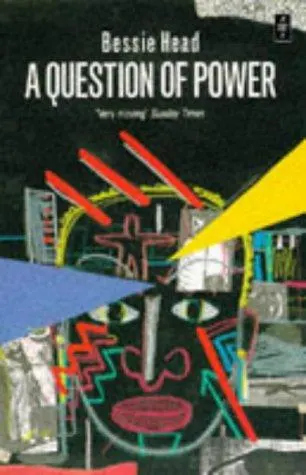
Elizabeth, a racially mixed South African exile living in Botswana, begins to experience nights dominated by two persecuting male figures. Her psychic crisis is inseparable from racism, sexual domination, displacement, and the question of who has the authority to define another person’s reality.
Head’s novel has less of Coetzee’s icy control and more visionary heat, but that difference makes it electrifying. Like Magda, Elizabeth is both victim and fierce interpreter, trapped among voices that may be social, supernatural, psychological, or all three. Head drew on her own breakdown without reducing it to confession, producing a ferocious novel about surviving systems of power after they have entered the mind. Long regarded as her masterpiece, it is a difficult, compassionate book whose final hard-won clarity feels genuinely earned.