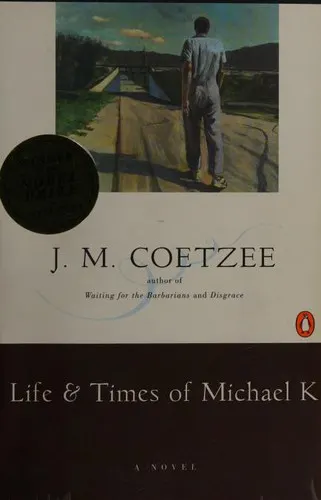
Books like Life & Times of Michael K
A lone figure crosses an elemental landscape while governments, customs, and even language itself try—and fail—to take possession of an irreducible inner life. These three novels make that struggle feel strange, physical, and necessary.
If you liked Life & Times of Michael K, you’ll love these
Not lookalikes — kindred books. Each one shares something essential with Life & Times of Michael K, and we tell you exactly what.

Coetzee’s debt to Beckett runs deep, and Molloy reveals why. Its wandering narrator is physically vulnerable, socially illegible, and stubbornly resistant to every demand that he explain himself. His journey turns bicycles, stones, hunger, and bodily indignities into the materials of a bleakly comic philosophy.
Where Michael K answers power with silence, Molloy answers it with language that circles, contradicts, and undermines itself. Beckett’s comedy is more grotesque than Coetzee’s, but the same question burns underneath: how can a person remain free when institutions insist on defining what a person is? The first novel of Beckett’s great postwar trilogy, Molloy is one of the central achievements of the writer who later received the Nobel Prize—and an indispensable ancestor of Michael K.
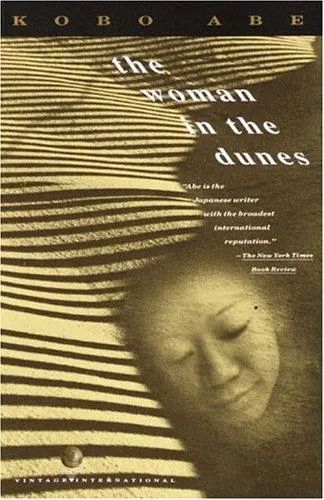
An amateur entomologist searching for insects finds himself in a village consumed by sand, where survival depends on endless, repetitive labor. Kobo Abe makes the sand startlingly tangible: it enters food, clothes, sleep, and thought, becoming at once landscape, prison, and way of life.
A reader who admired Coetzee’s ability to make digging, eating, and enduring carry philosophical weight will recognize a kindred power here. Yet Abe’s vision is feverish and sensuous where Coetzee’s is spare; his trapped protagonist argues, improvises, and gradually confronts the unstable meaning of freedom itself. Long established as a modern Japanese classic, The Woman in the Dunes is the rare allegorical novel whose ideas never detach from sweat, grit, and skin.
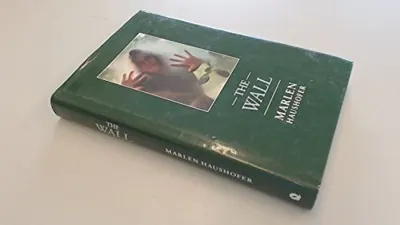
While staying at an Alpine hunting lodge, an unnamed woman discovers an invisible barrier separating her from the rest of the world. What follows begins not with grand explanation but with practical attention: food, weather, tools, animals, and the work required to continue living.
That attention is precisely what gives The Wall its kinship with Michael K. Both novels distrust the abstractions by which society measures a life; both locate dignity in care, manual labor, and an existence pared down to necessity. Haushofer’s narrator is more reflective than K, and her bonds with animals give the book an aching tenderness distinct from Coetzee’s severity. Once underappreciated, the novel has become a fiercely loved feminist and ecological classic. Its quietness is deceptive: few books so radically reconsider what solitude, civilization, and human freedom might mean.