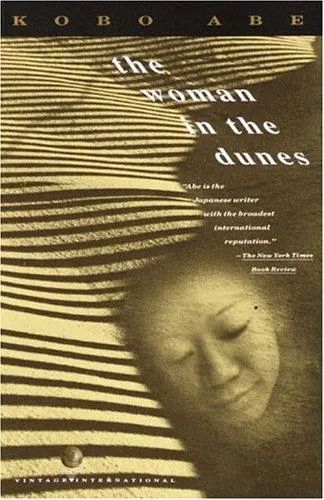
Books like The Woman in the Dunes
Pressure changes everything. Abe’s marvel is how confinement, repetitive work, physical matter, and unstable desire gradually alter the meaning of freedom itself. These novels exert the same unnerving force without merely reproducing his premise.
If you liked The Woman in the Dunes, you’ll love these
Not lookalikes — kindred books. Each one shares something essential with The Woman in the Dunes, and we tell you exactly what.
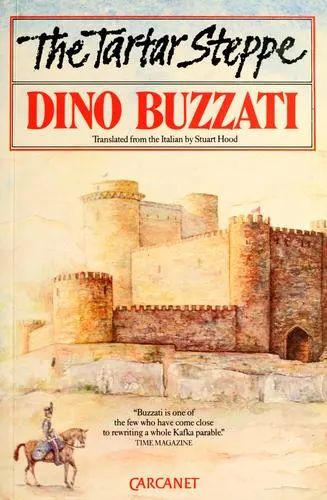
A young officer arrives at a remote fortress expecting a brief posting, only to find that its emptiness offers one intoxicating possibility: someday, something important might happen there. Buzzati turns waiting into a trap as palpable as Abe’s sand pit.
What the novels share most deeply is their understanding that captivity need not be imposed outright. Habit, hope, and the need to make one’s life meaningful can secure the bars. Buzzati’s lucid, deceptively simple prose makes passing time feel both absurd and terrifying. Long regarded as his masterpiece, The Tartar Steppe is one of the essential existential novels—and its final emotional force is devastating precisely because it never raises its voice.
A wealthy woman enters her former maid’s nearly empty room and encounters a cockroach. From that stark beginning, Lispector creates one of literature’s most intense confrontations with matter, identity, and the horror of existing without the consoling stories we tell about ourselves.
Abe’s sand is at once substance, environment, adversary, and philosophical problem; Lispector gives physical reality the same unbearable immediacy. Her narrator’s thoughts twist, recoil, and advance with an almost erotic dread, making the book feel less like an allegory to decode than an experience happening to your nervous system. Lispector’s reputation as a singular modernist rests heavily on this strange, ferocious novel. Readers willing to submit to it often become its evangelists.
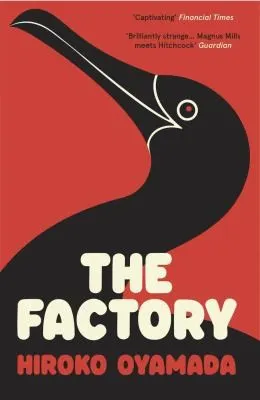
Three people take jobs at an immense factory: one shreds documents, one proofreads incomprehensible material, and one studies the facility’s mosses. Their tasks are mundane, yet the factory’s geography, wildlife, and purpose become increasingly difficult to grasp.
Oyamada inherits Abe’s gift for letting practical details quietly overthrow reality. Work continues; procedures are followed; no grand explanation arrives. The result is funny, airless, and eerily concrete, with an ecosystem that seems to be absorbing the workers into itself. Winner of Japan’s Shincho Prize for New Writers, this compact novel helped establish Oyamada as a major voice in contemporary Japanese surrealism. Its brevity is deceptive: afterward, ordinary workplaces may look permanently stranger.