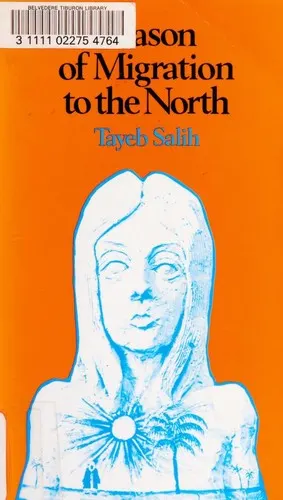
Books like Season of Migration to the North
After seven years in Europe, the narrator steps back onto Sudanese soil, feels the village reclaim him—and then notices the stranger among the familiar faces. These novels share that charged uncertainty about home, identity, and the stories people invent to survive history.
If you liked Season of Migration to the North, you’ll love these
Not lookalikes — kindred books. Each one shares something essential with Season of Migration to the North, and we tell you exactly what.

An elderly asylum seeker arrives at Gatwick carrying incense and a passport that is not his; elsewhere in England, another East African exile is drawn into his story. From that opening, Gurnah builds a superbly controlled duet of grievance, concealment, and belated disclosure.
Like Salih, Gurnah understands narration as a contest for power. Names, heirlooms, family anecdotes, and colonial records change meaning depending on who speaks. His prose is quieter than Salih’s, but the calm surface hides comparable depths of humiliation and desire. Gurnah’s Nobel Prize recognized a body of work about displacement and colonialism; this may be its most intricate novel, one that turns listening itself into a moral ordeal.
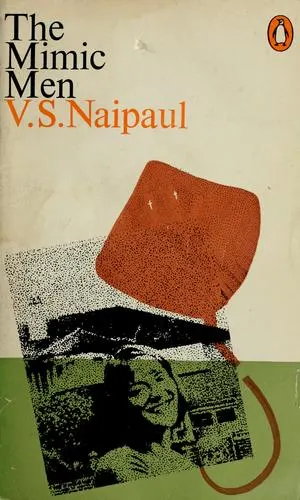
Ralph Singh, a failed politician from a fictional Caribbean island, sits in a London hotel and attempts to write himself into coherence. He is cultivated, vain, wounded, perceptive—and never fully trustworthy. Admirers of Mustafa Sa’eed will recognize the dangerous fascination of a colonial subject who has mastered the empire’s language and manners without escaping the damage beneath them.
Naipaul’s sentences are glacially precise, exposing self-deception one polished phrase at a time. The novel’s real subject is not politics but the fractured inner life produced by colonial rule: the longing to become someone else, and the terror that there may be no original self to recover. It is among the Nobel laureate’s sharpest achievements, an unsparing companion to Salih’s more fevered masterpiece.
Clarence, a disgraced European stranded in an unnamed African country, waits to petition its king. Nothing behaves as his colonial assumptions say it should: guides mislead him, ceremonies elude him, and the landscape seems to be reading him rather than the reverse.
Where Salih turns the journey north into a psychological trap, Laye overturns the imperial gaze through dream, comedy, dread, and spiritual mystery. The result has the logic of Kafka and the sensuous force of myth, yet it remains unmistakably its own creation. Long regarded as an African classic—and introduced in its NYRB Classics edition by Toni Morrison—it is a brief, astonishing novel that leaves the reader unsure who has been observing whom.