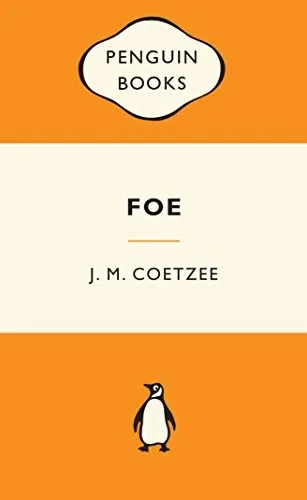
Books like Foe
Foe turns Friday’s missing tongue into a gravitational force: every attempt to tell the island story bends around the person who cannot—or will not—authorize it.
If you liked Foe, you’ll love these
Not lookalikes — kindred books. Each one shares something essential with Foe, and we tell you exactly what.
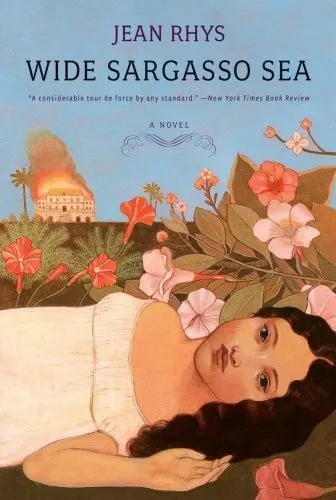
Rhys does to Jane Eyre what Coetzee does to Robinson Crusoe: she enters a canonical novel through one of its silences and exposes the power concealed inside storytelling. Yet this is no corrective footnote. Antoinette’s sensuous, unstable voice makes the Caribbean world feel fiercely present even as other people begin renaming and narrating her.
Its kinship with Foe lies in the troubling question beneath both books: can restoring a voice ever undo the violence that made it necessary? Rhys’s modernist masterpiece revived her career and permanently changed how generations read Jane Eyre. After it, the original novel’s margins can never look empty again.
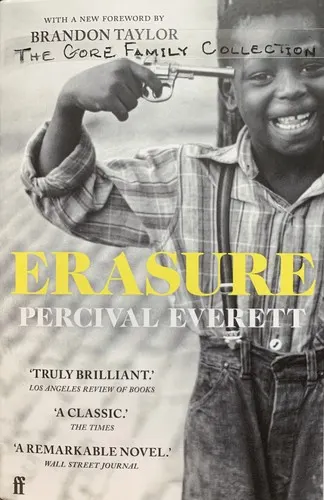
Thelonious Ellison is a Black novelist whose formally ambitious books are dismissed as insufficiently marketable. In fury, he writes a grotesque parody of the stereotyped fiction the publishing world expects from him—and discovers that the joke may be taken seriously.
Where Foe is austere, Erasure is ferocious and very funny, but both scrutinize who is permitted to represent whom. Everett dramatizes the struggle between an author and the identity readers, editors, and institutions impose upon him; even parody becomes a trap once others control its meaning. Winner of the Hurston/Wright Legacy Award and now widely regarded as one of Everett’s defining novels, it makes literary authority feel at once absurd, lucrative, and dangerous.
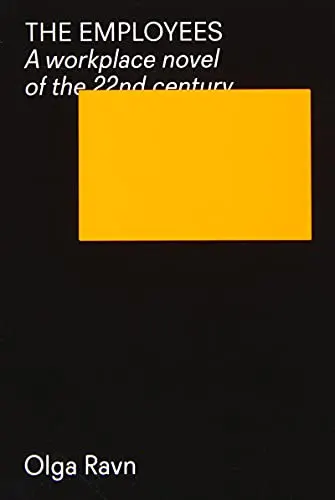
Aboard a spacecraft, human and humanoid workers give a sequence of statements to an unseen committee. Their numbered testimonies gradually suggest a crisis involving strange objects brought aboard—but the real subject is the archive itself: what the interrogators ask, what the witnesses omit, and how an institution manufactures a coherent account from incompatible voices.
Readers drawn to Foe’s spare prose and haunted gaps will recognize the pleasure of having to read silence as evidence. Ravn never settles comfortably what counts as human, authentic, or free; tenderness and bureaucratic menace occupy the same clipped sentences. This International Booker finalist is tiny, crystalline, and inexhaustibly discussable—the rare experimental novel that can be read in an evening and remain unresolved for years.