Author
Books like Toni Morrison
14 books we recommend to Toni Morrison readers, drawn from Beloved, The Bluest Eye, Song of Solomon, Sula, Jazz, Paradise and A Mercy — each with the reason why.
If you loved Beloved
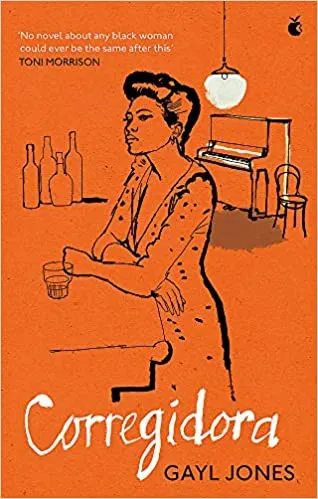
This fierce, compressed novel treats the body as an archive of history. Ursa Corregidora, a blues singer, has been raised to preserve her foremothers’ testimony about enslavement and sexual violence; their demand that she “make generations” turns remembrance into both sacred duty and intimate burden.
Jones’s prose has the repetition, improvisation, and accumulating force of blues. Like Morrison, who championed the novel while working as an editor, she refuses to make inherited trauma tidy or morally reassuring. Corregidora is now regarded as a landmark of Black feminist fiction, yet it still feels dangerous: short enough to read quickly, powerful enough to reverberate for years.
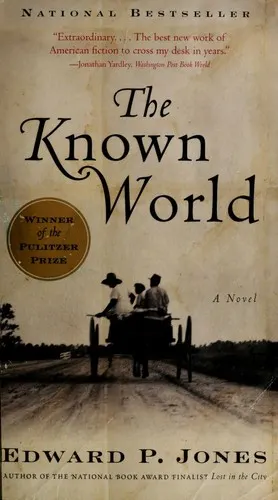
If you loved Beloved for its refusal to simplify the moral landscape of slavery, read The Known World. Its opening centers on the death of Henry Townsend, a formerly enslaved man who became an enslaver himself; from there, Jones creates a whole community whose compromises, affections, cruelties, and evasions cannot be contained by easy categories.
The novel’s remarkable narrator moves freely across decades, sometimes revealing a life’s eventual shape in a single sentence. That temporal freedom makes history feel simultaneously finished and still happening—the kind of narrative authority Morrison wielded so memorably. Winner of the Pulitzer Prize, The Known World is not merely an ingenious historical novel; it is one of the few books with the imaginative scale and moral gravity to stand beside Beloved.
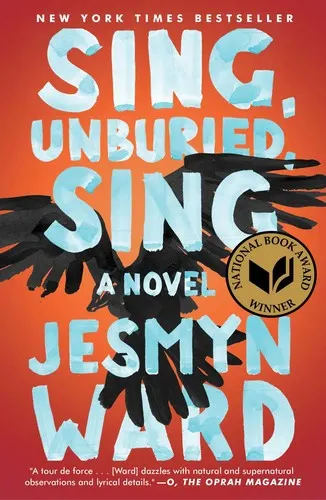
Ward understands, as Morrison did, that haunting can be both supernatural event and ordinary family condition. Thirteen-year-old Jojo is growing up amid addiction, racism, fierce attachment, and stories that the living have failed to reckon with. When his mother takes him and his little sister on a road trip, the family’s buried history begins pressing visibly into the present.
What makes the novel irresistible is its tenderness. Ward’s characters can wound one another terribly, yet her shifting voices reveal the hunger for love inside their worst failures. The dead are not atmospheric decorations; they demand witness, recognition, and release. This lyrical, unsparing novel won Ward her second National Book Award and confirmed her as one of Morrison’s most vital heirs.
If you loved The Bluest Eye
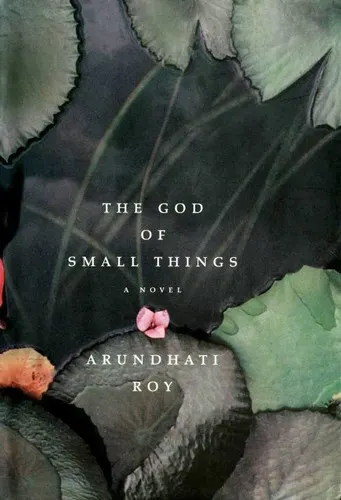
Roy’s Booker Prize–winning novel has the same uncanny ability to filter adult cruelty through children’s alert, inventive minds. In Kerala, twins Estha and Rahel inhabit a world of family rules, caste prohibitions, political tensions, and words whose sounds they turn over like bright objects. From the beginning, the novel tells us that catastrophe has already occurred; suspense comes from discovering how innumerable small humiliations and choices gathered into fate.
Roy’s prose is lush, playful, and exact, bending grammar to reproduce childhood perception without sentimentalizing it. Like Morrison, she asks how a society’s hierarchies are enforced inside homes—and how children come to believe the verdicts adults pronounce upon them. Few novels unite linguistic exhilaration and heartbreak so completely. Its enormous, enduring readership is deserved: once its rhythms enter your ear, the book becomes difficult to forget.
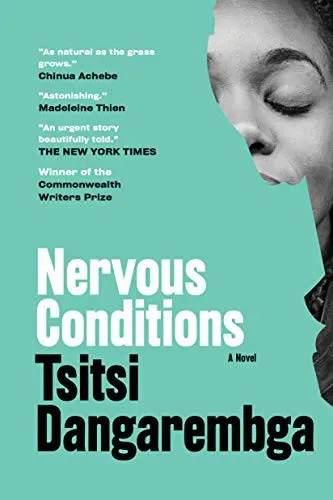
“I was not sorry when my brother died” is the blunt opening of Tambu’s account of growing up in colonial Rhodesia. That sentence announces a narrator as unsentimental and morally complicated as Morrison’s world: Tambu knows that her chance at education depends upon arrangements that diminish girls, yet ambition cannot simply be separated from liberation.
Where The Bluest Eye is incantatory, Nervous Conditions is taut, lucid, and edged with irony. Dangarembga makes patriarchy and colonialism visible not as abstractions but as forces operating through meals, school fees, language, manners, and the allocation of hope within a family. Around Tambu, other girls respond differently to the impossible demands placed upon them, giving the novel an extraordinary range of female consciousness. A landmark—the first novel published in English by a Black Zimbabwean woman—it has lost none of its intellectual bite. Read it for Tambu’s unforgettable voice, then expect its questions about education, freedom, and complicity to follow you.
If you loved Song of Solomon
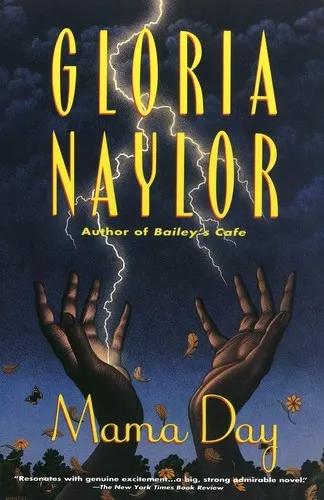
On Willow Springs—an island omitted from maps and governed as much by family lore as by law—Mama Day tends the community with formidable practical and spiritual intelligence. Her grandniece Cocoa, meanwhile, is building a life with the rational, city-bred George.
Like Song of Solomon, the novel lets folklore, history, gossip, and the supernatural speak with equal authority. Naylor’s shifting voices make love both intimate and ancestral: every private choice carries the weight of names, stories, and obligations accumulated over generations. Often regarded as Naylor’s most ambitious novel, Mama Day has the rare Morrisonian power to make a place seem invented, remembered, and eternally real all at once.
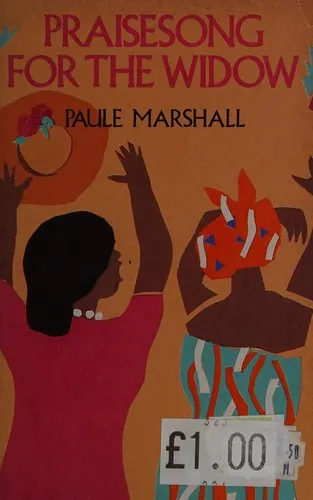
Avey Johnson has achieved the prosperous, respectable life she and her late husband worked for, but aboard a Caribbean cruise she is seized by an inexplicable need to leave. What follows begins as disorientation and gradually acquires the force of a summons.
Readers who loved Milkman Dead’s uneasy distance from his own inheritance will recognize Marshall’s fascination with what comfort can cost—and with the bodily shock of recovering what assimilation has buried. Memory arrives through music, dance, ritual, and the remembered cadences of family speech. Winner of an American Book Award, this luminous novel gives spiritual awakening unusual physical weight: sore feet, salt air, nausea, drums. Its final movement is one of modern American fiction’s great renderings of ancestral recognition.
If you loved Sula
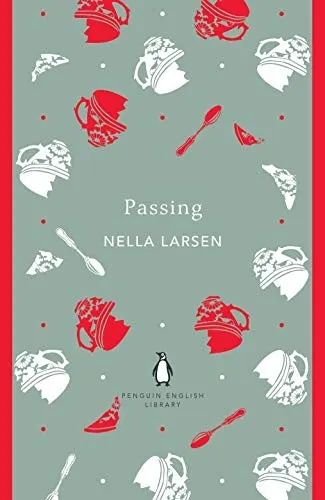
Irene Redfield’s carefully managed life is unsettled when she reconnects with Clare Kendry, whose beauty, audacity, and appetite for risk exert a fascination Irene cannot safely name. As with Nel and Sula, the relationship is charged by everything the women admire, fear, and suppress in themselves.
Larsen’s Harlem Renaissance classic is brief but inexhaustible. Its elegant, controlled prose makes every glance and hesitation unstable, while its close perspective traps us inside judgments we cannot entirely trust. If you loved how Sula refuses to separate devotion from resentment or freedom from cruelty, Passing offers another unforgettable female bond that grows more ambiguous the more closely you read.

A writer hires Emerence, an imperious older housekeeper who admits people into her life only on her own terms. What begins as employment becomes a ferocious attachment built from affection, pride, dependence, rivalry, and mutual incomprehension.
Emerence has something of Sula’s sovereign refusal to live by other people’s rules, yet Szabó never turns her into a symbol or saint. The narrator’s love is equally complicated: intimate with vanity, gratitude, shame, and betrayal. Widely regarded as Szabó’s masterpiece, The Door has inspired extraordinary devotion because it makes moral certainty feel like a failure of attention. Its final force comes from realizing that loving someone does not mean understanding what love requires.
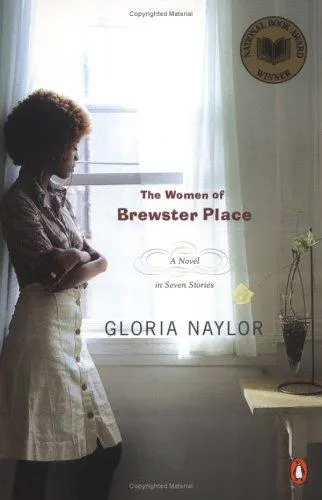
Gloria Naylor builds this novel from the interlocking lives of seven Black women living in the same worn urban block. Each section has its own emotional temperature, but voices, memories, gossip, and pain gather until Brewster Place itself seems to speak.
The kinship with Sula lies in Naylor’s combination of communal storytelling and stubborn individuality. Her women are watched and categorized, yet the novel continually breaks open the judgments imposed on them. Naylor can move from blunt social reality to lyricism and near-myth without losing the bodily truth of hunger, desire, exhaustion, or hope. Winner of the National Book Award for a first novel, The Women of Brewster Place remains beloved because its collective portrait never dilutes the singularity of any life within it.
If you loved Jazz

Morrison’s narrator in Jazz revises itself, addresses the reader, and discovers that a city cannot be contained by one story. Wideman pushes that instability into harsher territory. Beginning with Cudjoe’s return to Philadelphia to search for a child believed missing after the 1985 MOVE bombing, the novel splinters into competing voices, memories, public myths, and the author’s own troubled presence.
This is not smooth historical reconstruction; it is improvisation under moral pressure. Wideman makes broken form answer to broken civic memory, while his sentences move between street speech, lament, accusation, and lyric flight. The novel won the PEN/Faulkner Award, but its greater distinction is its refusal to make catastrophe comfortably legible. Readers drawn to Jazz’s daring narrative intelligence will find here a fiercer, more openly dissonant masterpiece.
If you loved Paradise

“Are you sure, sweetheart, that you want to be well?” That question hangs over Velma Henry as she sits at the center of a public healing ceremony, exhausted by years of activism and by the psychic cost of trying to repair a damaged world. Around her, the voices of a Southern Black community gather, interrupt, remember, joke, pray, and argue.
This is the closest match for the demanding, incantatory experience of Paradise: time folds, private pain becomes communal history, and spiritual power is inseparable from politics. But Bambara’s rhythm is wholly her own—jazzlike, funny, crowded, and electrically alive. The American Book Award–winning novel asks whether healing is possible without surrendering either rage or responsibility. Its difficulty is part of its force: once its voices cohere, the book feels less like something read than something entered.
If you loved A Mercy

A pregnant, condemned enslaved woman tells her story to a white man who believes he can translate her life into a useful theory. Williams makes that act of transcription a struggle over authority: who gets believed, whose language counts, and what disappears when suffering is made orderly.
Like A Mercy, this landmark of the neo-slave narrative distrusts any single account of the past. Its shifting voices expose the self-deceptions inside supposedly benevolent acts, while Dessa’s irreducible intelligence keeps defeating every attempt to classify her. The prose moves between oral force, documentary chill, and fierce inwardness. If Morrison’s chorus of compromised witnesses held you, Williams’s battle over who owns a story is indispensable.
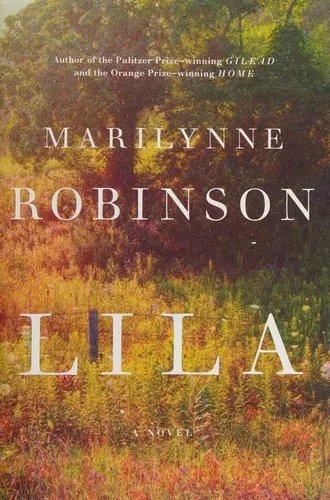
A homeless, wary woman steps into a church in the small Iowa town of Gilead and begins an unlikely encounter with its elderly minister. Around that moment, Robinson gathers Lila’s memories of hunger, itinerant labor, stolen tenderness, and the woman who once carried her away from neglect.
The setting is far from Morrison’s colonial America, but the emotional question is uncannily close: when an abandoned person is taken in, is that rescue, possession, grace—or all three? Lila’s suspicion of beautiful words resembles Florens’s vulnerability to them, while Robinson gives theological questions the texture of cold ground, worn clothes, and a hand tentatively offered. Winner of the National Book Critics Circle Award, it is a quiet masterpiece whose apparent simplicity opens into an immense meditation on whether love can answer abandonment.