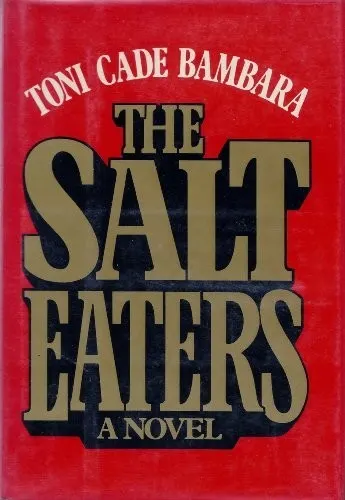
Books like The Salt Eaters
The Salt Eaters and Gayl Jones’s The Healing belong together as daring, darkly funny inquiries into what it costs a Black woman to become a source of repair. From there, these novels extend Bambara’s vision of healing as spiritual practice, political struggle, and communal art.
If you liked The Salt Eaters, you’ll love these
Not lookalikes — kindred books. Each one shares something essential with The Salt Eaters, and we tell you exactly what.

Harlan Jane Eagleton’s account of her life as a faith healer arrives in loops, riffs, jokes, corrections, and sudden revelations. Like Bambara, Jones refuses to separate psychic pain from race, gender, labor, or history—and refuses the comforting fiction that a healer must be unbroken.
Jones’s improvisatory prose demands alertness: voices collide, chronology buckles, and apparent digressions acquire unexpected force. Yet Harlan is such a magnetic raconteur that difficulty becomes pleasure. A National Book Award finalist, The Healing is among Jones’s most exuberant novels, matching The Salt Eaters in intellectual ferocity while possessing an unmistakably wayward music of its own.
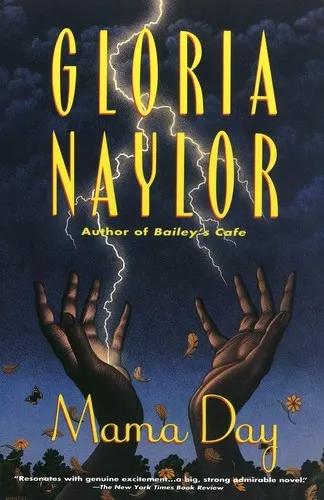
Willow Springs, an island community with its own history and laws of reality, is presided over by the formidable Miranda “Mama” Day. When her grandniece Cocoa brings the rational, city-bred George into that world, Naylor stages no simple contest between superstition and reason. She asks what different kinds of knowledge can perceive—and what love cannot master through will alone.
Readers who cherished Bambara’s chorus of neighbors, organizers, ancestors, skeptics, and spirits will recognize Naylor’s gift for making a community speak as a living intelligence. Mama Day is sensuous, mischievous, tragic, and structurally ingenious. It has become one of Naylor’s most beloved novels because its magic never floats free of history, family obligation, or the hard work of care.
Myal takes the spiritual wound at the center of The Salt Eaters and gives it a startling Caribbean vocabulary. In colonial Jamaica, Brodber treats the theft of a person’s vitality as at once supernatural violation and an exact description of what racist education, cultural domination, and exploitation do to the mind.
This short novel is dense with shifting voices, folk practice, Christian ritual, satire, and historical memory. Its fractured form does not merely depict disorientation; it makes restoration something the reader must participate in, assembling suppressed connections across the narrative. Brodber, one of Jamaica’s essential experimental writers, created a compact modernist classic that makes politics feel metaphysical and healing feel insurgent. Anyone captivated by Bambara’s refusal to choose between revolution and the spirit should not miss it.