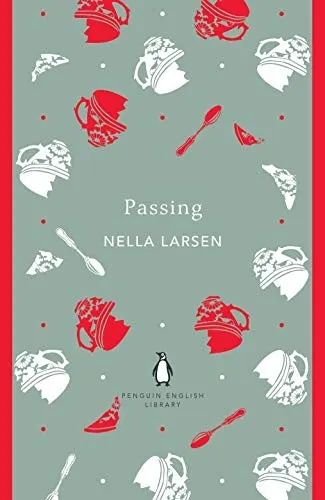
Books like Passing
Beautifully unstable. These novels share Larsen’s gift for turning female intimacy, social performance, and self-deception into concentrated psychological suspense.
If you liked Passing, you’ll love these
Not lookalikes — kindred books. Each one shares something essential with Passing, and we tell you exactly what.
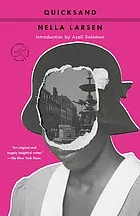
Larsen’s only other novel is indispensable—not simply because it revisits race and respectability, but because it gives consciousness itself the texture of a trap. Helga Crane moves through communities that promise belonging, only to detect the vanity, coercion, or hypocrisy beneath each promise. Her intelligence illuminates her world while making contentment almost impossible.
More restless and expansive than Passing, Quicksand has the same poised sentences, sensual surfaces, and merciless understanding of how identity is shaped by other people’s eyes. One of the defining novels of the Harlem Renaissance, it confirms that Passing was not an isolated marvel: Larsen possessed a singular talent for making ambivalence feel dangerous.

If the magnetic, poisonous bond between Irene and Clare held you, read Sula. Morrison places an intense friendship between two Black girls inside a community that watches, remembers, judges, and turns people into stories. Affection and resentment become nearly inseparable; freedom can look like selfishness, while virtue may conceal fear.
Morrison’s second novel is brief but immense, moving with the compression and symbolic force that make Passing so inexhaustible. Its reputation has only deepened: readers return to it because neither its women nor their friendship can be reduced to a moral lesson. To miss Sula is to miss one of American fiction’s fiercest examinations of what women demand from one another.

On a seaside holiday, Leda becomes fascinated by a young mother and daughter nearby. That ordinary act of watching gradually exposes buried memories, rivalries, and desires—and, as in Passing, the watcher’s interpretations tell us at least as much about her as about the woman she observes.
Ferrante’s lean novel shares Larsen’s unnerving intimacy with a narrator who is perceptive, articulate, and not entirely safe to trust. Both books understand fascination as a mixture of recognition, envy, attraction, and hostility; both make respectable womanhood feel like a role whose seams may split at any moment. This is Ferrante at her most concentrated: a small book with the aftershock of a much larger one.