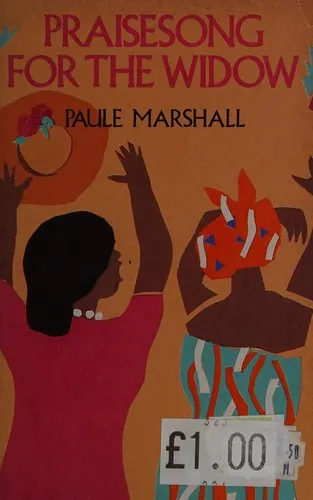
Books like Praisesong for the Widow
Avey Johnson’s body rebels before her mind can admit what her immaculate new life has cost her; Marshall turns nausea, memory, music, and dance into instruments of ancestral recognition.
If you liked Praisesong for the Widow, you’ll love these
Not lookalikes — kindred books. Each one shares something essential with Praisesong for the Widow, and we tell you exactly what.
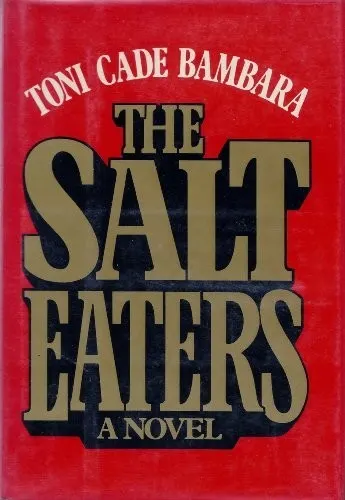
Bambara begins amid a healing ceremony, with the exhausted activist Velma Henry surrounded by voices, memories, jokes, spirits, and the charged attention of her community. Like Marshall, she treats spiritual crisis as inseparable from history: healing means recovering the bonds that modern success, political struggle, and private pain have strained.
The novel’s language crackles with Black speech and collective intelligence, moving associatively rather than obediently from point to point. It asks the unforgettable question, “Are you sure, sweetheart, that you want to be well?”—and then reveals how demanding wellness can be. Long cherished as a visionary classic, it offers the same rare exhilaration as Marshall’s novel: ritual becoming action, and a scattered self being called back into relation.
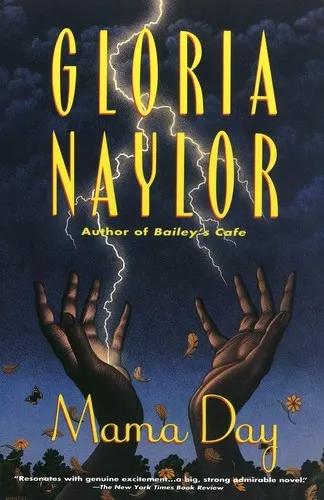
On Willow Springs, an island whose history exceeds official records, Mama Day understands weather, plants, family stories, and human motives with an authority that cannot be reduced to either superstition or science. Her beloved grandniece Cocoa, meanwhile, has made a life in New York and fallen for George, a man devoted to reason and self-reliance.
What connects Naylor to Marshall is not simply an island or an ancestral inheritance, but the gravity both writers give to knowledge carried outside conventional institutions. Naylor’s multiple voices argue, flirt, remember, and correct one another until the community itself seems to narrate. A touchstone of Black women’s fiction since its 1988 publication, Mama Day is funny, sensuous, intellectually serious, and ultimately overwhelming—a novel in which love must learn that independence is not the same thing as wholeness.
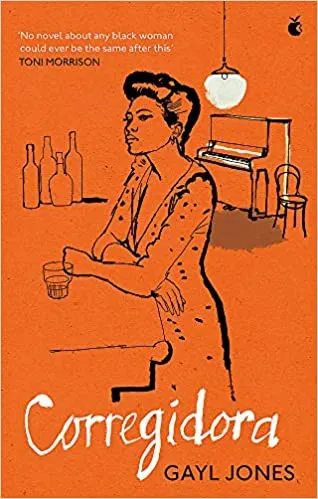
Ursa Corregidora is a blues singer whose foremothers have charged each generation with preserving the testimony of slavery and sexual violence. From its brutal opening, Jones makes that inheritance bodily: memory lives in Ursa’s voice, her desires, and the demands others place upon her.
Corregidora is harsher and more compressed than Praisesong for the Widow, but the novels share a profound question: how can a Black woman receive the past without being consumed by it? Jones builds her answer through repetitions, broken chronology, and prose shaped by the blues—history returns like a refrain, altered each time it is sung. Toni Morrison championed Jones early, and the novel’s influence on later writers has only become clearer. Few books render inherited memory with such ferocity or such formal precision.