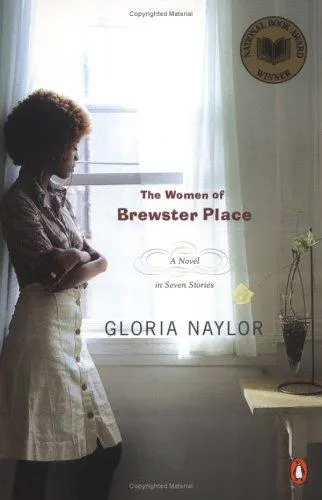
Books like The Women of Brewster Place
What lingers after Brewster Place is a hunger for fiction that gives each woman an irreducible life while letting many voices gather into something larger: an indictment, a history, and a kind of communal music.
If you liked The Women of Brewster Place, you’ll love these
Not lookalikes — kindred books. Each one shares something essential with The Women of Brewster Place, and we tell you exactly what.
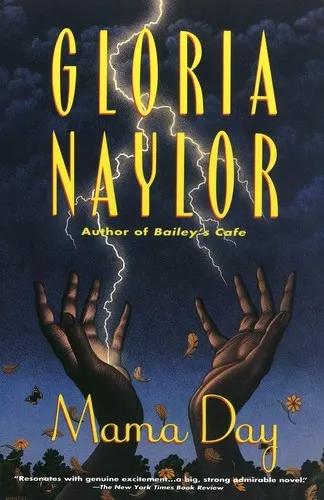
Naylor carries her gift for polyphony into a more mythic register. On Willow Springs—an island community with its own history and sense of time—the formidable Mama Day presides over generations of memory, while her grandniece Cocoa and George, a rational-minded New Yorker, tell intertwined versions of their lives.
As in Brewster Place, place is never mere backdrop: it stores what official history forgets, and the women who understand it possess forms of knowledge others dismiss at their peril. Naylor’s shifting voices make love, skepticism, ancestral power, and everyday practicality argue with one another. If Brewster Place showed you how boldly she could turn a community into a chorus, Mama Day reveals the full reach of that talent.
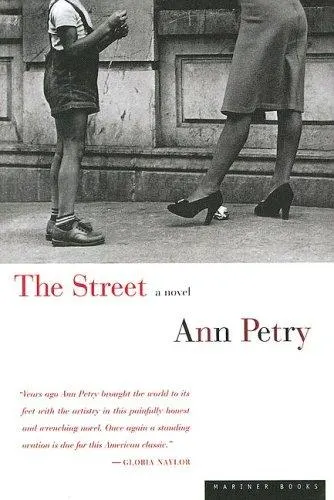
The opening pages follow Lutie Johnson through a vicious Harlem wind as she searches for an apartment; immediately, the street itself seems to be shoving her back. Petry builds from that sensation a devastating account of a capable Black woman trying to secure independence for herself and her son while every supposedly neutral institution is tilted against her.
A reader who admired how Naylor makes the wall, the tenements, and the neighborhood embody accumulated injustice will recognize Petry’s equally exact understanding of environment as pressure. Yet Lutie is never reduced to an example: her hopes, judgments, pride, and blind spots remain fiercely her own. Published in 1946, The Street became the first novel by an African American woman to sell more than a million copies. Its anger has not dated, and its suspense makes its social vision feel frighteningly immediate.
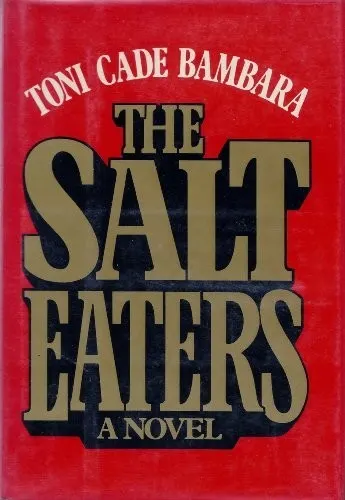
Bambara begins with healer Minnie Ransom asking the exhausted Velma Henry whether she truly wants to be well. Around that question, an entire Black community comes alive: activists, elders, workers, spirits, gossips, memories, and competing political commitments all crowd into the book’s charged language.
This is the recommendation for the reader most moved by Brewster Place’s transformation of separate suffering into collective reckoning. Bambara does not sentimentalize community—its demands can wound as well as sustain—but she renders healing as social, historical, and spiritual work. Winner of an American Book Award, The Salt Eaters is dense, funny, incantatory, and unlike almost anything else: a novel whose many voices do not simply describe communal life but enact it.