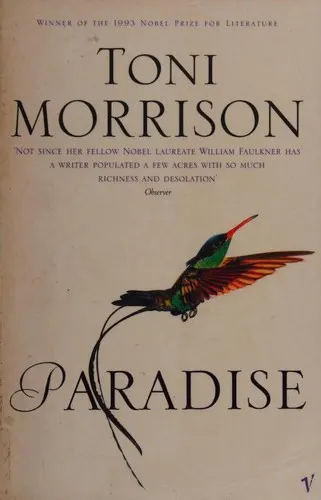
Books like Paradise
What becomes of a refuge built against oppression when its guardians begin treating purity as more sacred than human life? These novels share Paradise’s deepest powers: communal memory, moral ambiguity, women’s resistance, and histories that refuse to stay buried.
If you liked Paradise, you’ll love these
Not lookalikes — kindred books. Each one shares something essential with Paradise, and we tell you exactly what.
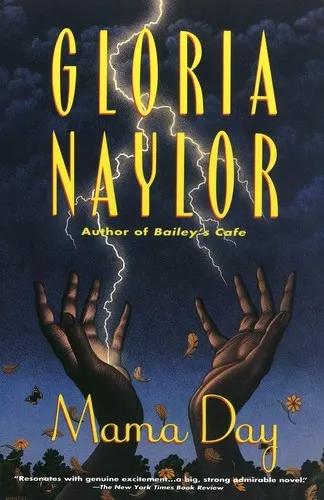
On Willow Springs, an island belonging fully to neither Georgia nor South Carolina, history survives through legend, gossip, ritual, and the authority of formidable women. At its center is Miranda “Mama” Day, healer and keeper of knowledge; approaching from another world are her grandniece Cocoa and Cocoa’s rational-minded lover, George.
Like Paradise, Naylor’s novel makes a Black community feel at once protective, quarrelsome, enchanted, and dangerous to misunderstand. Its shifting voices ask who gets to define reality: the educated outsider, the collective, the ancestor, or the woman whose knowledge cannot be proved in conventional terms. Naylor’s lush, audacious masterpiece has become a modern classic because its love story and folk magic carry a much harder argument about trust, inheritance, and the limits of reason.
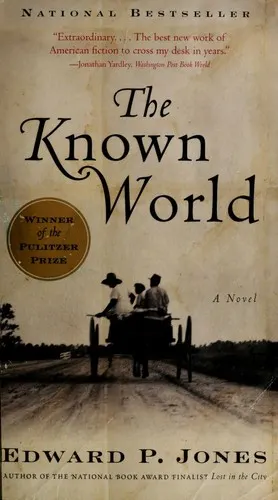
Jones begins with the death of Henry Townsend, a formerly enslaved Black man who has become an enslaver himself, then lets an entire Virginia county unfold around that contradiction. His narrator moves freely across households, generations, and time, revealing how slavery corrupts not only individuals but every category people use to understand justice, loyalty, and freedom.
A reader drawn to Paradise’s nonlinear revelations and refusal of easy moral camps will recognize the achievement immediately. Jones handles a large cast with uncanny precision: a brief appearance can open into a whole life, while an apparently settled fact acquires a devastating second meaning. Winner of the Pulitzer Prize, The Known World is one of the rare historical novels whose formal brilliance equals its moral seriousness. It does not merely reconstruct a world; it exposes the stories by which that world justified itself.
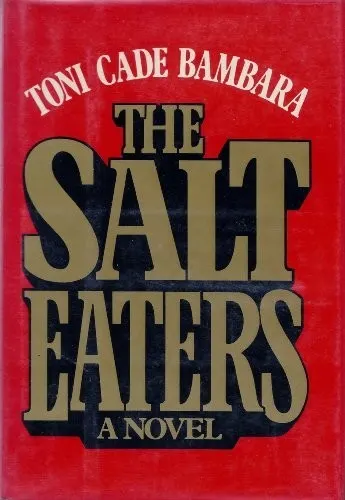
“Are you sure, sweetheart, that you want to be well?” That question hangs over Velma Henry as she sits at the center of a public healing ceremony, exhausted by years of activism and by the psychic cost of trying to repair a damaged world. Around her, the voices of a Southern Black community gather, interrupt, remember, joke, pray, and argue.
This is the closest match for the demanding, incantatory experience of Paradise: time folds, private pain becomes communal history, and spiritual power is inseparable from politics. But Bambara’s rhythm is wholly her own—jazzlike, funny, crowded, and electrically alive. The American Book Award–winning novel asks whether healing is possible without surrendering either rage or responsibility. Its difficulty is part of its force: once its voices cohere, the book feels less like something read than something entered.