
Books like Sula
Sula grips readers who prefer dangerous intimacy to easy sympathy: readers drawn to fierce women, morally charged friendships, communal judgment, and prose that leaves its deepest questions unresolved.
If you liked Sula, you’ll love these
Not lookalikes — kindred books. Each one shares something essential with Sula, and we tell you exactly what.

Irene Redfield’s carefully managed life is unsettled when she reconnects with Clare Kendry, whose beauty, audacity, and appetite for risk exert a fascination Irene cannot safely name. As with Nel and Sula, the relationship is charged by everything the women admire, fear, and suppress in themselves.
Larsen’s Harlem Renaissance classic is brief but inexhaustible. Its elegant, controlled prose makes every glance and hesitation unstable, while its close perspective traps us inside judgments we cannot entirely trust. If you loved how Sula refuses to separate devotion from resentment or freedom from cruelty, Passing offers another unforgettable female bond that grows more ambiguous the more closely you read.

A writer hires Emerence, an imperious older housekeeper who admits people into her life only on her own terms. What begins as employment becomes a ferocious attachment built from affection, pride, dependence, rivalry, and mutual incomprehension.
Emerence has something of Sula’s sovereign refusal to live by other people’s rules, yet Szabó never turns her into a symbol or saint. The narrator’s love is equally complicated: intimate with vanity, gratitude, shame, and betrayal. Widely regarded as Szabó’s masterpiece, The Door has inspired extraordinary devotion because it makes moral certainty feel like a failure of attention. Its final force comes from realizing that loving someone does not mean understanding what love requires.
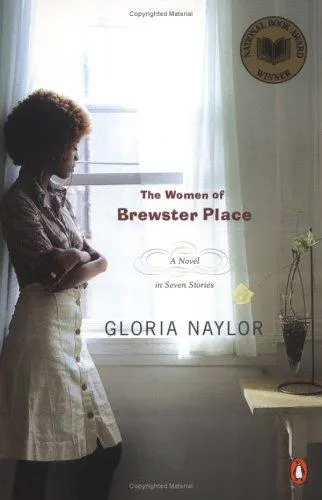
Gloria Naylor builds this novel from the interlocking lives of seven Black women living in the same worn urban block. Each section has its own emotional temperature, but voices, memories, gossip, and pain gather until Brewster Place itself seems to speak.
The kinship with Sula lies in Naylor’s combination of communal storytelling and stubborn individuality. Her women are watched and categorized, yet the novel continually breaks open the judgments imposed on them. Naylor can move from blunt social reality to lyricism and near-myth without losing the bodily truth of hunger, desire, exhaustion, or hope. Winner of the National Book Award for a first novel, The Women of Brewster Place remains beloved because its collective portrait never dilutes the singularity of any life within it.