Author
Books like Fyodor Dostoyevsky
20 books we recommend to Fyodor Dostoyevsky readers, drawn from Crime and Punishment, The Brothers Karamazov, White Nights, The Idiot, Notes from Underground, Demons and Poor Folk — each with the reason why.
If you loved Crime and Punishment
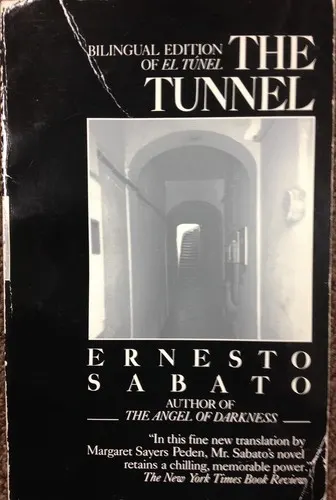
In the first sentence, painter Juan Pablo Castel tells us that he murdered María Iribarne. Suspense comes not from discovering what happened, but from being trapped inside the jealous, hyper-rational intelligence that made it possible.
Like Raskolnikov, Castel mistakes intellectual isolation for superiority. Every inference seems lucid in the moment, yet each narrows his world further. Sabato’s short, ferocious novel turns logic into claustrophobia and confession into another form of self-justification. Camus helped secure its French publication, and its reputation as an existential classic is deserved: few novels so efficiently make a consciousness become its own punishment.
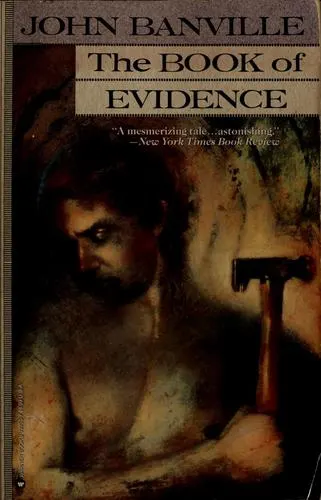
Freddie Montgomery addresses us from custody in prose of extraordinary elegance, attempting to explain the unforgivable. His cultivated voice is witty, observant and seductive—but every beautiful sentence raises the suspicion that beauty itself is being used as an alibi.
A reader fascinated by Raskolnikov’s oscillation between pride, dread and the desire to confess will recognize the moral drama, though Banville makes it colder and more aesthetically treacherous. Shortlisted for the Booker Prize, The Book of Evidence is among the finest novels about the gap between understanding guilt and truly seeing another person. It makes the reader an unwilling juror—and tests how readily eloquence can corrupt judgment.
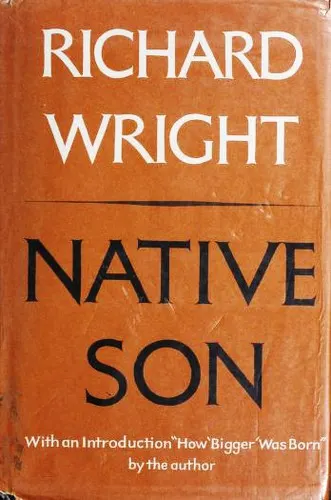
Wright begins with Bigger Thomas waking in a cramped Chicago apartment, already hemmed in by poverty, racism, fear and rage. The novel’s great power lies in refusing an easy choice between social explanation and individual responsibility: Bigger is both frighteningly constrained and irreducibly human.
Where Dostoyevsky uses feverish Petersburg to intensify Raskolnikov’s divided consciousness, Wright makes an entire social order bear down on Bigger’s every perception. The prose moves with brutal momentum, but the lasting shock is psychological—the way fear limits imagination until freedom itself becomes difficult to conceive. A literary sensation in 1940 and still fiercely debated, Native Son is indispensable because it does not merely ask who is guilty; it asks who gets the luxury of becoming a self before being judged.
If you loved The Brothers Karamazov
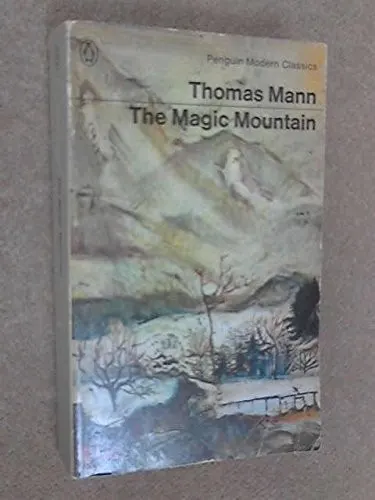
Hans Castorp arrives at an Alpine sanatorium intending to stay for three weeks and discovers a sealed world where time loosens and conversation becomes combat. As in Dostoyevsky, philosophical positions are never merely positions: they acquire voices, vanities, seductions, and dangerous emotional force.
Mann replaces the Karamazovs’ religious fever with an exquisitely controlled comedy of ideas, but he shares Dostoyevsky’s fascination with illness, death, eros, and the competing claims made upon an impressionable soul. The result—one of the defining European novels of the twentieth century—can make an argument about human freedom feel as suspenseful as a family crisis.
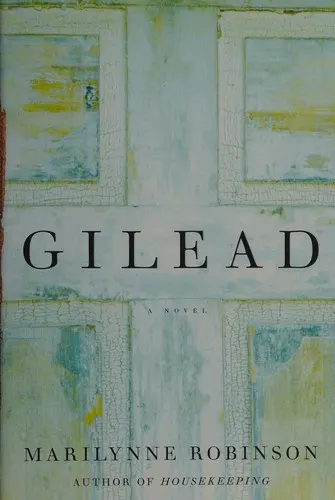
This Pulitzer Prize winner approaches Dostoyevsky’s great questions from the opposite direction: not through uproar, but through the measured voice of an elderly minister writing to the young son he will not live to see grow up. Beneath that serenity lie old grievances, troubled inheritances, and the fear that our moral judgments may conceal failures of love.
Robinson is extraordinary on the difficulty of grace: not grace as a comforting doctrine, but as the nearly unbearable demand to see another person whole. Readers moved by Alyosha’s spiritual intelligence, by the novel’s fathers and sons, or by its insistence that doubt belongs inside faith will find Gilead quietly devastating. Few novels make goodness feel so intellectually serious—or so hard won.

Tokarczuk’s immense, many-voiced novel follows the rise of the eighteenth-century religious leader Jacob Frank through the testimony of disciples, skeptics, family members, clerics, and observers. No single account masters him. Charisma may be revelation, fraud, liberation, appetite, or several of these at once.
That polyphony creates a distinctly Karamazov-like moral pressure: belief is inseparable from personality, spiritual longing from bodily need, and the search for freedom from the temptation to dominate others. Tokarczuk—later awarded the Nobel Prize—won Poland’s Nike Award for this audacious work. Its scale is formidable, but so is its reward: an entire world arguing over God, authority, identity, and who gets to define the truth.
If you loved White Nights
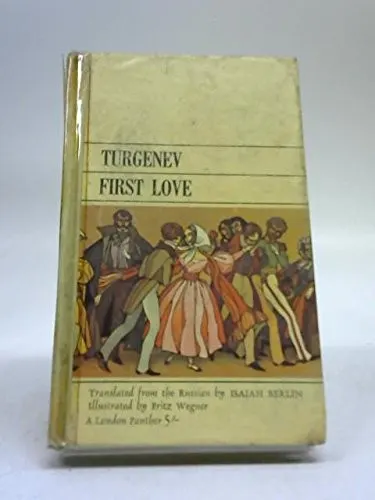
Sixteen-year-old Vladimir falls helplessly for the mercurial Zinaida, around whom a small court of admirers has gathered. Turgenev captures the same mixture Dostoyevsky does: the dreamer’s exaltation, the embarrassing theatricality of devotion, and the terrible sincerity beneath it.
Closely drawn from Turgenev’s adolescence, this short novel has the bruising authority of remembered experience. Its prose is clearer and cooler than Dostoyevsky’s, but that restraint makes every fluctuation in hope register. One of the classic anatomies of first desire, it understands that romantic awakening is also an awakening into bewilderment—and leaves an emotional afterimage far larger than its length.
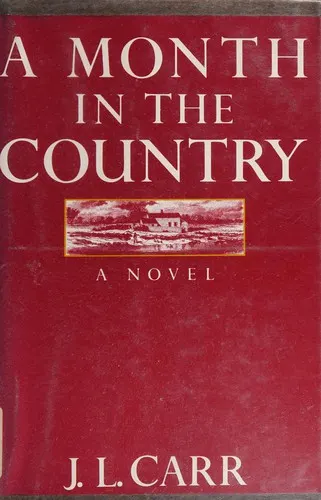
Tom Birkin, damaged by war and a failed marriage, arrives in a Yorkshire village to uncover a medieval painting hidden beneath whitewash. What follows is a season of work, companionship, and possibilities he scarcely knows how to receive.
Carr’s Booker-shortlisted, Guardian Fiction Prize-winning novel shares White Nights’ deepest structural magic: an older consciousness looks back on a brief interval when life seemed capable of becoming something else. Yet Carr never strains for poignancy. Sunlight, meals, silences, and tiny acts of kindness accumulate until the whole summer feels irretrievable. Few novels show so beautifully why temporary happiness can be permanent in memory.
Tsukiko lives alone and moves through Tokyo at a slight remove from other people. In a bar she encounters her former teacher; over sake, mushrooms, grilled fish, and repeated accidental meetings, a hesitant companionship takes shape.
A winner of Japan’s Tanizaki Prize, Kawakami’s novel turns pauses and rituals into emotional events. Like White Nights, it understands intimacy as something improvised by two solitary people who cannot quite speak directly about what they need. Its dry humor keeps the tenderness from becoming sentimental, while every shared dish acquires the suspense of a confession. This is a quietly bewitching book, beloved because it makes loneliness porous without pretending it is easily cured.
If you loved The Idiot
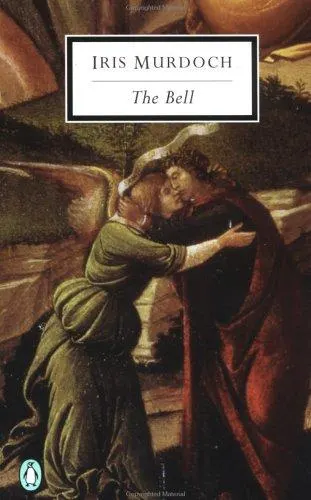
At Imber Court, a lay religious community beside a convent, people come hoping that discipline and faith will straighten out their lives. Instead, desire, jealousy, shame, and self-deception complicate every aspiration toward goodness. Murdoch shares Dostoyevsky’s fascination with the disastrous gap between loving humanity in principle and loving one difficult person in practice.
The kinship lies especially in Murdoch’s refusal to reduce moral failure to villainy. Her characters can be absurd, manipulative, generous, and genuinely penitent almost at once; their spiritual longings are inseparable from their erotic confusion. The result is both comic and painful, with an ensemble whose collisions feel inevitable even as each person remains startlingly free. The Bell became one of Murdoch’s best-loved novels because it turns abstract questions about goodness into vivid human weather. Missing it means missing one of English fiction’s most persuasive answers to Dostoyevsky’s moral drama.
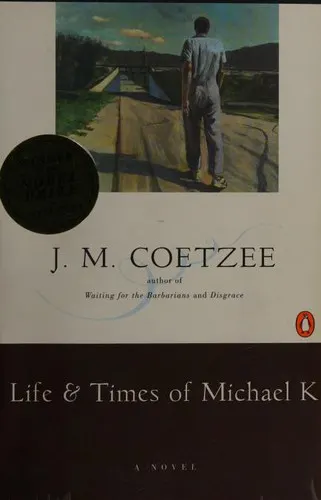
Michael K, a quiet gardener born with a cleft lip, attempts to carry his ailing mother away from a Cape Town being constricted by civil war. He possesses none of Myshkin’s eloquence or social position, yet he creates a similar disturbance: institutions and educated observers cannot accept a person who will not conform to their explanations of him.
Coetzee’s spare prose is the opposite of Dostoyevsky’s crowded theatricality, which makes the shared question even sharper: what happens when a nearly defenseless human being confronts a world that insists on classifying, correcting, or using him? Michael’s inward freedom remains elusive without becoming sentimentalized. This Booker Prize winner is among Coetzee’s defining achievements—a brief, severe novel whose central figure inspires the same uneasy mixture of protectiveness, bafflement, and reverence that makes Myshkin unforgettable.
If you loved Notes from Underground
Hamsun’s unnamed wanderer is another virtuoso of acting against his own interests. Penniless and starving, he preserves his grandiose self-image through absurd refusals, impulsive generosity, private games, and exquisitely painful humiliations. Like Dostoyevsky’s Underground Man, he can recognize his perversity without gaining the power—or even the sincere desire—to stop it.
Published in 1890, Hunger became a foundational work of modern psychological fiction. Its feverishly immediate narration turns thought itself into suspense: every boast, lie, and wounded reaction could ruin the narrator’s next hour. If the most thrilling part of Notes from Underground was being trapped inside a mind that is both victim and tormentor, Hunger is indispensable.
The Fall transforms confession into an ambush. In an Amsterdam bar, Jean-Baptiste Clamence addresses a silent listener, recounting his former life as an admired Parisian lawyer. He is charming, lucid, funny—and so rhetorically accomplished that every admission begins to feel like an accusation aimed at whoever is listening.
This is the kinship with Notes from Underground at its most dangerous: both speakers expose themselves while struggling to retain mastery over the audience. Camus’s short, polished novel lacks Dostoyevsky’s frantic clutter, but its elegance is a weapon. Often regarded as one of Camus’s finest achievements, it leaves readers wondering whether honesty can become merely a subtler form of vanity. To skip it is to miss one of literature’s most perfectly controlled unreliable monologues.
Thomas Bernhard’s narrator cannot stop circling a single unbearable fact: he and his friend Wertheimer once studied piano beside Glenn Gould and recognized genius at close range. From that realization grows a relentless monologue about talent, envy, failure, friendship, and the stories people construct to make defeat seem inevitable.
Bernhard’s long, recursive sentences operate like obsessive thought made audible. Assertions return altered; judgments harden into jokes; self-knowledge becomes another instrument of cruelty. Where the Underground Man lashes out because consciousness has paralyzed action, Bernhard shows consciousness converting an entire life into a merciless argument.
The Loser is among the most admired novels by one of postwar Europe’s great stylists, and its hypnotic voice inspires unusual devotion. Once its rhythm takes hold, it feels less like reading a narrative than overhearing a mind prosecute a case from which nobody—not even the prosecutor—can escape.
If you loved Demons
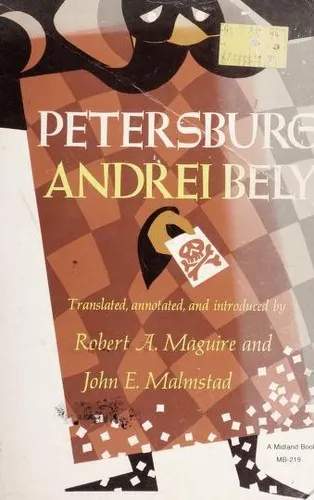
A senator’s son is ordered by revolutionaries to assassinate his own father: from that opening predicament, Bely builds a city-sized fever dream of bombs, bureaucracy, filial hatred, and political rhetoric turning into hallucination.
What resembles Demons most deeply is the sense that conspiracy exposes impulses its participants barely understand. Bely is more formally daring than Dostoyevsky—repetitions, colors, sounds, and grotesque images make Petersburg itself seem possessed—but he shares Dostoyevsky’s gift for making an ideological nightmare horribly funny. Nabokov ranked it among the supreme prose works of the twentieth century; its strange, intoxicating brilliance earns that devotion.
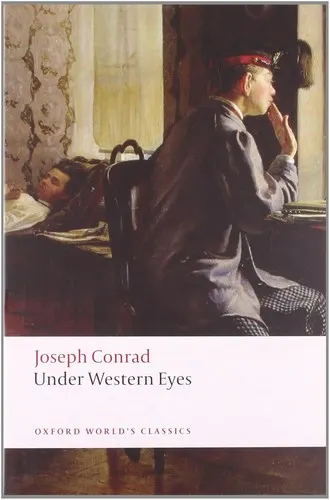
Conrad begins with Razumov, an ambitious and politically uncommitted student, discovering that a revolutionary assassin has chosen him as a confidant. In an instant, neutrality becomes impossible.
This is perhaps the most incisive answer ever written to Dostoyevsky’s revolutionary novels. Conrad distrusts both autocracy and the romantic glamour of rebellion, and he subjects every declaration of principle to the pressures of fear, loneliness, resentment, and self-deception. The result has the moral claustrophobia of Demons without imitating it: quieter, colder, but just as merciless about the human need to turn compromised motives into noble creeds. It stands among Conrad’s major political novels and deserves to be read as Dostoyevsky’s great skeptical countervoice.
A frustrated young man impulsively shoots a Soviet official; the state responds by manufacturing an immense conspiracy. Serge then moves through interrogation rooms, ministries, prison cells, foreign missions, and the minds of veteran revolutionaries who discover that the system they made no longer needs truth—or even plausible lies.
Where Demons shows ideology gathering its disciples, Serge shows it after victory, hardened into an apparatus that consumes believers and cynics alike. Yet this is no schematic anti-totalitarian parable. A former revolutionary and political prisoner, Serge writes with insider knowledge and extraordinary generosity toward compromised people. Widely regarded as his masterpiece, the novel combines an ensemble cast, black comedy, metaphysical dread, and political intelligence with a humane breadth few twentieth-century novels equal.
If you loved Poor Folk
Judith Hearne, an impoverished, unmarried piano teacher moving into yet another Belfast boarding house, possesses something of both Makar’s yearning and Varvara’s vulnerability. Moore sees every evasive boast, hopeful misreading, and social slight, yet never reduces Judith to an object of pity. Her loneliness is painful precisely because her desire to be valued is so ordinary and so reasonable.
The novel established Moore’s reputation, and its psychological precision remains astonishing. Like Poor Folk, it understands that humiliation is rarely theatrical: it arrives through seating arrangements, unpaid bills, strained invitations, and the moment when another person’s courtesy cools. Judith Hearne is one of fiction’s unforgettable portraits of a life that polite society prefers not to notice.
Gissing expands Dostoyevsky’s cramped rooms and financial anxieties into a devastating anatomy of cultural life under economic pressure. Its struggling writers must decide whether literature is a calling, a commodity, or simply the means of paying next week’s expenses. Money does not merely limit them; it enters their marriages, friendships, ambitions, and estimates of their own worth.
Generally regarded as Gissing’s masterpiece, New Grub Street has the rare severity of a novel that understands exactly how poverty corrodes without pretending that the poor are morally purified by suffering. A reader moved by Makar’s painfully earnest attempts to preserve dignity will recognize the same collision between inward value and public failure—rendered here with a broader social intelligence and a merciless, compelling clarity.

Written as one woman’s long letter to her closest friend, Mariama Bâ’s novel turns private address into an entire moral world. Ramatoulaye writes during a period of mourning, looking closely at marriage, friendship, betrayal, motherhood, faith, and the unequal freedoms granted to men and women. As in Poor Folk, the act of writing is itself a refuge: the addressee makes honesty possible.
Winner of the inaugural Noma Award and now a landmark of African literature, So Long a Letter achieves extraordinary breadth in a remarkably short space. Bâ’s voice is more composed than Makar’s, but it shares his need to rescue lived experience from society’s dismissive verdicts. Its intelligence, intimacy, and hard-won dignity make it feel less like overhearing a confession than being entrusted with one.