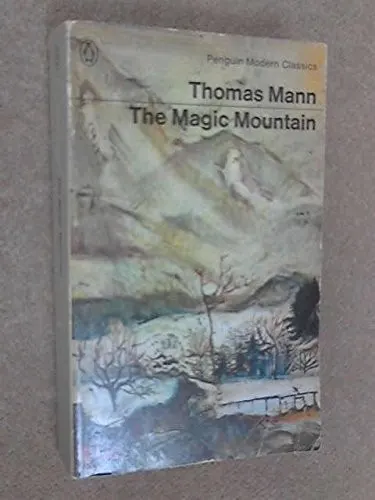
Books like The Magic Mountain
In each of these books, a sealed room slowly expands into a continent: clocks misbehave, conversation becomes combat, and a civilization’s hidden sickness seeps through the walls.
If you liked The Magic Mountain, you’ll love these
Not lookalikes — kindred books. Each one shares something essential with The Magic Mountain, and we tell you exactly what.
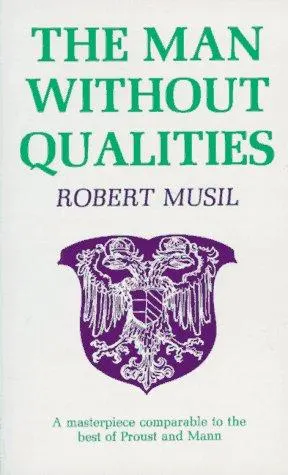
Ulrich, an intellectually restless mathematician, takes a leave from ordinary life and is drawn into a grandiose committee preparing a patriotic celebration in prewar Vienna. Like Hans Castorp, he becomes the amused, susceptible center of a world in which every person embodies a theory—and every theory is both seductive and faintly absurd.
Musil matches Mann’s rare fusion of comic social observation, philosophical inquiry, and historical foreboding. His unfinished masterpiece can pause over morality, mathematics, desire, or bureaucracy without losing its dry sparkle. If you loved the sanatorium debates because they made Europe itself seem to be arguing in a drawing room, this monumental classic of modernism is indispensable.
Broch’s trilogy begins in 1888 with Joachim von Pasenow, a Prussian officer clinging to uniform, hierarchy, and inherited certainty even as modern life makes those forms feel increasingly hollow. Across the novel’s widening design, styles and perspectives fracture along with the values they attempt to describe.
Where Mann diagnoses Europe through irony and debate, Broch makes disintegration happen inside the prose. Narrative gives way to essay, lyric, and competing voices; private bewilderment becomes a philosophy of an age losing its moral center. One of high modernism’s great achievements, The Sleepwalkers offers the intellectual scale of The Magic Mountain with a darker, more formally daring pressure.
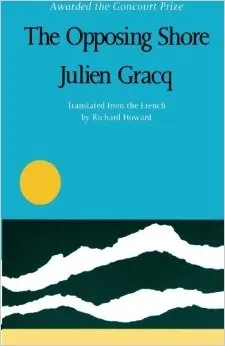
Aldo, a young aristocrat weary of metropolitan life, accepts a posting to a remote naval outpost facing a forbidden enemy coast. Almost nothing is supposed to happen there—and Gracq turns that suspended condition into an atmosphere of almost unbearable expectancy.
Readers who loved Mann’s strange elasticity of time will recognize the spell: routine becomes ritual, landscape becomes thought, and waiting acquires the force of an event. Yet Gracq’s prose is more dreamlike and sensuous, charged by coastlines, maps, fog, and the dangerous allure of crossing a boundary. The novel won France’s Prix Goncourt in 1951, which Gracq famously refused; it remains a French classic whose hypnotic tension is unlike anything else.