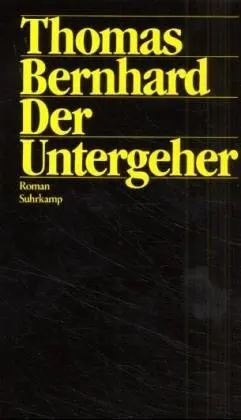
Books like The Loser
A mind circles its wound until repetition becomes rhythm, contempt turns comic, and failure acquires the severe beauty of music.
If you liked The Loser, you’ll love these
Not lookalikes — kindred books. Each one shares something essential with The Loser, and we tell you exactly what.
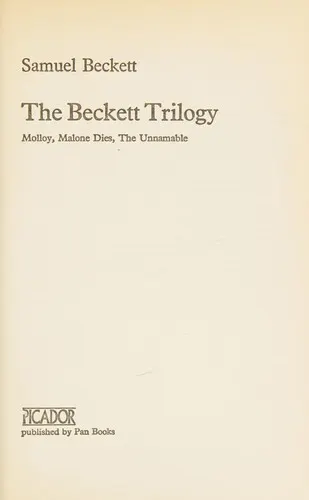
Like Bernhard, Beckett makes consciousness both the prison and the entertainment. Molloy begins in his mother’s room, writing pages for a mysterious visitor; from there, every attempt to establish a fact produces qualifications, reversals, and magnificently pedantic digressions.
The kinship lies in the voice: relentless, self-cancelling, and very funny precisely because it refuses consolation. Yet Beckett is sparer and stranger than Bernhard, turning bodily inconvenience and logical collapse into metaphysical slapstick. This landmark of postwar fiction helped redefine what a novel could be. Anyone exhilarated by The Loser’s ability to make obsessive failure sing should experience Beckett at full force.
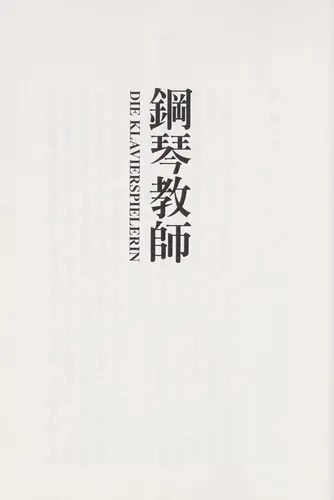
Erika Kohut is a formidable piano instructor whose discipline, thwarted ambition, and claustrophobic life with her mother have made mastery indistinguishable from punishment. The musical world matters, but the deeper link to The Loser is Jelinek’s pitiless understanding of excellence: the ideal does not ennoble those beneath it; it colonizes and deforms them.
Jelinek’s prose is colder than Bernhard’s torrent, slicing through romantic ideas about art, desire, and individuality until social cruelty appears to be speaking through the characters themselves. The result is vicious, unnerving, and mordantly comic. Jelinek later received the Nobel Prize, and this remains her defining novel—a book that makes artistic refinement feel as dangerous as any appetite.
A history professor sits down to write the introduction to his enormous study of guilt in Nazi Germany and instead begins excavating his own resentments, failures, evasions, and hatreds. The abandoned introduction swells into the novel itself: a verbal tunnel dug by a man who would rather burrow indefinitely than emerge into judgment.
Where Bernhard uses repetition like a musical motif, Gass builds a whole obscene symphony from rhetorical returns, typographical play, jokes, slogans, and sentences of astonishing polish. Its narrator is more morally repellent than Wertheimer, and the book demands stamina, but that difficulty is part of its singular power. Twenty-six years in the making and winner of an American Book Award, The Tunnel has inspired unusually fierce devotion. For readers who want the monologue-novel pushed toward its most audacious limit, it is unavoidable.