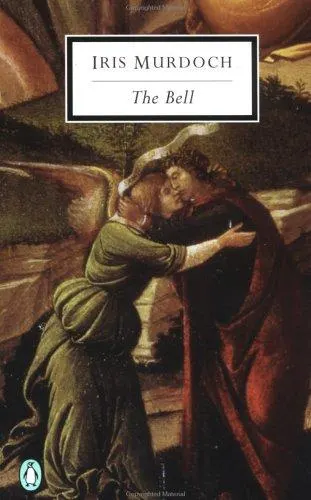
Books like The Bell
Sylvia Townsend Warner’s medieval nuns inhabit the same moral weather as Murdoch’s spiritual idealists: rules promise order, while vanity, desire, accident, and ordinary kindness keep upsetting the design. The three novels below share The Bell’s rare fusion of moral seriousness, social comedy, and sympathy for people who cannot live up to their own ideas.
If you liked The Bell, you’ll love these
Not lookalikes — kindred books. Each one shares something essential with The Bell, and we tell you exactly what.
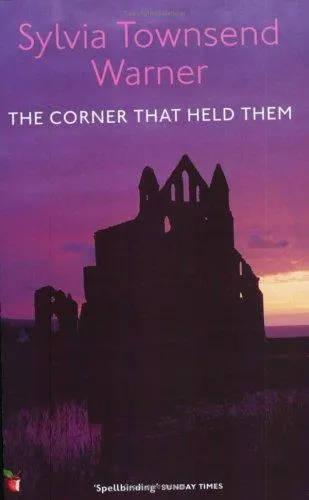
Warner treats a fourteenth-century convent not as picturesque history but as a living, quarrelsome institution. No single heroine controls the book; attention passes among nuns, servants, clergy, visitors, buildings, debts, illnesses, and private obsessions. Like Imber Court, the community acquires a personality of its own, sustained as much by compromise and happenstance as by faith.
What will especially delight a Murdoch reader is Warner’s dry, unsparing mercy. She sees self-deception clearly but never reduces anyone to a joke or a moral example. Her refusal of tidy spiritual conclusions gives the novel its strange authority: human muddle is not an interruption of communal life but its substance. Long neglected and now widely reclaimed as one of Warner’s masterpieces, it is the rare historical novel that feels radically free of historical-novel machinery.
Wilmet Forsyth is prosperous, married, attractive, and faintly dissatisfied. She channels her restless attention into an Anglo-Catholic parish and into other people’s lives, interpreting glances and attachments with supreme confidence—and imperfect accuracy.
Pym’s scale is more domestic than Murdoch’s, but her comedy has the same sharp moral purpose. Every social blunder exposes a failure of attention; every apparently minor infatuation tests the difference between loving someone and merely casting them in one’s private drama. The church supplies incense, ritual, gossip, and genuine consolation without becoming either a sanctuary from desire or an object of easy satire. Pym’s devoted readership prizes precisely this combination of exquisite comic timing and quiet ethical force. The novel looks light enough to float away, then leaves Wilmet’s awakening lodged in the mind.
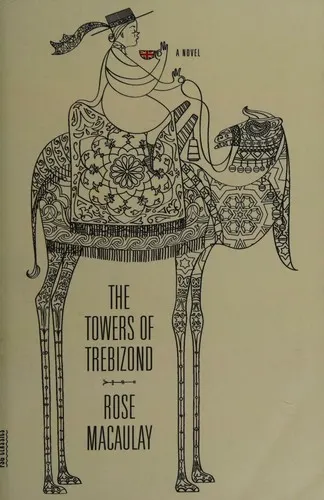
This begins as one of the funniest journeys in English fiction: Laurie travels through Turkey with her formidable Aunt Dot, an Anglican clergyman, and a camel, amid schemes for religious and social improvement. Macaulay’s sentences sparkle with learned jokes, absurd encounters, and the comedy of English people carrying their convictions abroad.
Beneath that brilliance lies a conflict very close to the heart of The Bell. Laurie wants religious truth but also wants a life incompatible with it; faith is neither dismissed nor made comfortably available. Macaulay understands that conscience can be sincere, evasive, painful, and faintly ridiculous all at once. The resulting tonal range—from high comedy to spiritual desolation—is extraordinary. Winner of the James Tait Black Memorial Prize, The Towers of Trebizond has endured because its wit does not protect either its heroine or its reader from the cost of divided desire.