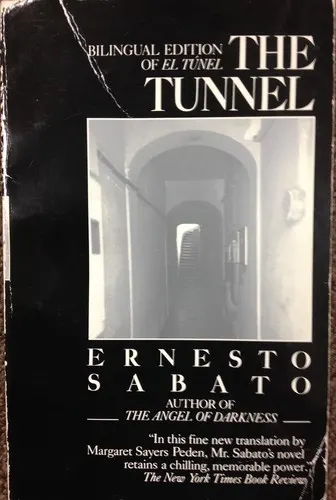
Books like The Tunnel
You love The Tunnel if you want fiction to lock you inside a brilliant, diseased consciousness—one that turns loneliness into logic, desire into prosecution, and confession into an unnervingly intimate trap.
If you liked The Tunnel, you’ll love these
Not lookalikes — kindred books. Each one shares something essential with The Tunnel, and we tell you exactly what.
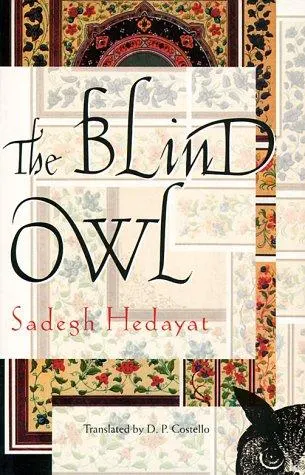
Few novels reproduce The Tunnel’s feeling of being sealed inside another person’s nightmare as powerfully as this cornerstone of modern Iranian literature. Its unnamed narrator writes for his shadow while obsession, memory, erotic longing, and disgust fold into one another. The prose has the starkness of testimony but the unstable imagery of fever.
Like Castel, Hedayat’s narrator is terrifying because his reasoning feels coherent moment by moment, even as reality grows less secure. The Blind Owl is stranger and more hallucinatory than Sábato’s novel, but it offers the same dangerous intimacy: consciousness becomes both prison and weapon. Its cult reputation is deserved; once entered, its private darkness is difficult to forget.
Jean-Baptiste Clamence begins talking in an Amsterdam bar, and soon his dazzling conversation has become confession, performance, seduction, and cross-examination. Where Castel insists on explaining his crime, Clamence anatomizes his own moral life—with such charm and precision that the reader gradually realizes the examination is also aimed outward.
Camus’s late masterpiece shares The Tunnel’s compressed form, caustic intelligence, and mistrust of confession as a route to innocence. Every elegant sentence tightens the trap. It is one of those rare philosophical novels whose ideas never float free of voice: Clamence’s wit is the instrument of his self-knowledge and his evasion. Skip it, and you miss one of literature’s most accomplished unreliable monologues.
A failed concert pianist reflects on his friendship with two fellow students, one of them the overwhelming genius Glenn Gould. From that simple arrangement Bernhard builds a relentless study of comparison, envy, admiration, and the ruinous demand for artistic perfection.
The kinship with The Tunnel lies in its obsessive motion. Bernhard’s narrator circles the same people and judgments, revising and intensifying them until repetition becomes suspense. As with Castel, intelligence does not rescue him from fixation; it merely supplies fixation with better arguments. Often counted among Bernhard’s finest novels, The Loser is bitterly funny as well as devastating—a virtuoso performance about what happens when another person’s existence makes your own feel impossible.