Author
Books like Charles Dickens
5 books we recommend to Charles Dickens readers, drawn from Bleak House, Little Dorrit and Our Mutual Friend — each with the reason why.
If you loved Bleak House
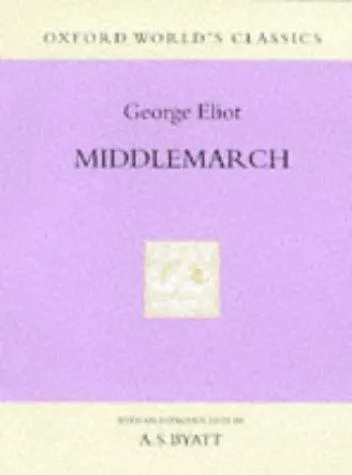
Where Dickens binds his characters with lawsuits, secrets, and London fog, Eliot binds hers through consequences. Dorothea Brooke’s hunger for a consequential life and the ambitious young doctor Tertius Lydgate’s arrival in Middlemarch begin two stories that gradually reveal a whole community as an intricate moral web. A careless judgment, a debt, a marriage, or a professional rivalry travels farther than anyone can see.
A lover of Bleak House will recognize the panoramic intelligence and the conviction that apparently minor people are never merely minor. Eliot is less theatrical than Dickens but even more exact about self-deception: she can expose vanity in one sentence and restore sympathy in the next. Commonly regarded as one of the supreme English novels, Middlemarch earns that standing not through monumentality alone but through the uncanny intimacy of its understanding. Reading it enlarges one’s sense of how much a novel—and a person—can notice.
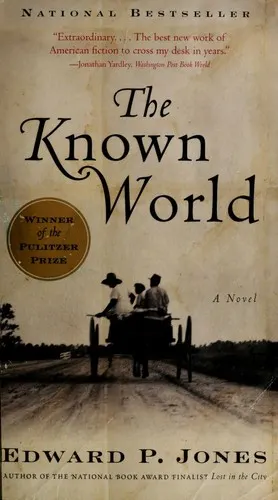
The opening announces a moral contradiction worthy of Dickens’s fiercest social vision: Henry Townsend, once enslaved, dies owning enslaved people himself. From that fact, Edward P. Jones constructs not a simple parable of individual wickedness but an entire society of laws, records, bargains, affections, evasions, and compromises. Responsibility is everywhere, which means no one can comfortably declare it elsewhere.
Jones’s omniscient narrator moves freely among landowners, enslaved people, officials, families, and figures who might receive only a passing glance in another novel. Brief glimpses across time give each life startling weight, much as Bleak House repeatedly reveals that its crowded cast belongs to one moral design. The novel’s dry irony and narrative authority keep its vast structure lucid, while its compassion never softens its judgment. Winner of the Pulitzer Prize and now firmly established as a modern American classic, The Known World is one of the rare novels that can make a social system feel both immense and painfully personal.
If you loved Little Dorrit
If Merdle’s prestige and the Circumlocution Office made you laugh with mounting horror, Trollope’s great social satire is indispensable. Augustus Melmotte arrives in London trailing rumors of immense wealth, and society swiftly decides that asking where the money came from would be vulgar. Around him orbit speculators, politicians, aristocrats, and Lady Carbury, who manufactures literary fame through strategic flattery.
Trollope lacks Dickens’s phantasmagoric grotesques, but he is even more exact about the tiny accommodations by which dishonesty becomes respectable. Widely regarded as his fiercest novel, The Way We Live Now turns financial credulity, social climbing, and self-deception into a vast comedy of compromised judgment. It is the novel to read if Little Dorrit convinced you that a society’s institutions are merely its private vanities enlarged.
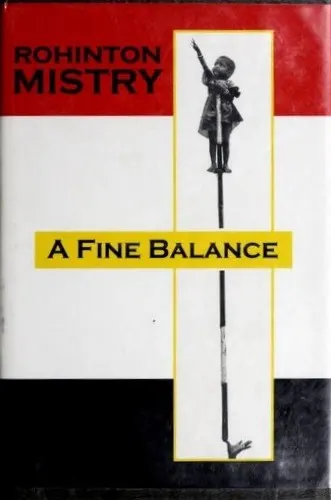
What if the quality you most cherish in Little Dorrit is its refusal to let institutional cruelty erase individual tenderness? Mistry’s novel brings four sharply different people together in an Indian city during the Emergency of the 1970s. Their improvised household becomes a place of quarrels, jokes, work, food, and precarious fellowship while political power presses brutally into ordinary life.
Mistry has Dickens’s gift for crowded social vision: minor figures arrive fully alive, comedy survives beside suffering, and public injustice is felt through rent, employment, bodily safety, and the possibility of trusting another person. Winner of the Giller Prize and shortlisted for the Booker, A Fine Balance inspires unusually fierce devotion because its compassion is never sentimental or easy. It is harrowing, but a reader moved by Little Dorrit’s belief that kindness can remain morally significant inside a crushing system may find it unforgettable.
If you loved Our Mutual Friend
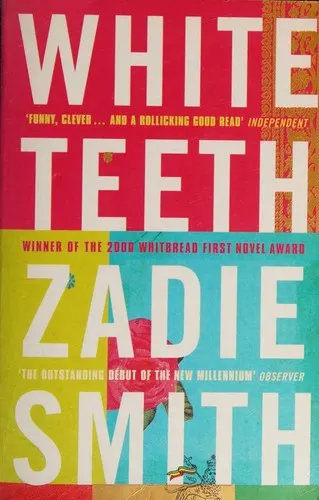
Zadie Smith’s prize-laden debut proves that the immense, coincidence-rich social novel did not end with Dickens. Beginning with Archie Jones at a moment of absurd despair, it expands into the intertwined lives of the Jones and Iqbal families, carrying private embarrassments and inherited convictions across generations and through multicultural London.
Smith shares Dickens’s appetite: for crowded rooms, outrageous secondary characters, comic names, public arguments, sudden pathos, and the secret histories concealed inside ordinary households. Her sentences continually turn observation into comedy, yet the comedy never erases her interest in belonging, self-invention, and the burdens people unknowingly pass to their children. White Teeth has remained beloved because its exuberance is not decorative—it is the form taken by a city too various for tidy realism. Anyone who delighted in Our Mutual Friend’s teeming human network should experience the sheer pleasure of watching Smith build one for modern London.