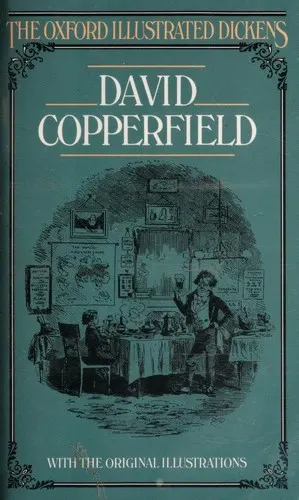
Books like David Copperfield
John Irving’s A Prayer for Owen Meany begins far from Dickens’s London, yet it comes closest to recreating the experience of being swept through a life by an irresistible retrospective voice. Alongside two more direct descendants of Dickens, it offers the same rare compound: comic abundance, intimate sorrow, social anger, and characters who become permanent residents of the imagination.
If you liked David Copperfield, you’ll love these
Not lookalikes — kindred books. Each one shares something essential with David Copperfield, and we tell you exactly what.
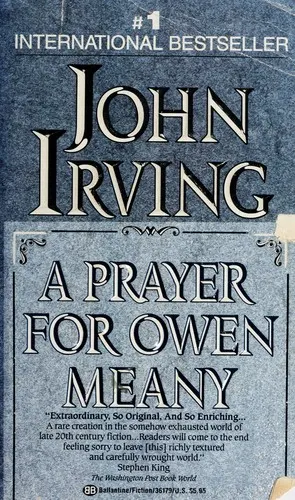
Irving gives us another narrator looking backward, trying to understand how one extraordinary friendship shaped his life. Like David Copperfield, the novel moves effortlessly between huge comic set pieces and wounds whose consequences emerge only gradually. Its eccentrics are not decorative: every absurd mannerism, family story, and recurring joke gathers emotional force.
Owen himself—tiny, commanding, uncannily certain—is one of those characters readers argue about and remember for decades. Irving’s long, carefully engineered narrative rewards the same trust Dickens asks of us: apparent digressions return with startling purpose. Few modern novels match its combination of rambunctious storytelling and devastating design.
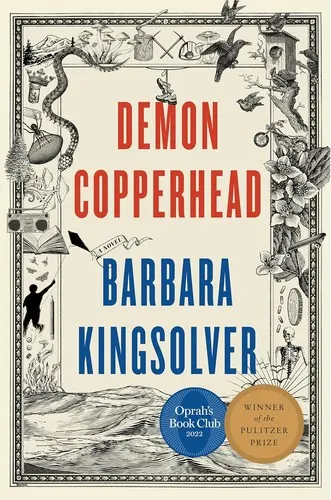
Kingsolver does not merely update David Copperfield; she answers it. Demon narrates his childhood in Appalachia with the same essential weapon David possesses: a voice capable of turning deprivation into sharp observation without disguising the deprivation. He is funny because he is intelligent, and compelling because storytelling is one of the ways he refuses to be erased.
The novel translates Dickens’s fury at institutions that fail children into an indictment of foster care, economic abandonment, and the opioid catastrophe. Yet it remains a buoyant, character-filled story rather than a tract. Winner of both the Pulitzer Prize and the Women’s Prize for Fiction, it proves how alive Dickens’s moral architecture remains—and how powerfully it can illuminate lives in contemporary America.

If what you loved was the feeling of accompanying David across decades—watching embarrassment, desire, accident, and belated understanding make a person—Boyne offers that same long companionship. Cyril Avery’s life unfolds through episodes at once farcical and painful, while Irish society changes around him. The comedy can be brazen; the loneliness beneath it is exact.
Boyne also shares Dickens’s gift for bringing minor characters onstage at full voltage. Encounters that initially seem merely outrageous acquire unexpected weight, and coincidence becomes less a contrivance than a way of showing how stubbornly lives remain entangled. Widely cherished by readers, this is a big-hearted, compulsively readable novel that earns its emotion over a lifetime rather than demanding it cheaply.