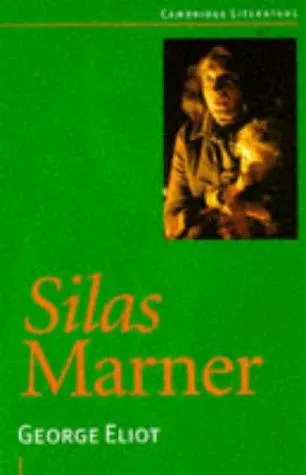
Books like Silas Marner
And it is Eliot’s quiet alchemy that lingers: painstaking work, lonely lives, ordinary objects charged with feeling, and affection becoming a form of moral rescue. These three novels achieve comparable wonders without merely repeating her story.
If you liked Silas Marner, you’ll love these
Not lookalikes — kindred books. Each one shares something essential with Silas Marner, and we tell you exactly what.
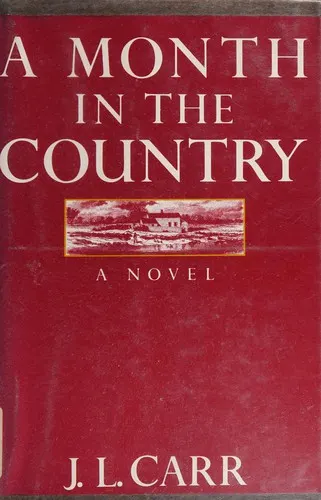
Like Silas Marner, this brief, beautifully proportioned novel understands restoration as something almost imperceptible. A damaged veteran arrives in a Yorkshire village to uncover a medieval painting; through patient work, small kindnesses, and the rhythms of communal life, the world slowly becomes habitable again.
Carr shares Eliot’s gift for making modest labor morally luminous. The novel is funny, restrained, and shadowed by the knowledge that happiness may be recognized only afterward. Shortlisted for the Booker Prize and winner of the Guardian Fiction Prize, it has become a classic of quiet English fiction: a small book with an astonishing emotional afterlife.
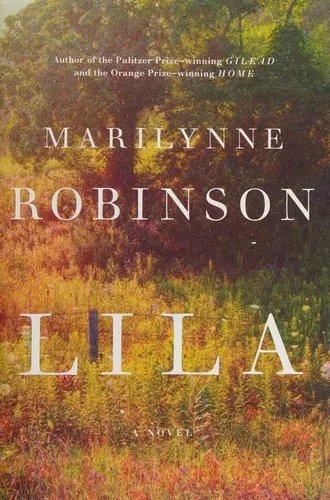
Lila has spent her life at the edge of society, suspicious of comfort and wary of every kindness. When she enters the orbit of an elderly minister in an Iowa town, Robinson examines what it costs such a person to trust—not only another human being, but the possibility that she possesses an inviolable worth.
A reader who loves Eliot’s compassionate scrutiny of poverty, exclusion, and reluctant attachment will recognize a kindred moral intelligence here. Robinson gives washing, gardening, and rough hands the same dignity Eliot gives Silas’s weaving. Winner of the National Book Critics Circle Award, Lila is austere, tender, and intellectually fearless: a profound novel about grace that never makes grace easy.

Ogawa’s novel begins with a housekeeper assigned to a mathematician whose memory lasts only eighty minutes. Each encounter must therefore begin again, and the fragile household they form depends upon repeated acts of attention: notes pinned to clothing, carefully prepared meals, numbers discovered in shoes and birthdays.
Its kinship with Silas Marner lies in its exact emotional scale. Both books show how a closed life can be enlarged through daily care, and both transform seemingly cold abstractions—gold, weaving, mathematics—into languages of intimacy. Ogawa’s lucid, delicate prose refuses melodrama; the result is one of those rare beloved novels whose gentleness reveals, rather than softens, the pain beneath it.