
Books like Atonement
What draws readers back is its haunting collision of beauty and culpability: the hope that a story might recover what a careless act destroyed, and the knowledge that it cannot. These novels exert a similarly delayed, devastating power.
If you liked Atonement, you’ll love these
Not lookalikes — kindred books. Each one shares something essential with Atonement, and we tell you exactly what.

An elderly man discovers a diary from the summer of 1900 and is forced to revisit the moment when, as a boy, he carried messages between adults whose desires he only dimly understood. Like Atonement, Hartley’s novel makes innocence dangerous: a child misreads the adult world, class decorum disguises cruelty, and understanding arrives decades too late.
Its celebrated opening—“The past is a foreign country”—has endured because the entire novel earns it. Hartley’s calm, lucid prose tightens almost imperceptibly around the reader; what begins as a sunlit memory becomes a study of complicity, shame, and the lifelong cost of being used. Few novels match Atonement so closely in making retrospection feel both like revelation and punishment.
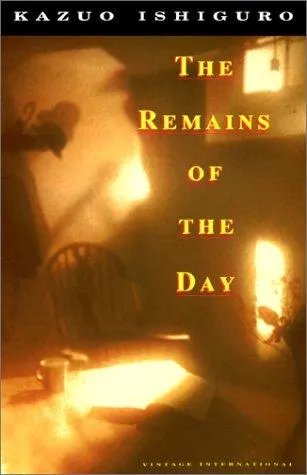
Stevens, an English butler taking a rare motoring holiday, begins to reconsider his years of devoted service to a powerful aristocrat. The journey’s true drama lies in what his polished narration avoids: political judgment, emotional surrender, and the possibility that dignity has been confused with self-erasure.
Atonement readers will recognize the exquisite tension between elegant language and unbearable knowledge. Ishiguro, who won the Booker Prize for this novel and later the Nobel, lets omissions accumulate until restraint itself becomes tragic. The book’s final pages are famous for their quiet force; by then, every impeccably chosen word seems to contain a life that might have been lived.
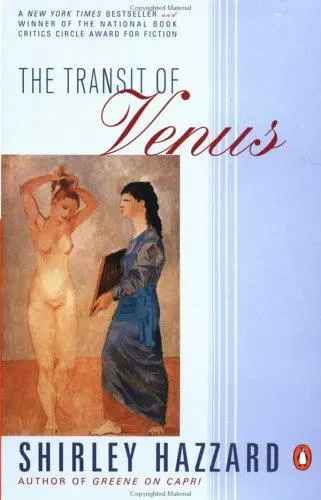
Two orphaned Australian sisters arrive in postwar England, entering a social world of love, ambition, privilege, and concealed calculation. Hazzard moves across decades with extraordinary assurance, planting apparently casual sentences whose significance may not become clear until hundreds of pages later.
That architectural precision is the deepest kinship with Atonement: both novels make time an instrument of suspense and rereading a radically different experience. Yet Hazzard’s voice is entirely her own—compressed, glittering, and mercilessly intelligent. Winner of the National Book Critics Circle Award and cherished by generations of writers, The Transit of Venus is one of those rare novels whose design becomes visible only as it closes around you.