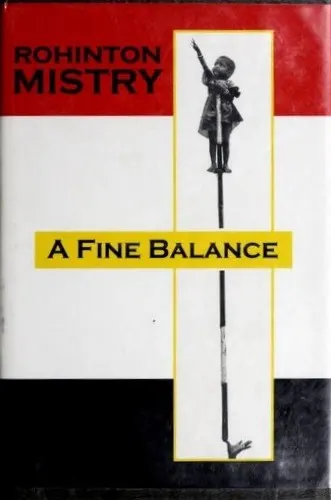
Books like A Fine Balance
Readers devoted to A Fine Balance want social injustice rendered not as an argument but as lived experience: crowded rooms, improvised jokes, fragile loyalties, and ordinary decency made precious by the forces arrayed against it. These novels offer that same union of panoramic vision and piercing intimacy.
If you liked A Fine Balance, you’ll love these
Not lookalikes — kindred books. Each one shares something essential with A Fine Balance, and we tell you exactly what.
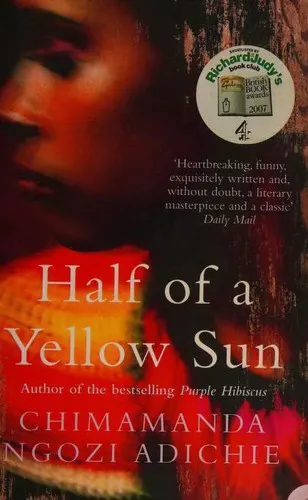
Adichie shares Mistry’s gift for making history enter through the kitchen door. Beginning in 1960s Nigeria, the novel gathers a village boy, a university professor, his charismatic partner, and an English expatriate into an intimate circle as the country moves toward the Biafran War. Political upheaval registers in meals, love affairs, loyalties, humiliations, and the changing meanings of home.
Winner of the Women’s Prize and later voted its “Best of the Best,” Half of a Yellow Sun earns its stature through moral and emotional range. It can be witty, sensuous, and companionable, then quietly expose how privilege, nationalism, and violence alter people. Like A Fine Balance, it makes you fiercely attached to characters without promising that attachment will protect you.

Read this for the part of A Fine Balance that understands dignity in material terms: a room of one’s own, reliable work, a chair placed where one chooses. Mohun Biswas, born into poverty in colonial Trinidad, spends his life resisting absorption into other people’s households and expectations. He is vain, irritable, funny, unlucky, and magnificently persistent.
Naipaul’s breakthrough novel has endured as a landmark of postcolonial fiction because its comedy never cheapens hardship. Every leaking roof, bad job, family quarrel, and small acquisition carries the weight of a struggle for independence. Mr Biswas is less saintly than Mistry’s sufferers and therefore wonderfully alive; by the end, his modest ambitions possess the grandeur of an epic.
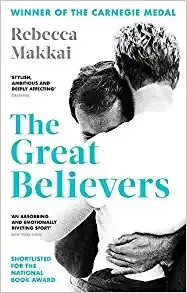
Makkai’s novel finds, in a different catastrophe, the same painful balance between devastation and the stubborn business of living. It opens amid Chicago’s AIDS crisis, inside a community already learning the rituals of illness and mourning. Yet the book’s pulse comes from friendship: teasing, jealousy, art, parties, practical care, and the improvised families people build when institutions fail them.
A Pulitzer finalist and winner of the Carnegie Medal, The Great Believers is admired not merely because it memorializes loss, but because it restores density and individuality to lives too often reduced to statistics. Its intricate structure reveals how grief travels through time without turning its characters into symbols. If A Fine Balance left you bereft because its people had become companions, Makkai’s humane, absorbing novel can do the same.