Author
Books like Ursula K. Le Guin
24 books we recommend to Ursula K. Le Guin readers, drawn from The Left Hand of Darkness, The Ones Who Walk Away from Omelas, The Dispossessed, A Wizard of Earthsea, The Lathe of Heaven, The Tombs of Atuan, Tehanu, Lavinia and The Telling — each with the reason why.
If you loved The Left Hand of Darkness
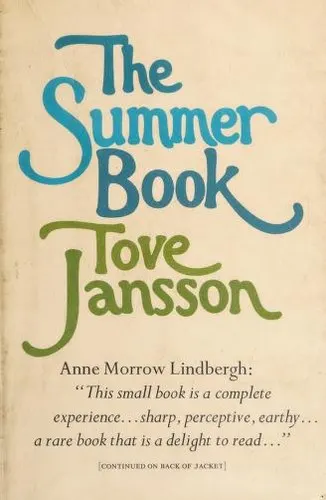
An elderly artist and her six-year-old granddaughter spend a summer together on an island in the Gulf of Finland. Their conversations are funny, prickly and tender without ever becoming sentimental; each must learn the other’s private rules while weather and landscape quietly govern what is possible.
Jansson shares Le Guin’s gift for making restraint feel profound. A clipped exchange, a change in wind or an unspoken concession can carry the weight of a declaration. Long cherished beyond Jansson’s famous Moomin books, this slender classic offers the same rare pleasure as The Left Hand of Darkness: intimacy emerging between formidable, irreducibly different people.
Eleanor Arnason sends an Earth expedition to meet the people of an inhabited planet, then refuses the usual colonial adventure. Anthropologist Lixia and the native woman Nia observe one another with intelligence, irritation and imperfect sympathy; neither exists merely to validate the other’s ideas.
Arnason builds social arrangements from economics, biology, folklore and everyday labor rather than from a single provocative premise. The result is anthropology as drama: every custom alters how friendship, sex, violence and community can be understood. Winner of the inaugural James Tiptree Jr. Award, the novel is an underread landmark of feminist science fiction—and perhaps the closest anyone has come to Le Guin’s combination of intellectual rigor and humane curiosity.
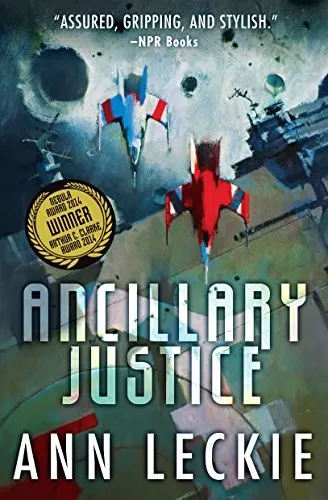
Breq appears to be one woman, but she was once the consciousness of an enormous imperial troop carrier, simultaneously inhabiting thousands of bodies. Leckie turns that startling perspective into an intimate question: what remains of a person when power, memory and identity have been stripped apart?
Like Le Guin, she uses language to unsettle assumptions rather than merely discussing them. Breq’s culture defaults to feminine pronouns, leaving readers unable to sort characters automatically by gender; meanwhile, the supposedly civilized Radch empire exposes itself through its manners, hierarchies and acts of annexation. The book’s unprecedented sweep of the Hugo, Nebula and Arthur C. Clarke awards reflected more than novelty. Beneath its audacious machinery is a fiercely controlled novel about loyalty—and the dangerous moment when genuine regard becomes stronger than obedience.
If you loved The Ones Who Walk Away from Omelas

Yeong-hye’s refusal begins almost wordlessly, prompted by a dream; the people around her respond as though her private decision were an attack on the social order. Like Le Guin, Han reveals the coercion hidden inside ordinary respectability: family love, good manners, and common sense become instruments for forcing a dissenter back into place.
The novel’s shifting viewpoints never grant readers an easy, authoritative explanation. We must decide whether Yeong-hye’s refusal is liberation, self-erasure, illness, protest—or something that defeats those categories. Winner of the 2016 International Booker Prize, this spare, ferocious novel turns walking away into an act at once ethically compelling and painfully unresolved.
Kathy H. introduces herself as a “carer” and remembers an apparently idyllic English boarding school. Yet her tranquil, conversational narration is threaded with unexplained rules and euphemisms. Ishiguro makes the reader participate in decoding them, much as Le Guin makes us inspect the moral machinery beneath Omelas’s happiness.
What makes this Booker-shortlisted novel devastating is its restraint. It does not thunder against injustice; it shows how people learn to speak gently around it, make accommodations, and cherish ordinary happiness inside a system they scarcely know how to challenge. One of Ishiguro’s defining novels, it leaves the same stubborn question as *Omelas*: once you understand what comfort costs, what forms of acceptance—or refusal—remain possible?

Aboard the Six-Thousand Ship, human and humanoid workers give numbered statements to an investigating committee. Their testimony concerns labor, memory, strange objects brought aboard, and the troubling possibility that an efficient social order may have misunderstood what a person is.
Ravn’s brief, fragmentary novel shares Le Guin’s ability to make speculative fiction function like a philosophical trap. Every deposition subtly changes the terms of judgment: productivity may be a kind of captivity, longing may signal freedom, and the supposedly artificial workers may possess the richest inner lives. Shortlisted for the International Booker Prize, *The Employees* is eerie, funny, and crystalline—a book small enough to read quickly but capacious enough to keep rearranging your moral intuitions afterward.
If you loved The Dispossessed
On the ocean moon Shora, the Sharers have built an egalitarian, ecologically intimate culture without property, hierarchy, or institutional violence. Slonczewski makes that society as materially convincing as Anarres: its principles live in language, child-rearing, scientific practice, and daily work rather than in slogans.
What makes this Campbell Memorial Award winner exceptional is the pressure it places on its ideals. When an expansionist power turns toward Shora, nonviolence becomes not a badge of moral purity but a demanding technology of resistance. Slonczewski, herself a biologist, gives the novel’s ecological thinking unusual authority, while the Sharers’ fierce internal arguments prevent them from becoming saintly abstractions. Few novels have carried forward Le Guin’s fusion of anthropology, science, and anarchist ethics so persuasively.
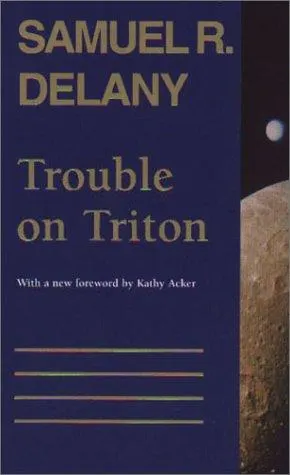
Delany’s subtitle, “An Ambiguous Heterotopia,” deliberately answers Le Guin’s “Ambiguous Utopia.” Triton offers astonishing freedom: people can alter their bodies, genders, affiliations, and living arrangements, while neighborhoods organize themselves around almost any shared preference. Yet its protagonist, Bron, remains aggrieved and dissatisfied. The question is no longer merely whether society can liberate a person, but whether a person can endure the freedom and reciprocity liberation requires.
Delany’s wit is sharper and his method more abrasive than Le Guin’s. He turns political theory inward, examining vanity, resentment, desire, and the habit of treating other people as supporting characters. The result is a major work of New Wave science fiction and one of the most searching literary conversations with The Dispossessed ever written. Reading it feels less like visiting another utopia than discovering the argument Le Guin’s novel makes possible.
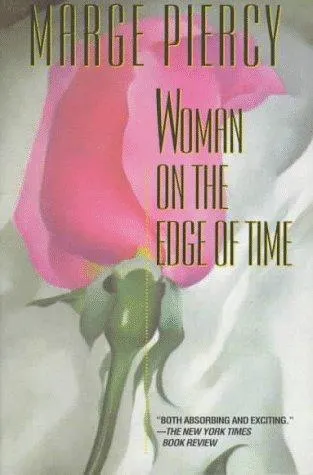
Connie Ramos begins in a world that has stripped her of credibility and control; from that brutal immediacy, Piercy opens a connection to a possible future organized around communal labor, ecological restraint, shared child-rearing, and participatory decision-making. Like Le Guin, she knows that a political vision becomes believable through kitchens, arguments, sexual arrangements, boring chores, and the distribution of care.
But Piercy gives utopian speculation the urgency of a struggle over who gets to define reality. Connie’s encounters with the future are inseparable from poverty, racism, psychiatric power, and the institutional language used to silence her. A landmark of feminist speculative fiction, the novel has retained devoted readers because its imagined society is inviting without being frictionless—and because its anger at the present never overwhelms its capacity to imagine otherwise. If The Dispossessed made political possibility feel intimate, Woman on the Edge of Time makes it feel fiercely necessary.
If you loved A Wizard of Earthsea
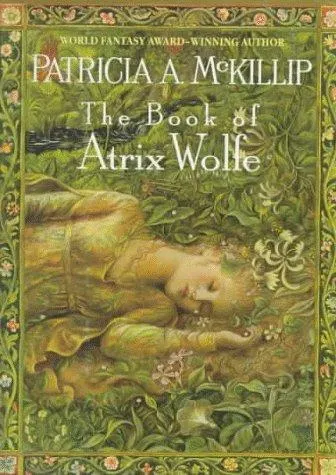
Atrix Wolfe is a great mage who, desperate to end a war, creates something terrible—and then withdraws from the world rather than face what his power has done. If Ged’s confrontation with his shadow was the heart of Earthsea for you, Atrix’s burden will feel piercingly familiar: magic cannot excuse its maker from responsibility.
McKillip writes more lushly than Le Guin, but with the same trust in silence, symbol, and the old gravity of fairy tales. A World Fantasy Life Achievement honoree, she could make enchantment feel at once numinous and psychologically exact. This compact, haunting novel is among the clearest demonstrations of her gift: every marvel leads back to guilt, compassion, and repair.
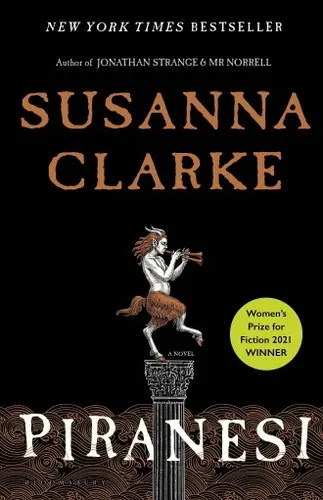
Piranesi lives in an apparently endless House of marble halls, statues, birds, and invading tides. He records its wonders with patient devotion; only one other living person regularly appears. The pleasure lies not merely in solving the House but in inhabiting Piranesi’s extraordinary consciousness—humble, attentive, and open to awe.
That quality should speak directly to readers who loved Le Guin’s belief that wisdom begins in seeing clearly rather than mastering everything. Clarke’s prose is lucid and ceremonious, and her magic feels sacred without becoming vague. Winner of the Women’s Prize for Fiction, Piranesi has already inspired the fierce affection usually reserved for much older classics. It is brief, strange, and difficult to leave behind.
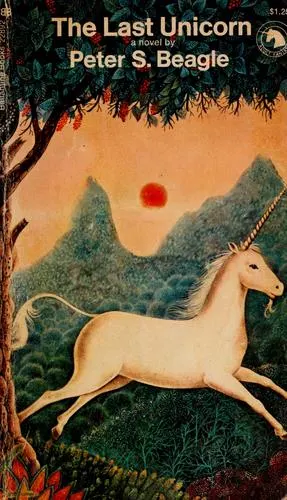
In a lilac wood, a unicorn overhears that she may be the last of her kind and leaves the safety of home to discover whether it is true. From that pristine opening, Beagle creates a quest whose deepest subject is the cost of becoming conscious of loss.
Earthsea readers will recognize the balance: myth without bombast, beauty sharpened by mortality, and wisdom that never hardens into a lesson. Beagle is also funnier and more playful than the title’s melancholy reputation suggests; his sentences can turn from sly comedy to heartbreak in a breath. The Last Unicorn has endured as one of fantasy’s most beloved classics because it understands that enchantment matters most when it changes how we bear the ordinary world.
If you loved The Lathe of Heaven

No novel more exhilaratingly captures the sensation of ordinary reality quietly losing its authority. After a disastrous mission, objects begin reverting to earlier forms, time behaves badly, and the survivors receive cryptic messages from something called Ubik. Dick makes every coffee pot, coin, and advertisement feel metaphysically suspect.
Like Le Guin, he uses reality-bending not as a gimmick but to ask who controls the world we experience—and whether anyone can be trusted with that power. The tone is brasher and more darkly comic than The Lathe of Heaven, yet beneath the pulp velocity lies the same existential unease. Widely regarded as one of Dick’s masterpieces, Ubik is the rare cult classic whose audacity still feels undiminished.
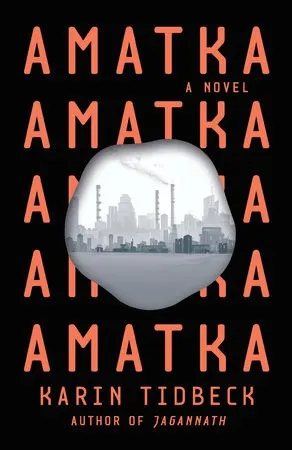
In the austere colony of Amatka, objects must be repeatedly named and labeled or they may lose their form. Into this precarious society comes Vanja, ostensibly to conduct market research, who gradually discovers how much collective discipline is required to keep both matter and political order intact.
Amatka reverses the mechanism of The Lathe of Heaven: instead of dreams rewriting reality, language holds it together. But it shares Le Guin’s fascination with the moral consequences of imposing a single vision on everyone else. Tidbeck’s clean, restrained prose makes the strangest events feel inevitable, while Vanja’s quiet vulnerability gives the philosophical puzzle a human pulse. This is compact, haunting speculative fiction of unusual originality—the kind of novel readers press on one another because too few people have discovered it.
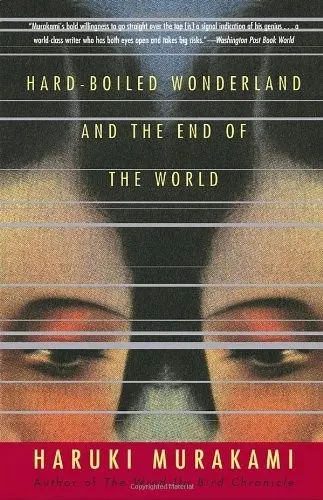
Murakami alternates between two enigmas: a sardonic data specialist descending into a bizarre technological conspiracy, and a newcomer to a walled town where shadows are severed from their owners. The connection between these worlds slowly becomes the novel’s great emotional and metaphysical question.
A reader who loved George Orr’s passivity, compassion, and uncertain footing will recognize Murakami’s gift for placing a gentle, unheroic consciousness inside impossible circumstances. Both novels ask whether a painless, harmonious world is worth the surrender of something essential in the self. Dreamlike without becoming vague, playful without trivializing its stakes, this early Murakami favorite achieves a haunting balance between cerebral invention and genuine heartbreak.
If you loved The Tombs of Atuan
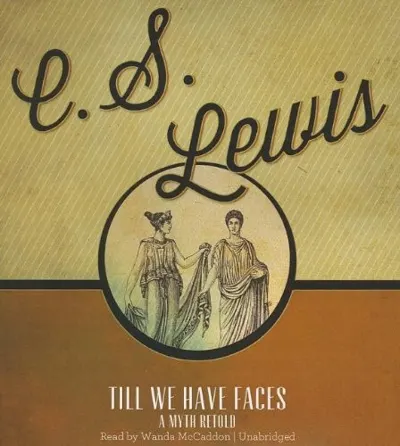
Orual, an aging queen, writes an accusation against the gods. Her grievance begins with her beautiful sister Psyche, whose fate becomes entangled with sacrifice, religious authority, and commands that appear cruel or incomprehensible. The result is not a pious fable but a fierce examination of what people call love when they want to possess, protect, or define another person.
A reader moved by Tenar’s struggle between her assigned sacred role and her buried self will recognize Orual’s battle with masks, names, and divine silence. Yet Lewis approaches that struggle through a formidable, wounded voice: intelligent enough to prosecute the gods, and honest enough to endanger her own case. Often regarded as Lewis’s finest novel—and the one he himself valued most highly—it has the density of myth and the intimacy of confession. Its final emotional force is difficult to shake.
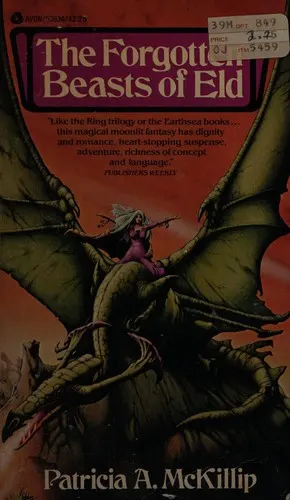
High on a mountain, the wizard Sybel lives among legendary creatures summoned and held by the power of their true names. Self-contained and remote, she seems complete until a man brings her an infant to raise, drawing human attachment and political violence into her carefully governed solitude.
McKillip’s kinship with Le Guin lies in her moral precision. Magic is never mere ornament: naming grants power, power creates obligations, and anger can become another kind of captivity. Sybel has Tenar’s austerity and formidable inwardness, but her story explores a different temptation—the desire to answer injury with perfect control. McKillip’s crystalline prose can make a single beast, gesture, or winter landscape feel archetypal without losing emotional specificity. A World Fantasy Award winner with generations of devoted readers, this is one of fantasy’s great compact novels: beautiful, severe, and merciless about the cost of treating any living soul as a possession.
If you loved Tehanu
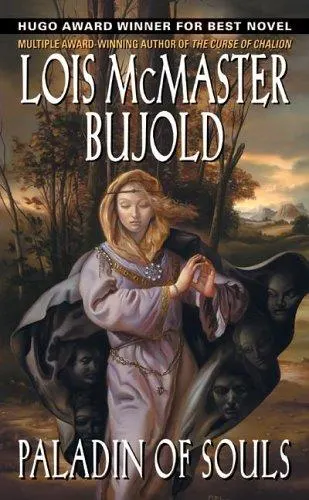
Ista has already played the roles assigned to her—wife, queen, invalid, madwoman—and now, in middle age, wants a life not defined by other people’s uses for her. She escapes court under the respectable pretext of a pilgrimage, only to discover that divine attention can be as troublesome as human control.
Like Tehanu, Bujold’s novel treats an older woman’s anger and experience as sources of knowledge rather than obstacles to adventure. Its theology is wonderfully concrete: holiness involves bodies, caregiving, embarrassment, appetite, and consent. Yet the book is more exuberant than Tehanu, with dry comedy and gathering momentum. Its Hugo and Nebula awards reflect how successfully Bujold made a middle-aged woman’s reclamation of herself feel not like a corrective footnote to fantasy, but one of the genre’s great quests.
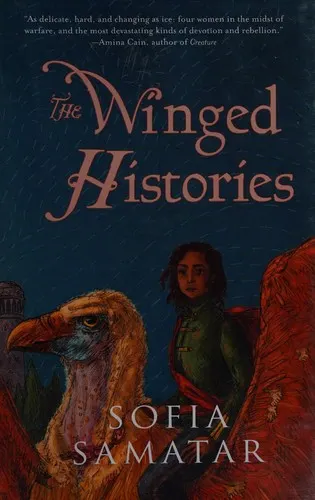
Most epics turn women into symbols and war into a clean sequence of glorious acts. Sofia Samatar breaks that machinery open. Through four sharply different women—a soldier, a scholar, a poet, and an aristocrat—she asks who gets to make history, whose language becomes authoritative, and what violence looks like to those who must live inside its consequences.
A reader who loved Tehanu’s challenge to the heroic assumptions of Earthsea will recognize the same intellectual ferocity here. Samatar does not merely replace male heroes with female ones; she questions the stories that manufacture heroes at all. Her prose is sensuous, fragmentary, and startlingly precise, moving among songs, letters, memories, and arguments. The Winged Histories has become a touchstone of literary fantasy because it offers the rare pleasure of watching an entire invented world reconsider the terms on which it was imagined.
If you loved Lavinia
Cassandra speaks while the heroic story of Troy closes around her, examining how a society teaches itself to prefer glorious lies to unbearable truths. Like Le Guin, Wolf strips war of its epic radiance and redirects attention toward palace rooms, private compromises, women’s knowledge, and the machinery that turns fear into public destiny.
Wolf’s voice is fiercer and more compressed than Le Guin’s, but it has the same authority: this is not a modern character wearing antique costume, but an ancient consciousness made startlingly present. A landmark of twentieth-century mythic revision, Cassandra is essential for anyone moved by Lavinia’s quiet refusal to remain what a male poet made her.
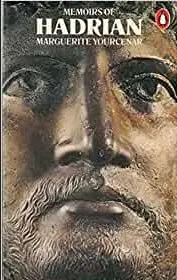
The dying emperor Hadrian writes to his successor, attempting to understand the life he has governed as carefully—and imperfectly—as he governed Rome. Yourcenar’s great achievement is the one Le Guin accomplishes in Lavinia: she crosses the apparent distance of two millennia without flattening the past into either pageantry or contemporary allegory.
Here are the same pleasures of lucid, meditative prose; politics understood through households and bodies; and a narrator contemplating mortality from inside a civilization that assumes its own permanence. Widely regarded as Yourcenar’s masterpiece, Memoirs of Hadrian makes historical imagination feel almost like resurrection. Readers who loved Lavinia’s wisdom about rule, fate, love, and death should not miss it.
If you loved The Telling
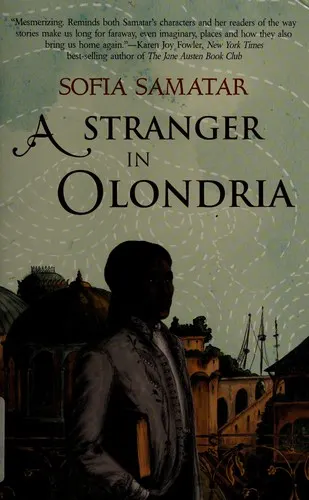
Jevick grows up captivated by a country he knows through its language and books, and Samatar makes that longing almost tactile: writing carries the allure of spice, ceremony, travel, and forbidden intimacy. Yet the novel never assumes literacy is superior to oral tradition. Like Le Guin, Samatar asks what kinds of experience official forms of knowledge preserve—and what they silence.
This World Fantasy Award-winning debut has become beloved for prose at once lush and exact. Its cultures feel inhabited rather than diagrammed, and its deepest revelations arrive through listening. Anyone who treasured The Telling’s patient discovery of a civilization’s inner life should not miss it.
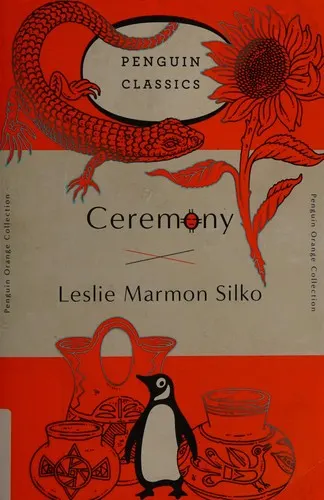
Silko begins with Tayo, a Laguna Pueblo veteran returning from war to a drought-stricken home, unable to separate private suffering from the damage done to his community and land. Prose, poetry, memory, and traditional narratives flow into one another because the stories here are not artifacts: they are ceremonies that must remain responsive to the present if they are to heal.
That is the profound kinship with The Telling. Both novels reject the idea that tradition means static doctrine; both understand survival as the creative continuation of relationship. Since 1977, Ceremony has become a touchstone of Native American literature, but its stature can obscure how immediate and moving it is. Reading it changes what the word “story” can mean.
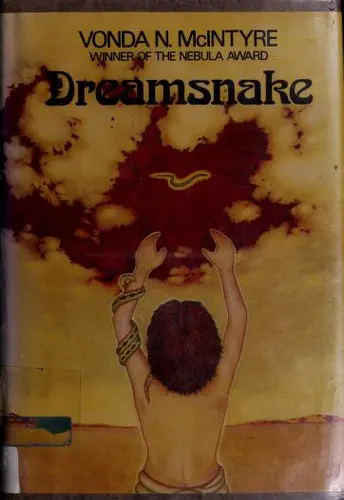
At the opening, a healer called Snake tends a desperately ill child while the child’s frightened family watches her strange healing creatures with suspicion. McIntyre builds the novel’s moral world from that encounter: expertise requires humility, trust must cross cultural boundaries, and precious knowledge can be destroyed by fear.
Snake’s heroism lies not in mastery but in attention. As she travels, every community has its own assumptions, and McIntyre lets those differences emerge through behavior rather than exposition—the same humane, observant intelligence that makes Sutty such a compelling protagonist. Winner of the Hugo, Nebula, and Locus awards, Dreamsnake remains one of science fiction’s finest novels of healing and non-coercive courage.