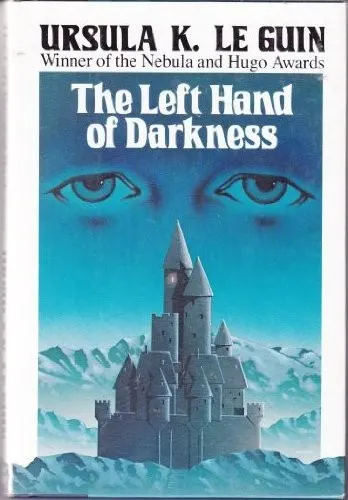
Books like The Left Hand of Darkness
Begin on a tiny Finnish island, with no spaceship or envoy in sight. The Summer Book belongs here because Le Guin’s deepest achievement is not exotic world-building but the patient discovery of another person: three very different novels below preserve that moral and imaginative force.
If you liked The Left Hand of Darkness, you’ll love these
Not lookalikes — kindred books. Each one shares something essential with The Left Hand of Darkness, and we tell you exactly what.
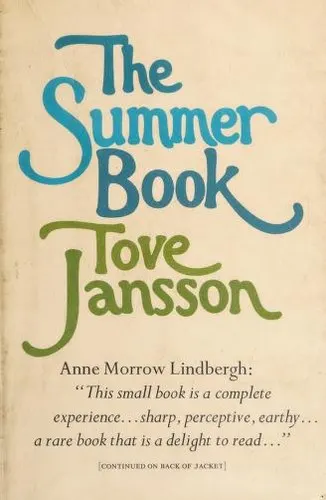
An elderly artist and her six-year-old granddaughter spend a summer together on an island in the Gulf of Finland. Their conversations are funny, prickly and tender without ever becoming sentimental; each must learn the other’s private rules while weather and landscape quietly govern what is possible.
Jansson shares Le Guin’s gift for making restraint feel profound. A clipped exchange, a change in wind or an unspoken concession can carry the weight of a declaration. Long cherished beyond Jansson’s famous Moomin books, this slender classic offers the same rare pleasure as The Left Hand of Darkness: intimacy emerging between formidable, irreducibly different people.
Eleanor Arnason sends an Earth expedition to meet the people of an inhabited planet, then refuses the usual colonial adventure. Anthropologist Lixia and the native woman Nia observe one another with intelligence, irritation and imperfect sympathy; neither exists merely to validate the other’s ideas.
Arnason builds social arrangements from economics, biology, folklore and everyday labor rather than from a single provocative premise. The result is anthropology as drama: every custom alters how friendship, sex, violence and community can be understood. Winner of the inaugural James Tiptree Jr. Award, the novel is an underread landmark of feminist science fiction—and perhaps the closest anyone has come to Le Guin’s combination of intellectual rigor and humane curiosity.
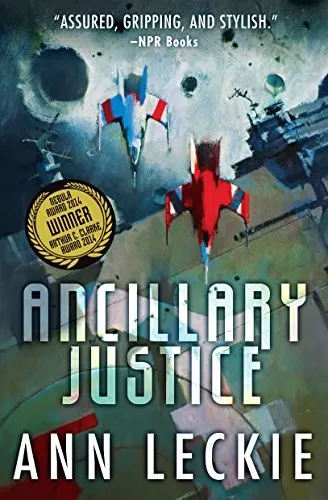
Breq appears to be one woman, but she was once the consciousness of an enormous imperial troop carrier, simultaneously inhabiting thousands of bodies. Leckie turns that startling perspective into an intimate question: what remains of a person when power, memory and identity have been stripped apart?
Like Le Guin, she uses language to unsettle assumptions rather than merely discussing them. Breq’s culture defaults to feminine pronouns, leaving readers unable to sort characters automatically by gender; meanwhile, the supposedly civilized Radch empire exposes itself through its manners, hierarchies and acts of annexation. The book’s unprecedented sweep of the Hugo, Nebula and Arthur C. Clarke awards reflected more than novelty. Beneath its audacious machinery is a fiercely controlled novel about loyalty—and the dangerous moment when genuine regard becomes stronger than obedience.