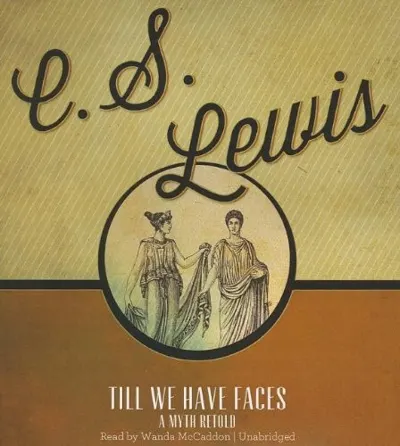
Books like Till We Have Faces
Each of these novels sets a solitary voice before a darkened shrine, certain it knows what love or heaven has done—until the act of speaking changes the accusation.
If you liked Till We Have Faces, you’ll love these
Not lookalikes — kindred books. Each one shares something essential with Till We Have Faces, and we tell you exactly what.
Le Guin gives a voice to the nearly silent princess of Virgil’s Aeneid, but the deepest resemblance to Till We Have Faces is not the classical setting. It is the eerie intimacy between mortal consciousness and sacred story: Lavinia senses that she is both a living woman and a figure shaped by powers she cannot fully comprehend.
Le Guin’s grave, translucent prose makes prophecy and ordinary affection feel equally real. Like Orual, Lavinia must distinguish love from possession and freedom from the role destiny has written for her. Winner of the Locus Award, this late Le Guin novel is quieter than her best-known work, but for many readers it is among her most beautiful: a book of startling spiritual poise that seems to speak from inside myth rather than merely revising it.
The surprise kinship here is the confessional voice. An elderly minister, knowing he will soon die, writes a long letter to the young son who will scarcely remember him. He intends to leave wisdom and blessing; instead, the letter gradually reveals the jealousies, evasions, and unresolved grief within a fundamentally good man.
That is precisely the moral territory Lewis explores through Orual: we become visible to ourselves only when our carefully justified account begins to crack. Robinson treats theology not as ornament but as lived experience—an effort to perceive grace while pride keeps clouding the glass. Her sentences possess a luminous patience, attentive to water, light, memory, and the strangeness of being alive. Gilead won both the Pulitzer Prize and the National Book Critics Circle Award, and its devoted reputation is deserved: it is one of the rare novels that can make self-knowledge feel like revelation.
If what gripped you most was Orual’s case against the gods, read The Sparrow. It opens after a disastrous Jesuit mission to another world: the sole survivor, Emilio Sandoz, has returned physically shattered and apparently unwilling to explain what happened. The novel then returns to the mission’s hopeful beginnings, when beauty, friendship, and coincidence seem to form an unmistakable summons.
Russell makes the problem of divine hiddenness brutally concrete. What does faith mean when providence appears first seductive and then monstrous? Can a person tell the truth about suffering without turning pain into a complete explanation of reality? Like Till We Have Faces, this Arthur C. Clarke Award winner refuses both easy piety and easy disbelief. Its warmth makes its theological ordeal more devastating, and its fiercely loyal readers tend to remember Emilio not as an argument but as someone whose wounded questions became their own.