
Books like Woman on the Edge of Time
The Female Man attacks patriarchy in splintered, furious bursts; The Fifth Sacred Thing builds a community and asks whether its ideals can survive danger. Alongside them, I Who Have Never Known Men offers the starkest version of Piercy’s struggle over who controls reality, bodies, and hope.
If you liked Woman on the Edge of Time, you’ll love these
Not lookalikes — kindred books. Each one shares something essential with Woman on the Edge of Time, and we tell you exactly what.

Russ presents four women living under radically different arrangements of sex, work, power, and possibility, then lets their realities collide. Like Piercy, she uses speculative worlds not as predictions but as arguments: every apparently “natural” gender role becomes strange once another way of living appears beside it.
The kinship is also formal and emotional. Russ shifts voices, mocks respectable assumptions, and turns female anger into intellectual energy. The result is sharper-edged and more fragmented than Woman on the Edge of Time, but similarly unwilling to separate private suffering from political design. A foundational work of feminist science fiction, it remains startling because its experiments still feel dangerous rather than dutiful.
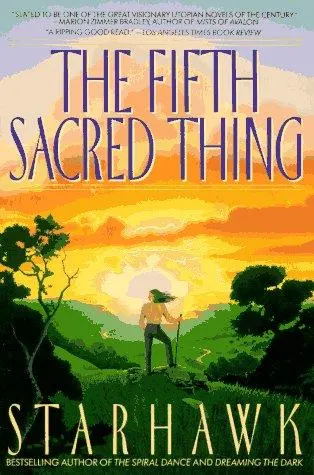
In a future San Francisco organized around ecological stewardship, neighborhood councils, shared ritual, and radical pluralism, an older woman belongs to a society trying to live without domination. Beyond it stands a culture built on scarcity, hierarchy, and force.
What makes this more than a simple utopia-versus-dystopia story is Starhawk’s insistence on testing the attractive society’s hardest commitments. Can nonviolence answer organized brutality? Can consensus function under pressure? What does resistance owe to the values it hopes to preserve? Those questions continue Piercy’s deepest project: imagining liberation concretely, then refusing to protect it from contradiction. Long cherished in activist and ecofeminist circles, the novel offers the rare pleasure of entering a political dream capacious enough to argue with.

A young woman grows up underground among thirty-nine older women, guarded by men and denied any explanation for their captivity. From that severe premise, Harpman creates a haunting inquiry into what remains of a person when society withholds history, intimacy, knowledge, and even a coherent account of the world.
Readers moved by Connie Ramos’s struggle against institutions that claim authority over her mind and body will recognize the central terror here: power does not merely imprison; it tries to determine what counts as reality. Yet Harpman’s narrator develops an austere, stubborn freedom through observation and thought. This Belgian novel’s revival from cult obscurity has inspired unusually fierce devotion, and rightly so. Its mysteries linger, but its true force lies in making consciousness itself feel like an act of resistance.