Author
Books like Neal Stephenson
11 books we recommend to Neal Stephenson readers, drawn from Snow Crash, Cryptonomicon, Anathem and Quicksilver — each with the reason why.
If you loved Snow Crash
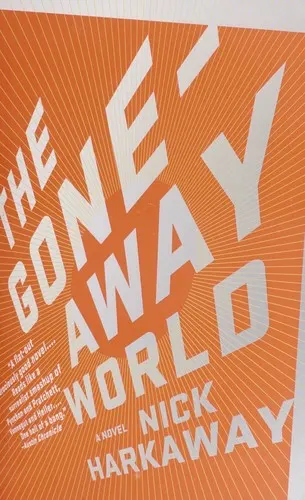
Harkaway shares Stephenson’s gift for making intellectual excess exhilarating. His narrator joins a band of combat-trained truckers crossing a catastrophically altered world, but the real attraction is the novel’s fearless accumulation: kung fu, corporate euphemism, friendship, metaphysics, bureaucracy, and weapons whose consequences outstrip anyone’s vocabulary.
Like Snow Crash, it is very funny until the joke opens beneath your feet. Harkaway sustains the gonzo momentum while giving the book an unexpectedly powerful emotional center. This acclaimed debut became a cult favorite because it delivers the rare maximalist thrill of a novel that seems willing to try anything—and somehow earns its extravagance.
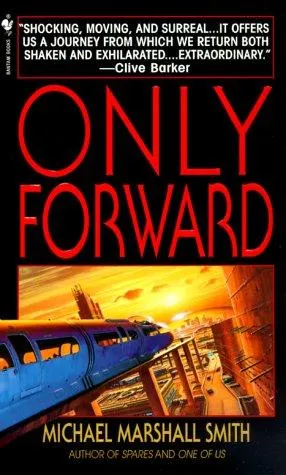
Stark lives in a city divided into bizarre neighborhoods, each organized around an obsession; when a child disappears, his search begins as wisecracking futuristic detective fiction and grows stranger from there. Smith writes with the same snap and swagger that make Hiro Protagonist’s adventures addictive: jokes land quickly, inventions arrive without laborious explanation, and the narrator’s cool competence is continually tested by a world too peculiar to master.
What distinguishes Only Forward—and won it the Philip K. Dick Award—is its startling tonal reach. The comic invention gradually reveals tenderness, dread, and philosophical ambition. It remains a fiercely beloved cult novel because readers expecting stylish fun discover something far more haunting.
Read this not simply because it helped define cyberpunk, but because its language produces the intoxication that Snow Crash both inherits and gleefully lampoons. Gibson drops the ruined hacker Case into a job involving mercenaries, artificial intelligence, and cyberspace, then lets implication do the work: every sentence feels compressed, neon-lit, and electrically alive.
Where Stephenson is expansive and comic, Gibson is cool, elliptical, and dreamlike. Yet both make jargon musical and turn abstract systems into visceral environments. Neuromancer became the first novel to win the Hugo, Nebula, and Philip K. Dick awards because it did more than predict technological imagery—it changed science fiction’s imaginative vocabulary. Snow Crash is even richer when you have felt the current it was answering.
If you loved Cryptonomicon
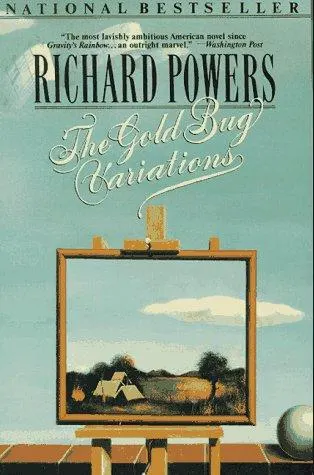
Powers braids genetics, Bach, information theory, and two love stories into a novel about the exhilaration—and cost—of deciphering patterns. Its ideas are not decorative: musical counterpoint shapes the narrative, DNA becomes both scientific object and metaphor, and intellectual discovery acquires genuine emotional force.
This is quieter than Cryptonomicon but equally intoxicated by brilliant minds at work. Long cherished as one of Powers’s early masterpieces, it offers the rare experience of feeling that a difficult concept has become intimate, beautiful, and urgently human.
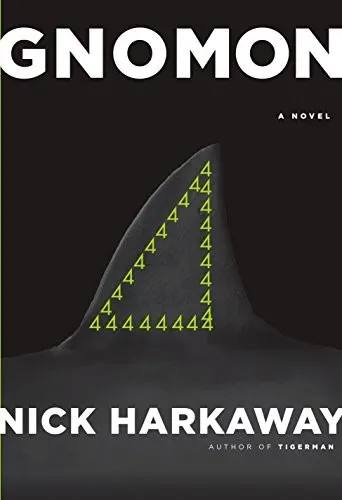
An investigator examines the death of a dissident inside a near-future surveillance state and encounters several apparently separate lives embedded in the evidence. From there, Gnomon becomes an audacious puzzle box of identities, stories, algorithms, and competing realities.
Harkaway matches Stephenson’s appetite for huge ideas, black comedy, ingenious machinery, and readers willing to keep several interpretive models running at once. Yet beneath its dazzling architecture lies a fierce argument about privacy, cognition, and freedom. Its devoted admirers treat it as a modern maximalist landmark; finishing it feels less like solving a puzzle than discovering the puzzle was studying you.
If you loved Anathem
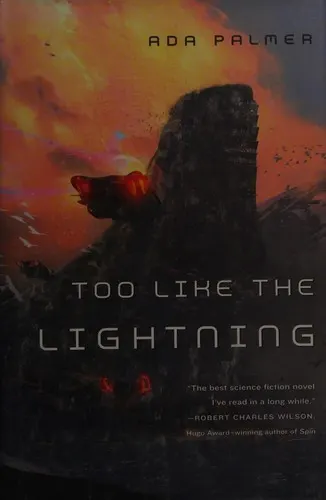
Palmer offers the same exhilarating bargain Stephenson does: tolerate initial disorientation and a whole political-philosophical world will gradually become legible. Its twenty-fifth century has discarded nations for voluntary global affiliations, while its narrator—learned, theatrical, compromised—addresses the reader as though writing an Enlightenment history.
What makes it an essential match is not the future-world density but the way ideas acquire force. Debates about theology, governance, gender, punishment, and historical progress are also struggles over who gets to shape reality. A Hugo finalist and the opening of the fiercely admired Terra Ignota quartet, it inspires the kind of obsessive rereading Anathem does: once Palmer’s design becomes visible, not continuing feels almost impossible.
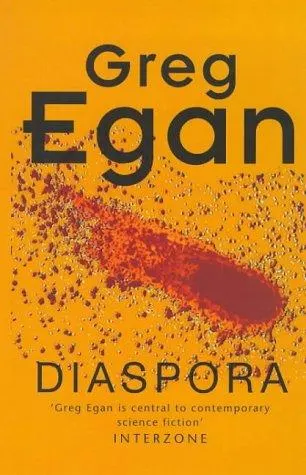
If Anathem’s most intoxicating passages were those where mathematics, cosmology, and metaphysics ceased to be decoration and became the adventure itself, read Diaspora. It begins with the creation of Yatima, a digital person born inside a virtual polis, and proceeds from first principles: What counts as a self? What does embodiment mean? How much of the universe can intelligence truly comprehend?
Egan is among hard science fiction’s most uncompromising and revered writers, and Diaspora is a touchstone of the field because its conceptual audacity is matched by genuine cosmic awe. It asks work of the reader, but repays that work with vistas few novels even attempt. Anathem makes intellectual discovery thrilling; Diaspora makes it sublime.

Hesse’s final novel imagines Castalia, an elite community devoted to scholarship, contemplation, and the Glass Bead Game—an elusive synthesis of music, mathematics, philosophy, and cultural memory. Its deepest kinship with Anathem lies in its scrutiny of the disciplined life: the beauty of withdrawing from ordinary society to preserve thought, and the danger that such purity may become sterile or evasive.
The novel follows Joseph Knecht’s formation within this order with patient, cumulative power. Rather than merely praising intellectual devotion, Hesse tests its obligations to history and to people outside the cloister. Written by a future Nobel laureate and widely regarded as his culminating masterpiece, it is one of the rare novels that can make a life of thought feel both sacred and morally insufficient.
If you loved Quicksilver
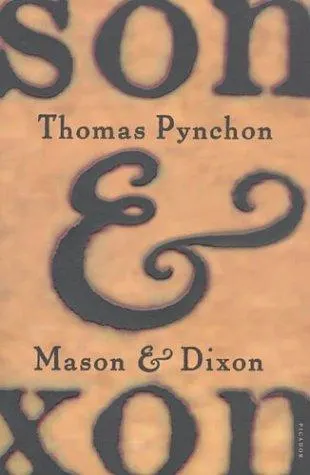
Pynchon turns the partnership of astronomer Charles Mason and surveyor Jeremiah Dixon into a funny, melancholy epic about how knowledge becomes power. Instruments, measurements, colonial commerce, and Enlightenment argument matter here—but so do tavern stories, mechanical marvels, bad jokes, and the friendship between two gloriously imperfect men.
Its antiquated, elastic prose demands attention, then becomes intoxicating: history seems to be invented aloud, with fact continually shading into folklore. Often regarded as one of Pynchon’s masterpieces, it offers the rare combination Quicksilver achieves so well—formidable learning transformed into exuberant entertainment.

For the bawdy, swashbuckling side of Quicksilver, read Barth’s enormous comic picaresque. Its hero, Ebenezer Cooke, is an extravagantly innocent poet dispatched to colonial Maryland, where nearly everyone proves to be a fraud, opportunist, storyteller, or some inventive combination of the three.
Barth piles up disguises, reversals, forged histories, obscene mishaps, and rhetorical fireworks until the novel becomes a joyful assault on the idea that history is orderly or trustworthy. A landmark of American postmodern fiction, it has inspired unusually devoted readers because its difficulty is inseparable from its fun. Few novels are this learned while behaving this badly.

Tokarczuk supplies the scale: hundreds of characters, competing faiths, trade routes, medicine, printing, court politics, and private desires all moving through eighteenth-century Europe. At the center is Jacob Frank, a charismatic religious figure whose growing following unsettles the boundaries among Judaism, Christianity, mysticism, and political calculation.
What connects it most deeply to Quicksilver is its fascination with ideas as material forces. Beliefs reorganize families; information travels through fragile networks; institutions struggle to control changes they only partly understand. Tokarczuk, a Nobel laureate, makes this immense architecture intimate through sharply observed lives and shifting perspectives. The result is not merely a historical panorama but a world one gradually learns to inhabit—and then resents having to leave.