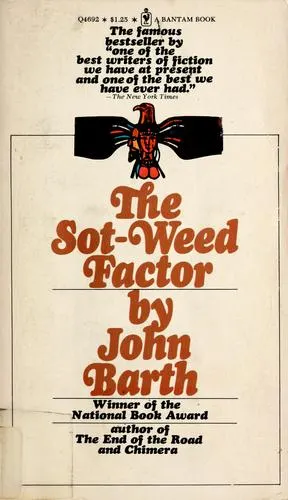
Books like The Sot-Weed Factor
The Sot-Weed Factor and Thomas Pynchon’s Mason & Dixon belong together as extravagantly comic reinventions of early America, built from antique language, dubious history, and inexhaustible narrative mischief.
If you liked The Sot-Weed Factor, you’ll love these
Not lookalikes — kindred books. Each one shares something essential with The Sot-Weed Factor, and we tell you exactly what.
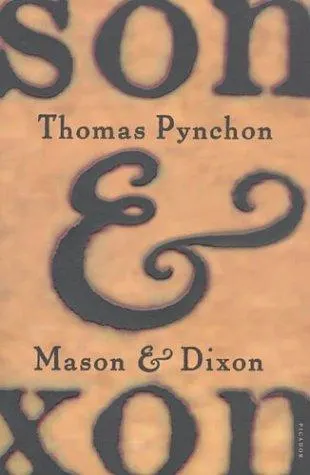
Pynchon turns the surveyors Charles Mason and Jeremiah Dixon into a magnificent comic pair wandering through a world where Enlightenment science, tavern yarns, political schemes, talking animals, and outright miracles coexist. Its faux-eighteenth-century prose does what Barth’s does: it makes archaism feel not dutiful but gleefully alive, packed with puns, digressions, songs, and voices clamoring to hijack the story.
Yet beneath the performance lies a moving inquiry into how measurements become borders and stories become national history. Widely regarded as one of Pynchon’s greatest novels, it offers the rare combination Barth perfected: intellectual intricacy, sustained absurdity, and unexpected tenderness.
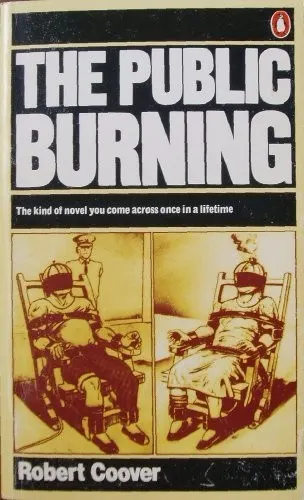
If Barth’s colonial Maryland taught you to distrust the dignified official version of America, Coover’s ferocious carnival will finish the job. Taking the Rosenberg execution as its starting point, he lets Richard Nixon narrate portions of a grotesque national pageant presided over by an obscene, swaggering Uncle Sam.
The comedy is more savage than Barth’s, but the governing pleasure is similar: historical documents, patriotic rhetoric, popular entertainment, and private fantasy collide until “history” reveals itself as a theatrical production. Long a cult landmark of American postmodernism, The Public Burning is politically audacious and verbally uninhibited—the kind of novel whose sheer nerve makes most historical fiction seem timid.
Potocki’s eighteenth-century labyrinth begins with a young officer crossing Spain and rapidly becomes a hypnotic chain of seductions, hauntings, philosophical disputes, criminal confessions, and stories nested inside other stories. What connects it most deeply to Barth is its delight in narrative proliferation: every apparent destination opens another door, every authoritative account acquires a rival, and the reader’s confusion becomes part of the comedy.
This European cult classic is at once picaresque adventure, Gothic entertainment, Enlightenment thought experiment, and grand joke about humanity’s need to explain itself. Readers devoted to it tend to sound like discoverers of a secret continent; anyone who loves Barth’s abundance should want its map.