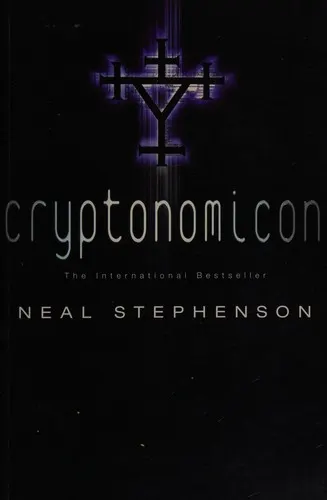
Books like Cryptonomicon
Systems. These novels share Cryptonomicon’s deepest pleasure: watching codes, money, science, history, and human eccentricity lock together into one enormous, unexpectedly entertaining machine.
If you liked Cryptonomicon, you’ll love these
Not lookalikes — kindred books. Each one shares something essential with Cryptonomicon, and we tell you exactly what.
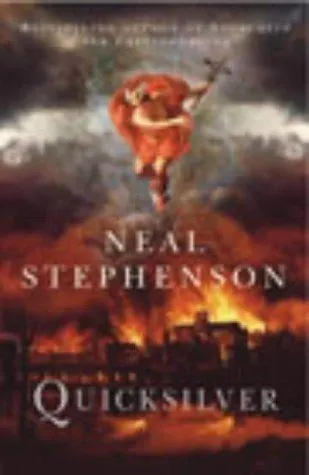
The natural next step—not simply because Stephenson wrote it, but because it expands Cryptonomicon’s intellectual ancestry into a vast historical comedy. The Waterhouse and Shaftoe family lines reappear as seventeenth-century science, finance, politics, and cryptography begin evolving into the modern world.
Stephenson makes disputes over calculus and currency feel as consequential as battles, while surrounding them with rogues, savants, conspirators, and magnificently stubborn women. Winner of the Arthur C. Clarke Award and the opening of the Baroque Cycle, Quicksilver is the book for anyone who wished Cryptonomicon’s digressions were even bigger.
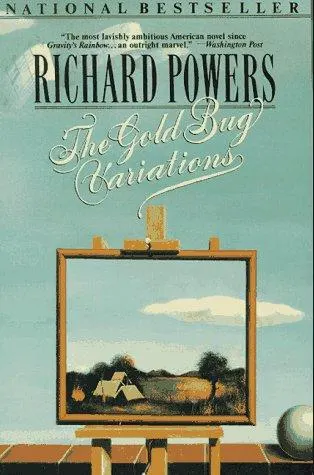
Powers braids genetics, Bach, information theory, and two love stories into a novel about the exhilaration—and cost—of deciphering patterns. Its ideas are not decorative: musical counterpoint shapes the narrative, DNA becomes both scientific object and metaphor, and intellectual discovery acquires genuine emotional force.
This is quieter than Cryptonomicon but equally intoxicated by brilliant minds at work. Long cherished as one of Powers’s early masterpieces, it offers the rare experience of feeling that a difficult concept has become intimate, beautiful, and urgently human.
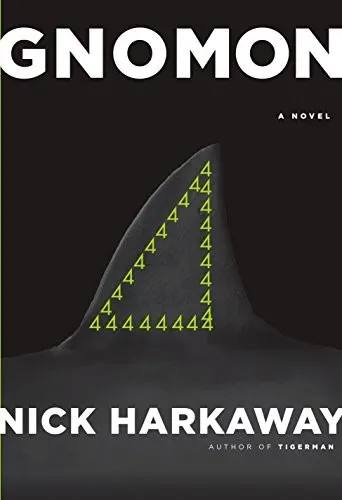
An investigator examines the death of a dissident inside a near-future surveillance state and encounters several apparently separate lives embedded in the evidence. From there, Gnomon becomes an audacious puzzle box of identities, stories, algorithms, and competing realities.
Harkaway matches Stephenson’s appetite for huge ideas, black comedy, ingenious machinery, and readers willing to keep several interpretive models running at once. Yet beneath its dazzling architecture lies a fierce argument about privacy, cognition, and freedom. Its devoted admirers treat it as a modern maximalist landmark; finishing it feels less like solving a puzzle than discovering the puzzle was studying you.