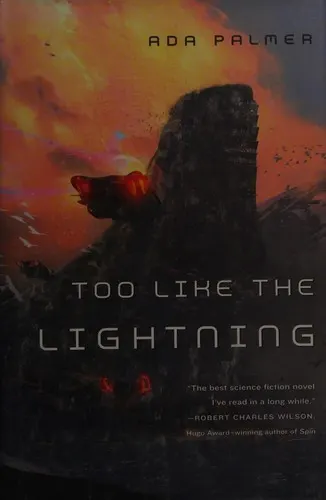
Books like Too Like the Lightning
Its deepest pleasures arrive on rereading: Mycroft’s omissions become evidence, jokes become arguments, and the apparently stable utopia reveals another contested layer of history, theology, and power. These three novels offer similarly inexhaustible rewards.
If you liked Too Like the Lightning, you’ll love these
Not lookalikes — kindred books. Each one shares something essential with Too Like the Lightning, and we tell you exactly what.
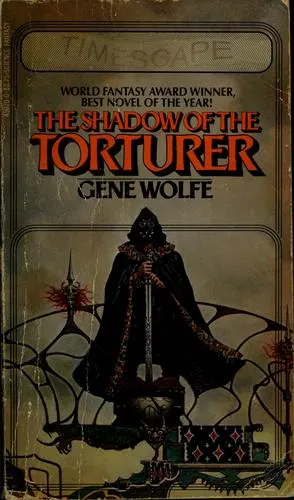
Severian, an apprentice in a torturers’ guild, writes his memoir from a future so remote that its advanced technology has become indistinguishable from antiquity. Like Mycroft, he is eloquent, compromised, and scrupulously truthful in ways that make every sentence suspect. What he emphasizes, mistranslates, or fails to understand matters as much as what he reports.
Wolfe makes the reader an active interpreter: archaic diction conceals science-fictional realities, embedded tales refract the main narrative, and casual details acquire enormous significance on rereading. The opening volume of The Book of the New Sun, widely regarded as one of speculative fiction’s supreme achievements, offers the same rare exhilaration as Palmer’s work—the discovery that the novel has been thinking several moves ahead of you all along.
Delany builds a galactic civilization from kinship systems, etiquette, desire, labor, language, and competing definitions of what it means to be human. Instead of stopping to explain this future, he forces you to inhabit its categories until your own assumptions about gender, family, and normality begin to feel provincial.
That is precisely the kind of intellectual vertigo Palmer creates with bash’ systems, set-sets, and revived Enlightenment philosophies. Yet Delany’s novel is also intensely sensuous and intimate: civilization-scale questions are felt through bodies, rooms, meals, and attraction. Long cherished by writers and serious readers of ambitious science fiction, it remains startlingly original decades after publication—a future that has not been domesticated by imitation.
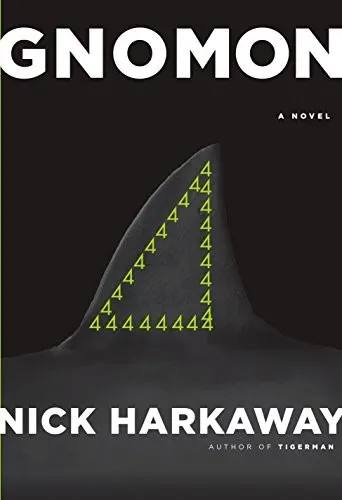
In a near-future Britain governed by an apparently benevolent system of total transparency, an investigator examines a death that occurred during a state interrogation. Inside the victim’s mind she encounters several elaborate lives, each persuasive enough to destabilize the reality surrounding it.
Gnomon shares Palmer’s delight in making political philosophy into a gripping narrative machine. Surveillance, democracy, consent, identity, and the seductive logic of utopia are not decorative themes; they determine the novel’s structure and demand judgment from the reader. Harkaway moves between voices and genres with audacious control, packing the book with symbols, traps, and delayed connections. It is a formidable puzzle, but also a furious defense of the unruly human mind—the sort of maximalist novel whose devotees immediately want someone else to read it so they can argue about what really happened.