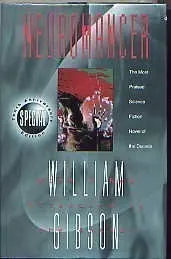
Books like Neuromancer
Neuromancer casts its strongest spell on readers who relish velocity, compressed language, moral grime, and futures that refuse to pause for explanation. These three novels preserve that exhilarating sense of being dropped into a world already running without you.
If you liked Neuromancer, you’ll love these
Not lookalikes — kindred books. Each one shares something essential with Neuromancer, and we tell you exactly what.
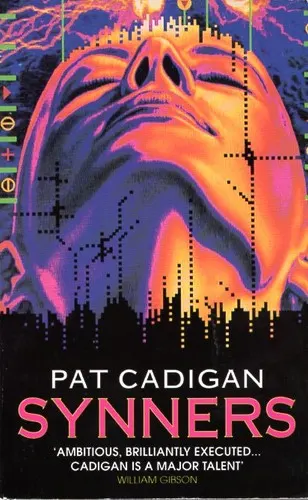
Cadigan matches Gibson’s ability to make technology feel less like hardware than a new condition of consciousness. Her hackers, artists, corporate operators, and music-video obsessives speak in charged, subcultural voices; the prose jumps channels as readily as their minds do. Where Neuromancer finds beauty in cyberspace’s cold geometry, Synners plunges into the messier question of what happens when media, desire, and the body become inseparable.
Winner of the Arthur C. Clarke Award and a defining cyberpunk novel in its own right, it has the movement’s streetwise intelligence without imitating Gibson’s silhouette. Its crowded opening gradually resolves into a fiercely human book about people remaking themselves faster than they can understand the consequences.
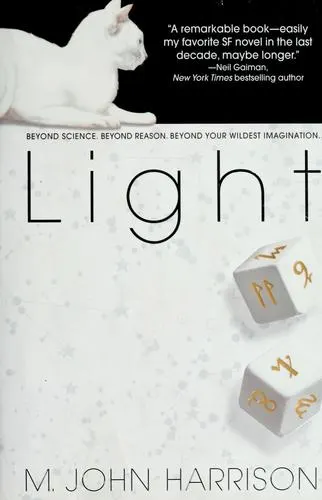
Read Light for the same intoxicating bewilderment Neuromancer produces: the conviction that every sentence opens onto a world too strange and extensive to be fully mapped. Harrison cuts between a haunted physicist near the end of the twentieth century and damaged lives in a remote, baroque future, trusting abrupt images, unexplained technologies, and black comedy to carry the reader forward.
But Harrison is even more hostile to comforting science-fictional grandeur. His universe is tawdry, sublime, cruel, and full of people trying to turn transcendence into another transaction. Winner of the James Tiptree Jr. Memorial Award and now a cult landmark of British SF, Light offers technological awe stripped of innocence. Few novels make incomprehension feel so seductive.
Maya Andreyeva is a journalist whose implanted equipment lets audiences receive her perceptions directly—and lets unseen authorities reach back into her mind. Carter takes Neuromancer’s fascination with mediated consciousness and makes it painfully intimate: every observation may be reporting, surveillance, manipulation, or an attempt to preserve a private self.
The prose is sensuous and exact, balancing political dread with an aching hunger for connection. Rather than Gibson’s outlaw cool, Carter gives the networked future emotional vulnerability: what does trust mean when experience itself can be edited or monitored? This Nebula-nominated debut became a fiercely cherished cult novel—and remained Carter’s only novel, giving it the aura of a singular transmission. Anyone drawn to the melancholy beneath Neuromancer’s chrome should seek it out.