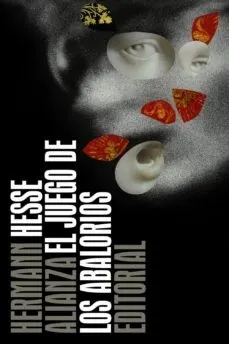
Books like The Glass Bead Game
Can a life dedicated to pure thought stay fully human, or must wisdom eventually leave its sanctuary and submit itself to the disorder of living? These three novels turn that question in strikingly different ways.
If you liked The Glass Bead Game, you’ll love these
Not lookalikes — kindred books. Each one shares something essential with The Glass Bead Game, and we tell you exactly what.
Mann offers the great dark counterpart to Hesse’s novel. Serenus Zeitblom recounts the life of the brilliant composer Adrian Leverkühn, whose austere pursuit of artistic innovation unfolds against Germany’s descent into catastrophe. As in The Glass Bead Game, music becomes a language for thinking about an entire civilization, while an earnest biographer struggles to understand a gifted, forbidding friend.
But where Hesse tests intellectual purity against ordinary life, Mann asks what happens when genius deliberately severs itself from warmth, fellowship, and moral responsibility. The musical discussions are not ornament: they make abstraction feel intoxicating, dangerous, and historically consequential. Widely regarded as one of Mann’s supreme achievements, Doctor Faustus is the novel to read if Castalia’s beauty left you wondering about its shadow.
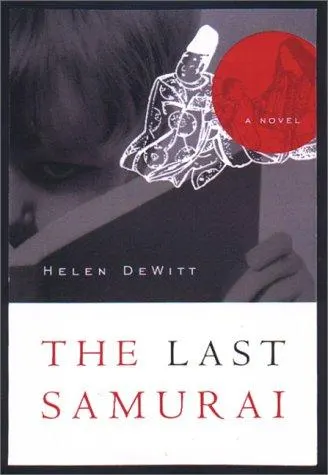
This cult masterpiece captures the exhilaration of learning more vividly than almost any contemporary novel. Sibylla, an intellectually ravenous single mother, raises her precocious son Ludo amid Greek, Japanese, mathematics, Icelandic sagas, and repeated viewings of Kurosawa’s Seven Samurai. Knowledge here is not a stately institution but a homemade survival system—improvised, comic, obsessive, and alive.
A lover of Hesse will recognize the dream of disciplines speaking to one another, yet DeWitt refuses to separate education from money, loneliness, parenthood, or the need for exemplary lives. Her formal daring is matched by emotional force, and the novel’s unusually devoted readership has grown steadily since its troubled initial publication. It feels like a Glass Bead Game rebuilt in a cramped apartment—and made urgent by love.
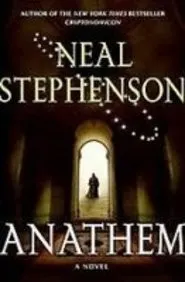
Behind the forbidding invented vocabulary lies one of the most absorbing novels ever written about communities devoted to thought. Its scholars live in secluded institutions, preserving mathematics, philosophy, and scientific inquiry while the outside world moves at a different tempo. Stephenson makes their rituals, rivalries, humor, and long arguments concrete enough that intellectual life acquires the texture of an adventure.
The crucial kinship with Hesse is not the cloistered setting but the pressure placed upon it: What is disciplined contemplation for, and when must the thinker re-enter history? Anathem gradually makes abstract reasoning feel suspenseful without cheapening it, joining metaphysics to loyalty, courage, and action. It is one of Stephenson’s most fiercely admired novels, and for readers who wished they could inhabit Castalia before interrogating its limits, it is nearly irresistible.