Author
Books like Joseph Conrad
12 books we recommend to Joseph Conrad readers, drawn from Heart of Darkness, Nostromo, Lord Jim, The Secret Agent and Under Western Eyes — each with the reason why.
If you loved Heart of Darkness
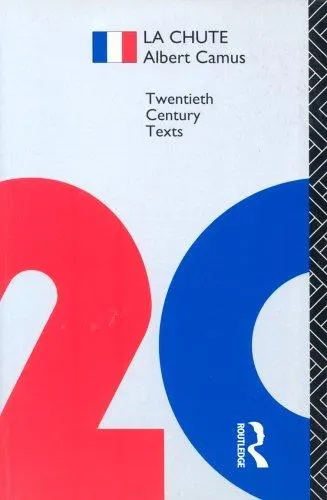
If Marlow’s storytelling gripped you because confession and self-exoneration become impossible to separate, meet Jean-Baptiste Clamence. In an Amsterdam bar, this charming stranger buttonholes a silent listener and begins recounting his exemplary former life. Every polished admission seems candid—until you notice how expertly he is arranging the courtroom.
Camus compresses Conrad’s moral unease into one brilliantly controlled voice. Clamence’s wit seduces even as his logic corrodes distinctions between guilt and innocence, speaker and audience. By the end, his real subject is not merely himself but the reader’s appetite for judging him. One of Camus’s most admired novels, it is short enough to read in a sitting and poisonous enough to remain active for years.
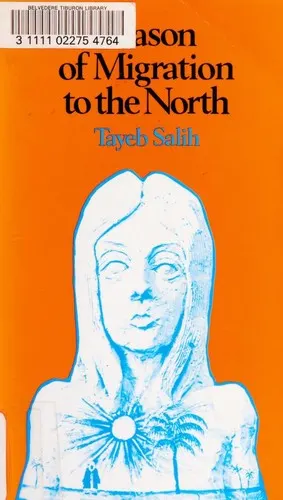
An unnamed Sudanese narrator returns from Europe to his village beside the Nile and encounters Mustafa Sa’eed, a newcomer whose reserve conceals a disturbing history. Salih takes the charged encounter between Europe and Africa that animates Heart of Darkness and reverses its current: here the enigmatic African has traveled into the imperial center, mastered its language, and learned how readily its fantasies can be turned against it.
Yet this is no tidy rebuttal to Conrad. Its stories nest inside one another; fascination compromises judgment; eloquence becomes both revelation and trap. Salih’s river landscape is sensuous and sustaining rather than Conrad’s blank menace, which makes the violence of colonial inheritance more intimate. Routinely regarded as a landmark of modern Arabic fiction, this slim novel does not answer Heart of Darkness so much as reopen it from the other shore.
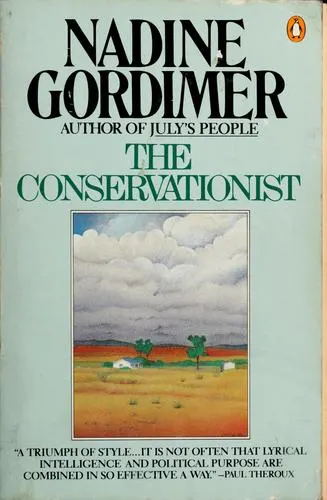
Mehring, a wealthy white industrialist, buys a South African farm and imagines himself its attentive steward. When a Black man’s body is found on the property, the land begins quietly contradicting its owner’s account of possession, order, and permanence.
Gordimer’s Booker Prize–winning novel offers the same unsettling friction between a protagonist’s cultivated self-image and the reality his language cannot master. But where Conrad gives us a journey, Gordimer creates a siege of consciousness: seasons turn, workers come and go, the veld burns and floods, while Mehring’s confident categories steadily lose authority. Her dense, shifting prose makes the farm feel less like scenery than an intelligence refusing ownership. Readers drawn to Conrad’s ability to make landscape, politics, and psychological delusion inseparable should not miss it.
If you loved Nostromo
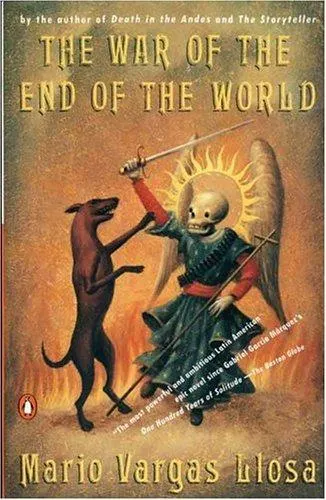
A prophetic preacher gathers Brazil’s dispossessed at Canudos; the young republic, unable to comprehend the settlement, imagines a vast conspiracy. From this collision Vargas Llosa builds one of the great political novels of the late twentieth century, and arguably his masterpiece.
Like Nostromo, it refuses to grant any faction a monopoly on truth. Revolutionaries, landowners, journalists, soldiers, and fanatics each see clearly enough to act—and too narrowly to understand what their actions create. Its many viewpoints generate the same terrible Conrad-like irony: history emerges not from a master plan but from incompatible convictions, material interests, vanity, and rumor. The scale is immense, yet even minor figures possess unforgettable moral weight. If you loved watching Costaguana become both a place and a collective delusion, Canudos is indispensable.
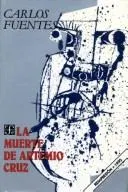
Artemio Cruz opens his eyes in a sickroom, surrounded by relatives and associates already maneuvering around his power. Fuentes then breaks consciousness into first, second, and third person, making a single man’s identity feel like evidence under interrogation.
This landmark of the Latin American Boom has Nostromo’s fascination with the point where heroic self-conceptions become inseparable from wealth and control. Fuentes is especially acute about retrospective mythmaking: Artemio’s memories do not simply disclose a life but compete to define it, much as Conrad’s shifting chronology turns Nostromo from man into legend and then questions the legend. The prose can be sensuous, accusatory, and exhilaratingly abrupt. Few novels expose more forcefully how a nation’s betrayed ideals may survive inside the very people who betrayed them.
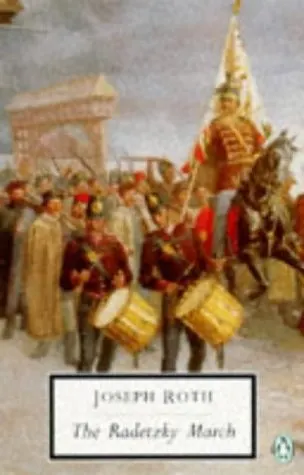
At Solferino, an infantry officer saves the young emperor and is rewarded with a title; almost at once, the official account begins falsifying what happened. From that superb opening, Roth follows three generations whose private lives become entangled with the rituals of the Austro-Hungarian Empire.
Roth’s masterpiece offers the same pleasure as Conrad’s quieter passages: immaculate narrative control, devastating irony, and sympathy untouched by sentimentality. Uniforms, ceremonies, portraits, debts, and military postings form an entire political theology, even as the society that believes in them begins to hollow out. Where Nostromo gives silver an almost supernatural authority, Roth lets imperial symbols govern people who half know they are obsolete. The novel is more restrained than Conrad’s, but its restraint makes every humiliation and flicker of loyalty cut deeper. To miss it is to miss one of European fiction’s most beautiful accounts of people living inside a doomed idea.
If you loved Lord Jim
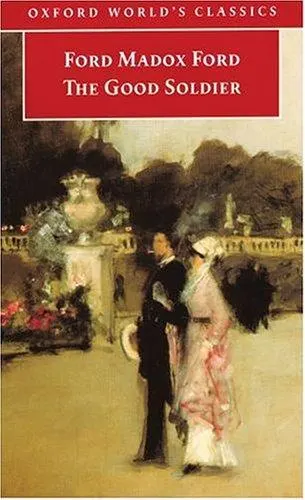
Ford—once Conrad’s literary collaborator—created one of modernism’s defining experiments in unreliable narration. John Dowell begins by promising the “saddest story” he knows, then recounts two intertwined marriages with such hesitations, revisions, and blind spots that the reader must reconstruct the emotional catastrophe for him.
Like Marlow, Dowell is less a transparent witness than a troubled instrument of judgment. His storytelling keeps shifting the moral weight among weakness, betrayal, innocence, and self-deception. The prose is deceptively conversational; the structure is exquisitely controlled. If Lord Jim made you relish the uncertainty between what happened and what a narrator needs to believe happened, The Good Soldier is indispensable.
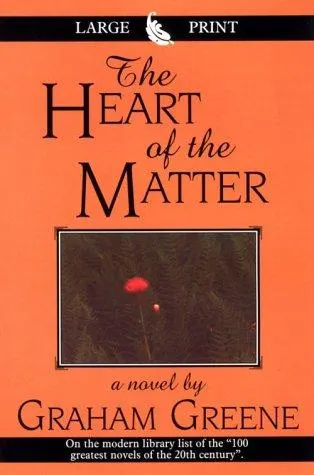
Major Scobie is a colonial policeman whose decency has hardened into a ruinous compulsion: he cannot bear to cause pain, yet every effort to protect others entangles him further. Greene makes pity feel not merely virtuous but perilous—a temptation capable of competing with duty, honesty, and faith.
Winner of the James Tait Black Memorial Prize and often counted among Greene’s finest novels, The Heart of the Matter shares Lord Jim’s consuming interest in a man measuring himself against an absolute code. But Greene’s spare, lucid sentences bring the ordeal almost unbearably close. Scobie’s conscience becomes a chamber from which there seems no clean exit, and few novels make moral anguish so gripping.
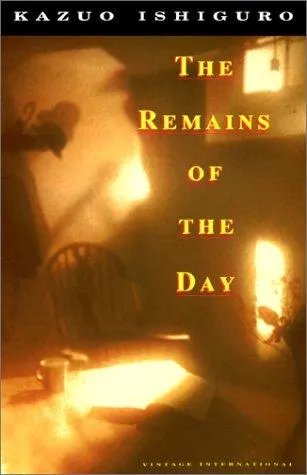
Stevens, an aging English butler, sets out on a short motoring holiday while reflecting on his years of service to a celebrated household. His meticulous voice—formal, reasonable, faintly defensive—gradually exposes the distance between devotion to an ideal and the courage required to examine it.
The kinship with Jim lies in the terrible authority of an imagined self. Both men organize their lives around a heroic conception of who they ought to be; both narratives ask whether loyalty to that conception is noble, evasive, or both. Ishiguro’s Booker Prize winner achieves its force through restraint rather than Conrad’s turbulence, allowing tiny verbal evasions to carry the pressure of confession. It is one of the great novels of belated self-knowledge, and its quietness makes its blows land harder.
If you loved The Secret Agent
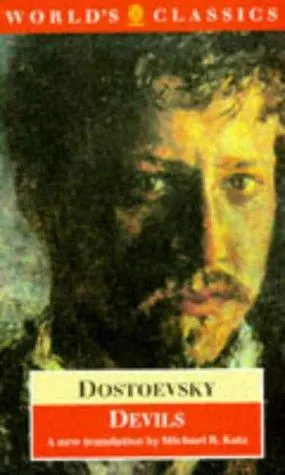
No novel more ferociously exposes the grubby human appetites hiding inside exalted political rhetoric. A provincial circle of radicals talks of liberation, but Dostoevsky hears vanity, resentment, boredom, and the desire to dominate. Like Conrad, he makes conspiracy both frightening and grotesquely comic.
The scale is larger and the temperature more feverish than in The Secret Agent, yet the kinship is unmistakable: ideology becomes lethal through weak, ridiculous, painfully recognizable people. Camus admired the book enough to adapt it for the stage, and its portrait of political possession has only grown more unnerving. Missing Demons means missing one of the great sources of the modern political novel.
Bowen’s wartime London is a city of blacked-out streets, damaged houses, overheard conversations, and loyalties that cannot be examined without changing them. Stella Rodney is told that the man she loves may be passing secrets to the enemy; the accusation turns intimacy itself into a form of surveillance.
A reader who admired how Conrad lets espionage seep into marriage and family life will recognize Bowen’s special cruelty. Her suspense comes less from pursuit than from pauses, evasions, and the terrible ambiguity of another person’s motives. Widely regarded as one of Bowen’s masterpieces, The Heat of the Day transforms the spy novel into a subtle, haunting inquiry into what love can know—and what it chooses not to know.
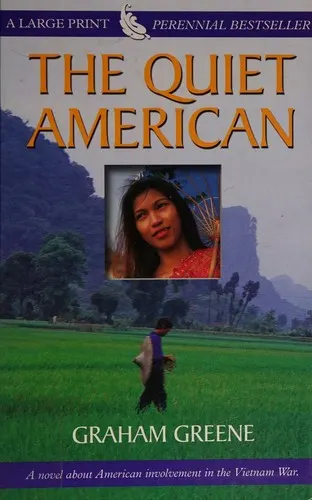
Greene begins with a death and then dismantles the comforting distinction between private jealousy and public catastrophe. In 1950s Vietnam, the weary British journalist Fowler watches an earnest young American arrive armed with political theories, good intentions, and a disastrous confidence in both.
What will delight a Conrad reader is Greene’s cold precision about innocence: it is not the opposite of guilt but often its most efficient disguise. The prose is lucid, the triangle of affection painfully convincing, and the political argument never becomes abstract because every belief exacts a human price. Often counted among Greene’s finest novels, The Quiet American is short enough to devour and morally complicated enough to remain lodged in the mind for years.