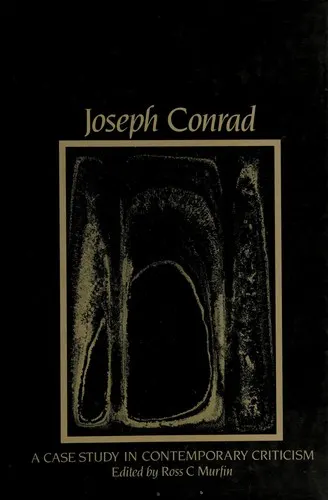
Books like Heart of Darkness
Each of these books is a dark mirror held at an angle: the speaker peers into it to judge another man, another country, another moral catastrophe—and slowly finds his own face staring back.
If you liked Heart of Darkness, you’ll love these
Not lookalikes — kindred books. Each one shares something essential with Heart of Darkness, and we tell you exactly what.
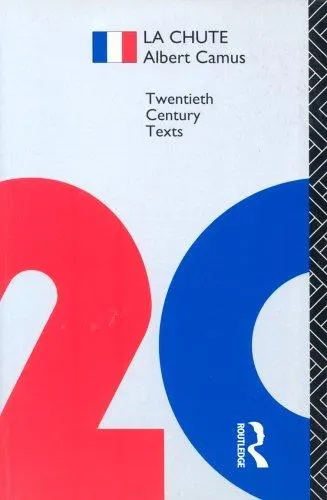
If Marlow’s storytelling gripped you because confession and self-exoneration become impossible to separate, meet Jean-Baptiste Clamence. In an Amsterdam bar, this charming stranger buttonholes a silent listener and begins recounting his exemplary former life. Every polished admission seems candid—until you notice how expertly he is arranging the courtroom.
Camus compresses Conrad’s moral unease into one brilliantly controlled voice. Clamence’s wit seduces even as his logic corrodes distinctions between guilt and innocence, speaker and audience. By the end, his real subject is not merely himself but the reader’s appetite for judging him. One of Camus’s most admired novels, it is short enough to read in a sitting and poisonous enough to remain active for years.
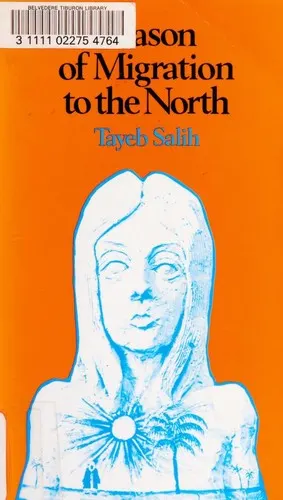
An unnamed Sudanese narrator returns from Europe to his village beside the Nile and encounters Mustafa Sa’eed, a newcomer whose reserve conceals a disturbing history. Salih takes the charged encounter between Europe and Africa that animates Heart of Darkness and reverses its current: here the enigmatic African has traveled into the imperial center, mastered its language, and learned how readily its fantasies can be turned against it.
Yet this is no tidy rebuttal to Conrad. Its stories nest inside one another; fascination compromises judgment; eloquence becomes both revelation and trap. Salih’s river landscape is sensuous and sustaining rather than Conrad’s blank menace, which makes the violence of colonial inheritance more intimate. Routinely regarded as a landmark of modern Arabic fiction, this slim novel does not answer Heart of Darkness so much as reopen it from the other shore.
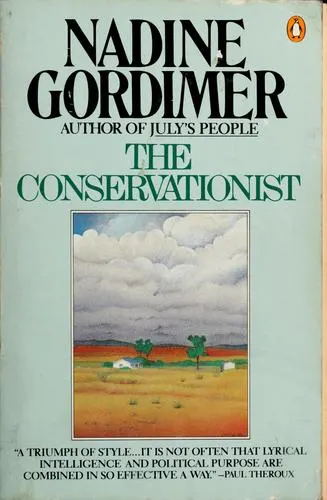
Mehring, a wealthy white industrialist, buys a South African farm and imagines himself its attentive steward. When a Black man’s body is found on the property, the land begins quietly contradicting its owner’s account of possession, order, and permanence.
Gordimer’s Booker Prize–winning novel offers the same unsettling friction between a protagonist’s cultivated self-image and the reality his language cannot master. But where Conrad gives us a journey, Gordimer creates a siege of consciousness: seasons turn, workers come and go, the veld burns and floods, while Mehring’s confident categories steadily lose authority. Her dense, shifting prose makes the farm feel less like scenery than an intelligence refusing ownership. Readers drawn to Conrad’s ability to make landscape, politics, and psychological delusion inseparable should not miss it.