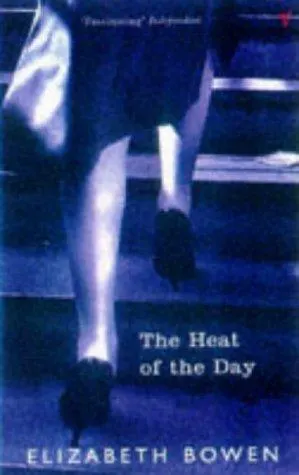
Books like The Heat of the Day
—because what lingers is not the espionage machinery but Bowen’s unsettling fusion of public crisis, private betrayal, and sentences that seem to know more than they will disclose. These three novels create that same charged experience in strikingly different ways.
If you liked The Heat of the Day, you’ll love these
Not lookalikes — kindred books. Each one shares something essential with The Heat of the Day, and we tell you exactly what.
During the Blitz, a prosperous businessman joins London’s Auxiliary Fire Service and enters the uneasy society of a station where class resentment, wounded pride, and personal history are already smouldering. The fires matter, but Green’s real subject is what emergency exposes in people—and what it allows them to keep hidden.
Like Bowen, Green makes ordinary conversation feel perilous: evasions carry more force than declarations, while abrupt, glinting prose catches emotion before it can compose itself. Long cherished as a writers’ writer, he turns wartime London into a moral pressure chamber. Caught is among the few Blitz novels whose psychological atmosphere can genuinely stand beside The Heat of the Day.
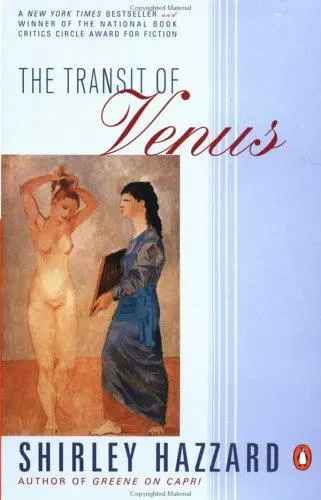
Two Australian sisters arrive in postwar England, where love, ambition, and dependence draw them into lives whose meanings emerge only gradually. Hazzard handles time with extraordinary authority: an apparently casual image may become decisive decades later, while the narration calmly anticipates consequences the characters cannot yet imagine.
A lover of Bowen will recognize the intelligence of every sentence—the compressed wit, the social precision, the sense that desire is both revelation and trap. Yet Hazzard’s vision is more sweeping and fateful, tracing the long afterlife of choices rather than the pressure of one historical moment. Winner of the National Book Critics Circle Award and sustained by unusually devoted readers, The Transit of Venus is the rare novel whose formal brilliance intensifies, rather than cools, its emotional power.
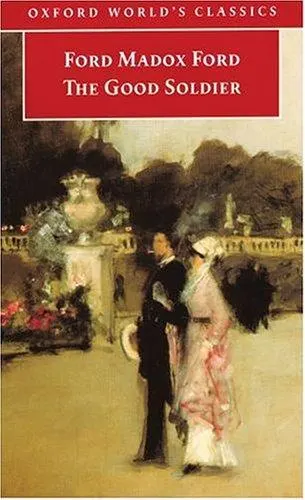
John Dowell begins by calling his account “the saddest story” he has ever heard, then tries to explain the intimate friendship between two affluent couples. His narrative doubles back, corrects itself, and discovers—almost despite him—that civilized manners can serve as an elaborate system for concealing appetite, pain, and betrayal.
This is the book for the reader who loved Bowen’s refusal to separate knowledge from intimacy. What does it mean to know another person? Is ignorance innocence, cowardice, or collaboration? Ford makes those questions suspenseful without relying on conventional mystery. A foundational modernist novel, The Good Soldier has influenced generations of fiction about unreliable memory; its final effect is devastating precisely because almost everything has been said so politely.