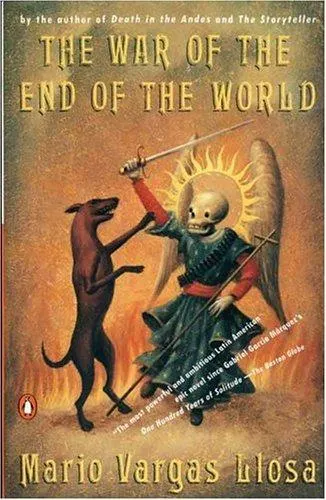
Books like The War of the End of the World
How can people share a country, confront one another face to face, and still inhabit realities so incompatible that understanding becomes impossible? These three novels turn that question into history on an epic scale.
If you liked The War of the End of the World, you’ll love these
Not lookalikes — kindred books. Each one shares something essential with The War of the End of the World, and we tell you exactly what.
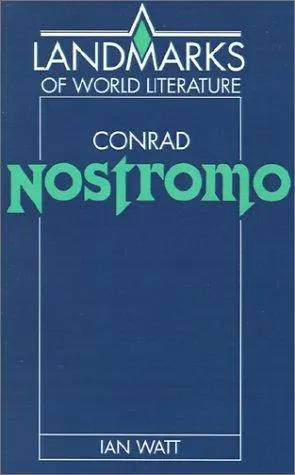
Conrad’s masterpiece offers the same exhilarating sense of an entire society becoming visible at once. In the fictional republic of Costaguana, politicians, revolutionaries, financiers, workers, idealists, and foreign opportunists all believe they understand the country; together, their partial visions propel it toward catastrophe.
Like Vargas Llosa, Conrad moves among competing minds without granting any one of them final authority. Material interests disguise themselves as patriotic causes, reputations become prisons, and historical “progress” acquires a savage irony. Often regarded as Conrad’s greatest novel, Nostromo is indispensable for anyone who loved the panoramic intelligence and moral complexity of The War of the End of the World.
This Booker Prize–winning historical novel begins with the construction of a slave ship and expands into a devastating anatomy of the world that built it. Unsworth makes ledgers, contracts, family resentments, religious arguments, and private weaknesses converge into organized brutality; exploitation is not merely committed by villains but sustained by an entire way of reasoning.
What will grip a Vargas Llosa reader is Unsworth’s refusal to simplify either human motives or collective disaster. His large cast is rendered with earthy comedy and compassion, while an alternative vision of community emerges against the pitiless arithmetic of profit. Sacred Hunger has the sweep of an epic and the precision of an indictment—and deserves to be read as one of the finest modern historical novels.
If Vargas Llosa’s novel left you fascinated by the struggle to control what history means, Roa Bastos takes that struggle inside the consciousness of power itself. Paraguay’s nineteenth-century dictator José Gaspar Rodríguez de Francia dictates, corrects, remembers, argues with documents, and tries to make language as obedient as the state—only for other voices and textual fractures to undermine him.
The result is demanding, darkly comic, and hypnotic: less a conventional portrait of tyranny than a battle among memory, authority, rumor, and the written word. A landmark of Latin American fiction by a future Cervantes Prize winner, I, the Supreme matches Vargas Llosa’s ambition while inventing a radically different form for it. Reading it feels like watching official history crack open from within.