Author
Books like Graham Greene
14 books we recommend to Graham Greene readers, drawn from The Quiet American, The Power and the Glory, The End of the Affair, The Heart of the Matter, The Ministry of Fear and The Human Factor — each with the reason why.
If you loved The Quiet American
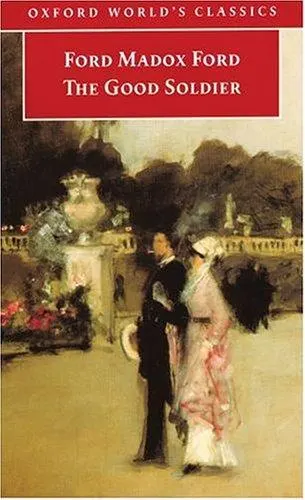
Ford’s celebrated “saddest story” concerns two affluent couples and the ruin concealed beneath their polished friendship. Like Fowler, narrator John Dowell presents himself as the sensible observer rather than the agent of disaster; the novel’s fascination comes from watching his hesitations, revisions, and evasions expose a far less innocent man.
The prose is intimate, conversational, and exquisitely controlled. Every apparent digression alters the moral balance, so judgment keeps slipping away just as it does in Greene. Readers who loved The Quiet American for its self-deceiving narrator and the poisonous mixture of love, pity, possession, and betrayal will find Ford’s modernist classic indispensable.
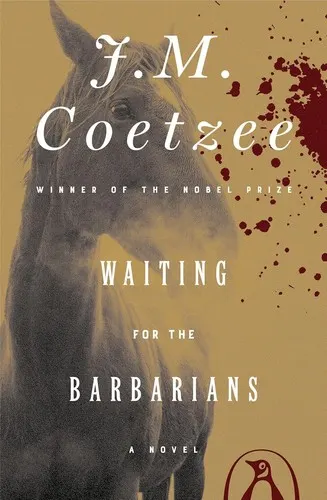
At a remote imperial outpost, an aging magistrate has built a comfortable life by not looking too closely at the violence supporting it. Then officials arrive from the capital, armed with certainty about an approaching enemy. Coetzee turns that confrontation into a devastating inquiry into the difference between decency and mere passivity.
This has Greene’s gift for making political guilt bodily and personal: public brutality enters private desire, while the narrator’s humane instincts remain tangled with vanity and appetite. Coetzee’s stark, lucid sentences give the novel the force of a parable without simplifying anyone. It is among the defining works of a Nobel laureate, and its portrait of an empire manufacturing the threat it claims to resist has only grown more urgent.
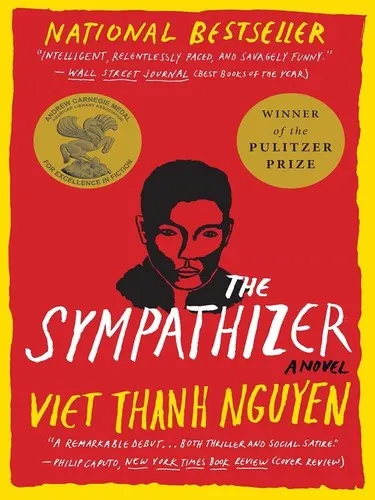
Nguyen’s Pulitzer Prize-winning debut feels like both a descendant of The Quiet American and a brilliant argument with it. Its unnamed narrator, a communist double agent, can inhabit opposing loyalties at once; his intelligence makes him perceptive about everyone’s hypocrisies except, sometimes, his own.
Where Greene coolly dissects American innocence, Nguyen gives the supposedly observed Vietnamese subject control of the story—and a voice that is exuberant, sardonic, erudite, and dangerously funny. Yet this is no corrective footnote: it has its own formidable architecture of confession, divided identity, political faith, and moral compromise. Reading it after Greene transforms both novels; skipping it means missing one of contemporary fiction’s most electrifying examinations of the harm done by people certain they are saving others.
If you loved The Power and the Glory
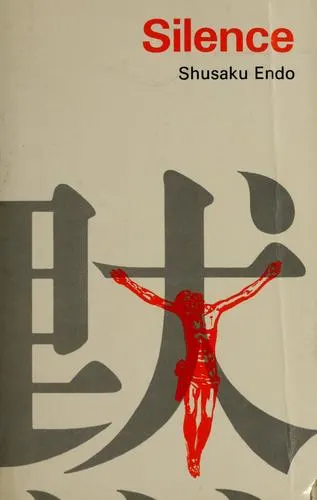
Endō subjects faith to the same merciless test Greene does. A Portuguese Jesuit enters seventeenth-century Japan after hearing that his revered teacher has renounced Christianity. What follows is not a pageant of noble martyrdom but a confrontation with pride, betrayal, suffering, and the terrifying possibility that God may offer no answer.
Winner of the Tanizaki Prize and widely regarded as Endō’s masterpiece, Silence has Greene’s gift for making theology feel physically dangerous. Its central question is not whether belief can remain pure, but whether mercy may require what looks like spiritual defeat. Few novels leave a believer—or an unbeliever—so unsure where cowardice ends and grace begins.
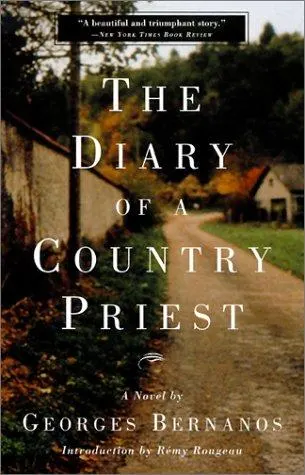
Bernanos’s young priest arrives at an indifferent French parish with poor health, little authority, and a painfully acute sense of his own inadequacy. His diary records awkward visits, hostile encounters, bodily misery, and the stubborn work of attending to souls that often do not want him.
The novel, awarded the Académie française’s Grand Prix du Roman, finds sanctity in humiliation rather than triumph. Like Greene’s whisky priest, Bernanos’s curate becomes most compelling when he seems least impressive: lonely, clumsy, frightened, and unable to measure the good he may be doing. Its final spiritual force is immense precisely because Bernanos refuses every easy consolation.
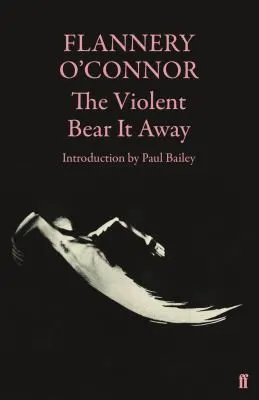
Fourteen-year-old Francis Tarwater has been raised by a fanatical great-uncle who insists that the boy is destined to become a prophet. When the old man dies, Tarwater sets out to reject that destiny—and discovers that disbelief can be as obsessive and violent as faith.
O’Connor writes with savage comedy, biblical intensity, and an absolute refusal to make grace pleasant. Where Greene gives us dusty roads, furtive sacraments, and exhausted pity, O’Connor offers scorched landscapes, grotesque encounters, and spiritual compulsion. This fierce final novel of hers is for anyone who loved the way The Power and the Glory makes redemption feel less like a reward than an ambush.
If you loved The End of the Affair
An embittered old lawyer writes a letter to his wife, intending it as a final indictment of their marriage and family. Around his fortune gathers a household he regards with contempt; inside him, decades of humiliation have tightened into something almost sustaining.
Mauriac, a Nobel laureate and one of the great Catholic novelists, is even less comforting than Greene about faith. He understands hatred as both armor and appetite, and he lets the possibility of grace enter without sentimentality or easy conversion. The novel is short, venomous, psychologically exact, and finally astonishing in its moral reach. Anyone moved by the way The End of the Affair makes spite and longing into possible instruments of redemption should not miss it.

In wartime London, Stella Rodney is told that Robert, the man she loves, may be betraying his country. The accusation comes from Harrison, an intelligence agent whose interest in Stella makes truth inseparable from pressure, desire, and surveillance.
Bowen’s wartime masterpiece turns uncertainty into atmosphere: rooms feel charged, pauses become evidence, and every intimate gesture invites interpretation. What connects it most profoundly to Greene is its question of whether love can survive the demand to know another person completely. Bowen’s crystalline, strange prose captures the loneliness of lovers who cannot distinguish trust from chosen blindness. Reading it feels less like following a mystery than entering the moral weather of suspicion itself.
If you loved The Heart of the Matter
Judith Hearne is a shabby-genteel Belfast spinster whose fragile hopes gather around a boarding house and one seemingly promising acquaintance. Moore sees every humiliating detail, yet never turns her into a joke. His exactness becomes a form of compassion.
Readers who loved Greene’s tenderness toward compromised, spiritually frightened people will recognize the same unsentimental mercy here: loneliness distorts judgment, faith offers no easy refuge, and need can become its own kind of moral danger. Greene himself admired Moore enormously, calling him his favourite living novelist. This fierce, beautifully controlled debut shows why—and Judith is impossible to forget.
If you loved The Ministry of Fear
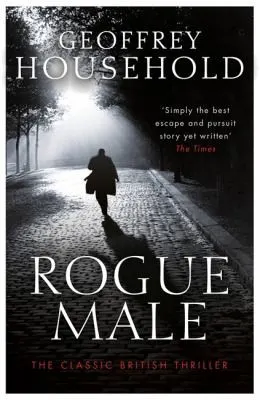
Household turns pursuit into an anatomy of self-deception. An unnamed Englishman, caught after taking aim at a European dictator, insists the act was merely a sporting experiment; as he is hunted across England, that explanation becomes increasingly difficult to live inside.
Like Greene, Household understands that suspense deepens when danger presses upon a hidden moral wound. The chase is brilliantly physical—trains, hedgerows, traps, concealment—but its real subject is a man discovering what he meant to do and why. Long regarded as a classic of the pursuit novel, Rogue Male has the rare stripped-down force of a thriller that feels both elemental and psychologically exact.
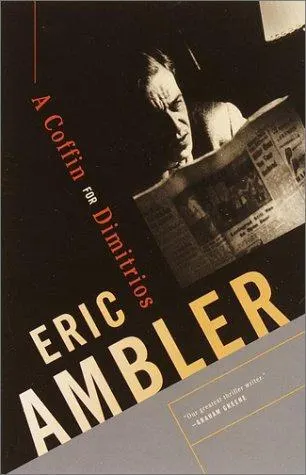
Charles Latimer, a mild writer of detective stories, becomes fascinated by the corpse of Dimitrios, a criminal whose career seems to trace the secret history of Europe between the wars. His investigation draws him out of the safe, artificial world of fiction and into one governed by money, political violence and people who survive by understanding weakness.
Ambler shares Greene’s gift for making intrigue feel shabby, plausible and morally contaminating rather than glamorous. Latimer’s curiosity has the same dangerous innocence as Arthur Rowe’s: each step toward clarity implicates him further. A landmark in the development of the modern espionage novel, A Coffin for Dimitrios remains startlingly fresh because its cynicism is never merely stylish—it is backed by an unnerving comprehension of how ordinary respectability accommodates evil.
Few novels reproduce the queasy alternation in The Ministry of Fear between drab everyday life and private nightmare as powerfully as Hangover Square. George Harvey Bone moves through the pubs and lodging houses of late-1930s London, helplessly devoted to the cruel, magnetic Netta. At moments something in his mind ‘clicks,’ and the world—and his purpose within it—changes.
Hamilton’s suspense comes from fractured consciousness rather than espionage, but the kinship is profound: pity and dread become inseparable, comedy curdles without warning, and a damaged man is surrounded by people too selfish to recognize the scale of his suffering. Once undervalued and now firmly established as Hamilton’s masterpiece, it inspires unusually fierce devotion. Its smoky rooms, repetitive humiliations and gathering fatality do not simply create atmosphere; they close around the reader like a trap.
If you loved The Human Factor
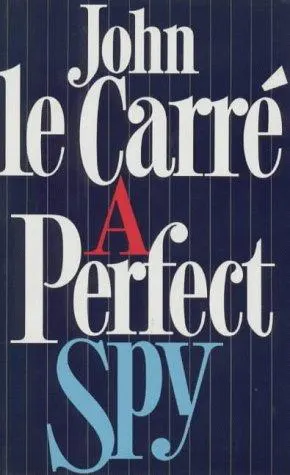
Magnus Pym, a British intelligence officer, disappears after his father’s funeral, leaving colleagues and family to reconstruct his life while he begins writing his own account. What emerges is not a puzzle about whether a man betrayed his country, but an inquiry into how he learned to betray—and whether espionage merely gave professional form to habits acquired in childhood.
Like Greene, le Carré understands treason as an intimate act before it is a political one. Pym is shaped by charm, shame, divided affection, and the need to become whatever another person wants. The patient accumulation of moral detail makes this less a conventional spy story than a great novel of damaged identity. Often judged le Carré’s masterpiece, and famously praised by Philip Roth as “the best English novel since the war,” it takes the human sympathy of Greene’s novel and expands it into an engulfing life story.
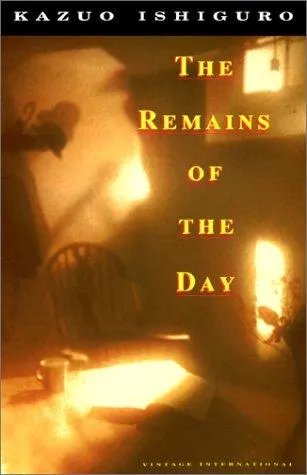
Stevens, an aging English butler, sets out on a motoring holiday and begins reconsidering his decades of devoted service to Lord Darlington. His measured recollections gradually expose the danger hidden inside such words as dignity, loyalty, and professionalism.
There are no secret files or double agents here, yet few novels come closer to The Human Factor’s moral core. Stevens, like Castle, has surrendered part of his conscience to a system whose language protects him from seeing what obedience costs. Ishiguro’s triumph is to make repression suspenseful: every immaculate sentence invites the reader to notice the feeling its speaker cannot acknowledge. This Booker Prize winner is celebrated for good reason—its final emotional force is devastating precisely because it never raises its voice.