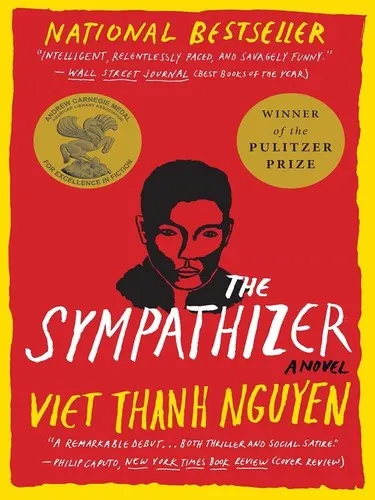
Books like The Sympathizer
You were gripped by a novel that turns divided allegiance into a source of comedy, anguish, and intellectual attack. These three offer similarly commanding narrators—and make political certainty look dangerously simple.
If you liked The Sympathizer, you’ll love these
Not lookalikes — kindred books. Each one shares something essential with The Sympathizer, and we tell you exactly what.
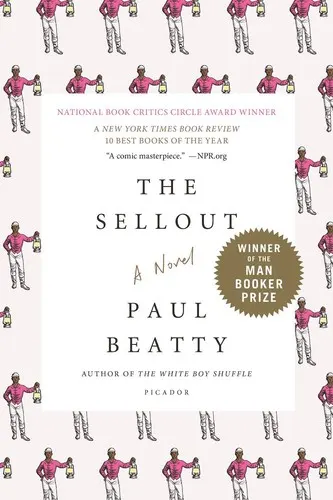
If you loved the sheer audacity of Nguyen’s voice—the jokes that become arguments before you realize you have been cornered—read Beatty’s Booker Prize–winning satire. Its narrator recounts to the Supreme Court how he ended up accused of attempting to restore segregation in his California hometown, and every page detonates another piety about race, progress, and American self-regard.
Like The Sympathizer, it uses a scandalously funny confession to expose the contradictions its country prefers not to see. Beatty’s comedy is denser and more anarchic than Nguyen’s, but it has the same moral pressure behind it: laughter keeps curdling into recognition. Few contemporary novels are this fearless, this linguistically alive, or this unwilling to let any ideology leave the room unscathed.
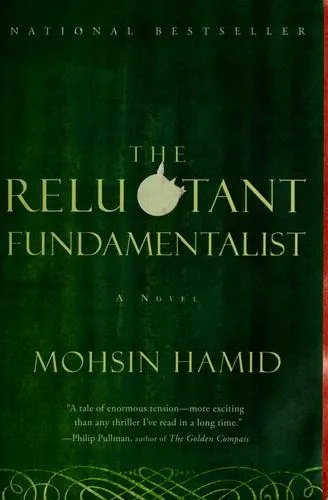
A Pakistani man in Lahore tells an American stranger about his brilliant early career in New York—and you gradually become aware that every courteous sentence may carry several meanings. Hamid’s entire novel is one sustained act of address: intimate, elegant, hospitable, and faintly threatening.
That makes it a superb match for readers fascinated by the Communist captain’s double consciousness in The Sympathizer. Both narrators understand America from inside its institutions while remaining alert to what those institutions cannot perceive about themselves. Hamid’s Booker-shortlisted novel is much shorter and quieter, but its ambiguities are so precisely controlled that readers still argue over them. You can finish it in an evening; escaping its gaze takes considerably longer.

Artemio Cruz, a powerful Mexican businessman and former revolutionary, lies ill while memory fractures around him. Fuentes moves among first, second, and third person, forcing Cruz to confront the distance between revolutionary conviction, private appetite, and the life he actually built.
Where Nguyen explores the man split between opposed causes, Fuentes examines the man whose cause has been absorbed into power. Both novels distrust heroic national histories and reveal how public ideals become entangled with vanity, desire, betrayal, and self-exoneration. A landmark of the Latin American Boom, The Death of Artemio Cruz is formally daring without being merely experimental: its shifting voices make complicity feel inescapably intimate. Missing it means missing one of the great novels about what history does to conscience—and what conscience does to history.