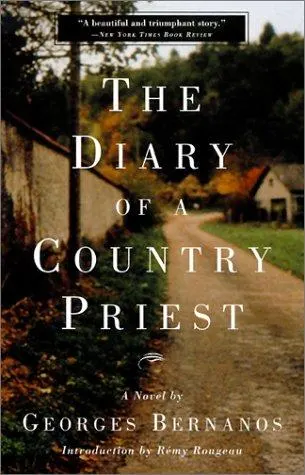
Books like The Diary of a Country Priest
Grace under pressure. Bernanos makes holiness inseparable from frailty: bodily suffering, spiritual dryness, humiliation, and the stubborn belief that an apparently useless life may still become an instrument of mercy. These three novels test that mystery with comparable intensity.
If you liked The Diary of a Country Priest, you’ll love these
Not lookalikes — kindred books. Each one shares something essential with The Diary of a Country Priest, and we tell you exactly what.
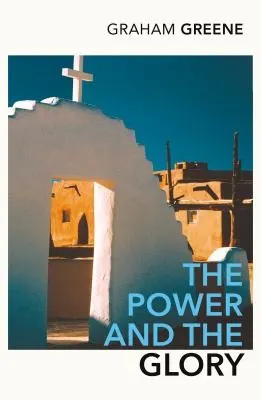
In revolutionary Mexico, a hunted priest—frightened, alcoholic, and painfully conscious of his failures—moves through a land where his ministry has been outlawed. Greene shares Bernanos’s most bracing conviction: a priest’s weakness does not necessarily cancel the grace entrusted to him.
The novel has the pressure of a thriller, yet its deepest suspense is spiritual. Can compromised service still be holy? Greene refuses both piety and cynicism, making the priest’s smallest actions feel charged with consequence. Long regarded as one of his masterpieces, it is the indispensable companion to Bernanos: harsher in motion, equally unsparing about sin, and just as mysterious about sanctity.
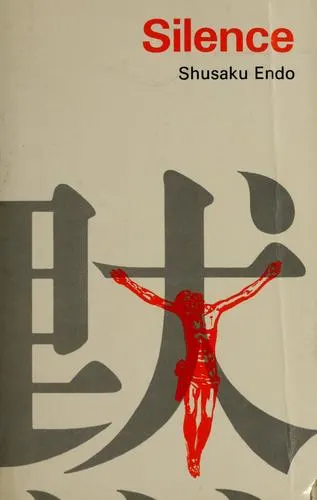
Endō begins with a seventeenth-century Portuguese Jesuit entering Japan after hearing that his revered teacher has renounced the faith under persecution. What follows is not simply a novel about martyrdom, but an ordeal built around a question Bernanos’s priest would recognize: what does fidelity mean when God seems absent and one’s own spiritual heroism may increase another person’s suffering?
Endō writes with lucid, accumulating force; every confident religious category becomes unstable under pressure. Admired internationally and central to Endō’s reputation, Silence has inspired fierce devotion and argument because it offers no cheap consolation. If Bernanos’s portrayal of grace hidden inside defeat unsettled and moved you, Endō takes that paradox to its most agonizing edge.
An old, wealthy lawyer begins a private testament for the family he despises, rehearsing decades of injury while plotting to deny them his fortune. His voice is venomous, brilliant, self-justifying—and gradually revealing in ways he does not control.
Mauriac, a Nobel laureate and one of the great Catholic psychological novelists, approaches grace from the opposite side of Bernanos: not through a humble priest desperate to reach others, but through a man barricaded inside resentment. The result is a devastating anatomy of how wounded love hardens into hatred, and how even a soul practiced in refusal may not be entirely closed. Compact, intimate, and morally exact, it has the rare power to make spiritual transformation feel neither sentimental nor earned.