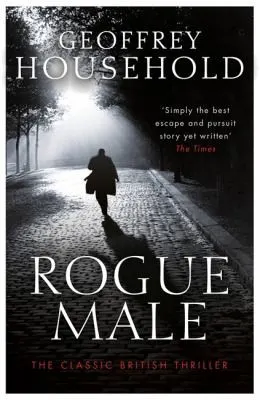
Books like Rogue Male
Begin in a Japanese sand pit. Kobo Abe’s surreal classic may seem far removed from Household’s prewar manhunt, yet it presses the same nerve: a resourceful man stripped of status and forced into an intimate, almost philosophical struggle with confinement, terrain, and himself. The other two choices recover Rogue Male’s political menace and ruthless forward motion.
If you liked Rogue Male, you’ll love these
Not lookalikes — kindred books. Each one shares something essential with Rogue Male, and we tell you exactly what.
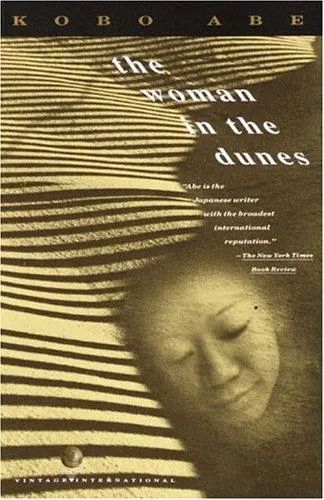
An amateur entomologist visits a remote village and finds himself trapped in a house at the bottom of a sand pit. From that stark opening, Abe makes physical survival inseparable from psychological resistance: every rope, tool, water ration, and collapsing wall matters.
A reader who loved Rogue Male’s burrow sequences will recognize the almost tactile claustrophobia, the obsessive practical thinking, and the way captivity strips a cultivated man down to his essential drives. But Abe pushes Household’s questions further: when does adaptation become surrender, and can a prison become a life? Winner of Japan’s Yomiuri Prize and the source of the celebrated film, this is suspense fiction transformed into an existential masterpiece.
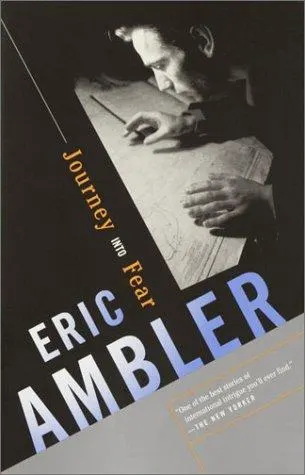
Armaments engineer Graham knows too much to be allowed an uneventful journey home. Ambler places this intelligent but thoroughly unheroic civilian aboard a ship where confined space, uncertain loyalties, and an unseen political struggle turn every social encounter into a calculation.
Like Household, Ambler understands that suspense intensifies when competence has limits. Graham can reason, improvise, and observe, but he has neither the professional killer’s instincts nor the protection his comfortable life taught him to expect. Written on the brink of the Second World War, the novel carries the same chill as Rogue Male: European politics are no abstraction but a force that can suddenly enter a private life. Ambler helped remake the spy novel into morally serious fiction, and this compact, unnervingly plausible book shows why.
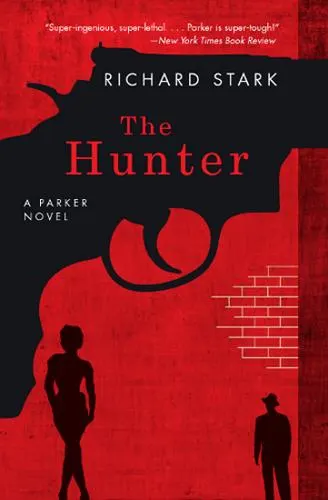
Parker walks into New York with one objective: recover what was taken from him. Richard Stark—Donald Westlake writing in his coldest, leanest register—builds the novel from action, logistics, and an almost inhuman concentration of will.
The kinship with Rogue Male lies less in plot than in purity. Both books discard ordinary society and follow a protagonist who reads streets, rooms, habits, and weaknesses as a hunter reads tracks. Stark’s sentences are hard, quick, and exact; sentiment never interrupts the machinery of pursuit. Yet Parker’s pitiless professionalism also throws Household’s gentleman hunter into revealing relief, especially where vengeance and principle blur. This first Parker novel launched one of crime fiction’s most fiercely admired series and inspired films including Point Blank. Its severe momentum is addictive.