Author
Books like Thomas Pynchon
12 books we recommend to Thomas Pynchon readers, drawn from Vineland, Gravity's Rainbow, The Crying of Lot 49, Mason & Dixon and Bleeding Edge — each with the reason why.
If you loved Vineland
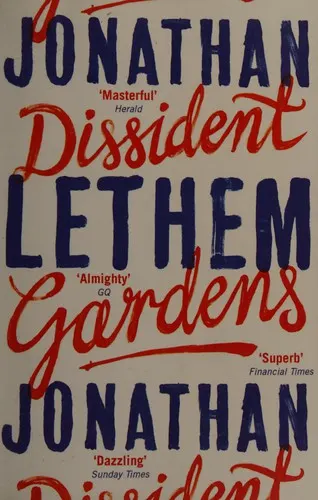
Lethem follows the embers of American radicalism as they pass through generations, scorching friendships and family life long after the slogans have faded. At its center is Rose Zimmer, a ferocious Communist whose politics are inseparable from her appetite for argument, domination, and love.
Like Vineland, this is less a requiem for the Left than an inquiry into what political defeat does to private feeling. Lethem understands that movements survive not only as ideas but as grudges, habits, jokes, songs, and damaged children. His characters are infuriating without becoming caricatures, and the novel’s comedy keeps opening into genuine sorrow. Few books capture so well the peculiar intimacy of ideological disappointment.
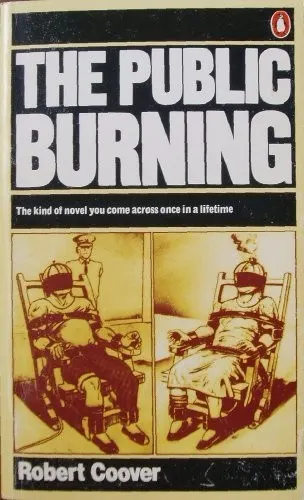
Coover turns the execution of Julius and Ethel Rosenberg into an obscene national pageant, with Richard Nixon as a hapless protagonist and Uncle Sam as a swaggering embodiment of American appetite. The result is a carnival of propaganda, sex, patriotism, paranoia, and theatrical violence.
A cult landmark of American postmodernism, The Public Burning has Pynchon’s gift for making slapstick feel like political diagnosis. Its jokes do not offer escape from power; they show how power manufactures jokes, myths, and spectacles to make itself irresistible. If Vineland’s sinister television logic delighted you, Coover’s funhouse version of public history is essential reading.
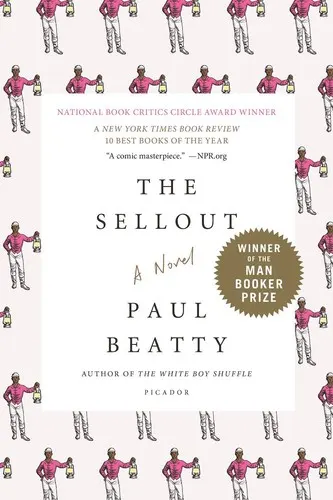
The Sellout begins with its narrator before the Supreme Court, smoking marijuana and contemplating the outrageous acts that brought him there. From that audacious opening, Beatty builds a satire whose jokes arrive at terrifying speed, puncturing every comfortable language Americans use to discuss race, justice, community, and progress.
Winner of the Booker Prize, it shares Vineland’s rare ability to be politically furious without becoming solemn. Beatty’s comedy is sharper and more confrontational than Pynchon’s, but both writers understand absurdity as a governing institution, not a decorative flourish. Beneath the virtuoso riffs is a stubborn attachment to compromised people and damaged places. Missing it would mean missing one of the most fearless comic novels of contemporary America.
If you loved Gravity's Rainbow
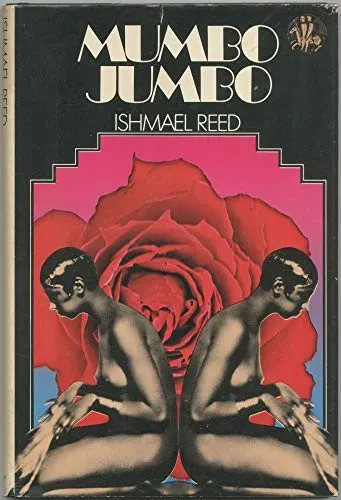
Reed offers the concentrated, dance-floor version of Pynchonian counterhistory. In 1920s America, an infectious cultural force called Jes Grew spreads through music and movement, alarming institutions devoted to order, hierarchy, and control. Newspaper fragments, photographs, footnotes, secret societies, and scholarly parody collide in a book that treats typography itself as part of the joke.
Yet its wildness has a sharp purpose: Reed asks who gets to manufacture history, whose culture is labeled dangerous, and whether liberation might behave like contagion. Hugely influential and still startlingly original, Mumbo Jumbo delivers more invention in two hundred pages than many novelists manage in a career.
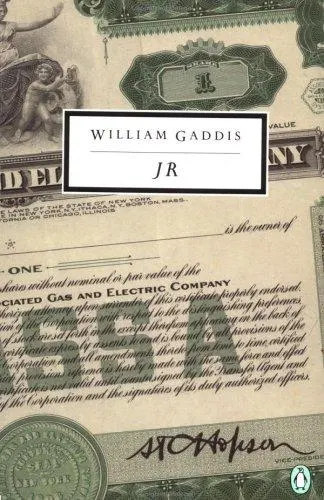
If Gravity’s Rainbow thrilled you by revealing systems that no individual fully controls, J R is indispensable. An eleven-year-old boy begins trading stocks and, almost accidentally, assembles a financial empire. The novel is written almost entirely in unattributed dialogue: phone calls overlap, deals mutate, misunderstandings compound, and capitalism seems to speak through everyone at once.
Winner of the National Book Award, J R is famously demanding but also ferociously funny. Its apparent chaos gradually becomes an astonishingly precise score of verbal tics, evasions, sales pitches, and institutional noise. Gaddis makes money into what the Rocket is for Pynchon: an abstract power that reorganizes human lives while pretending merely to serve them.
If you loved The Crying of Lot 49
Marian Leatherby, nearly deaf and serenely eccentric, receives a hearing trumpet that lets her overhear her family’s plan to institutionalize her. The home she enters—run by dubious authorities and decorated with an unsettling portrait—begins generating clues faster than any reasonable worldview can contain them.
Like Oedipa Maas, Marian is a woman whom society underestimates and who responds by becoming an investigator of hidden arrangements. Carrington’s comedy has Pynchon’s gift for making institutions simultaneously ridiculous and menacing, while her surrealism keeps enlarging the possibilities of what the clues might mean. A cult classic by one of Surrealism’s great figures, it is funny, emancipatory and gloriously ungovernable.
A fugitive hiding on an apparently deserted island begins seeing impeccably dressed visitors who repeat peculiar gestures and conversations. He watches, records and theorizes, trying to determine whether they are real, supernatural or part of some mechanism he has not yet understood.
Bioy Casares gives the interpretive vertigo of The Crying of Lot 49 a crystalline, almost mathematical form. Every recurrence might be evidence; every theory makes the observer’s own position less secure. The novel is brief enough to feel like a trap snapping shut, yet emotionally charged by loneliness and desire. Borges famously praised its plot as perfect, and generations of readers have treated this Argentine classic as a small, inexhaustible machine: once read, it permanently alters the meaning of repetition, spectatorship and reality.
If you loved Mason & Dixon
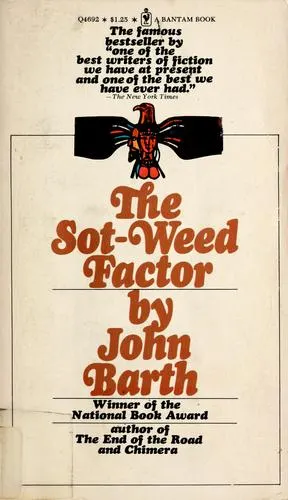
The closest precursor to Mason & Dixon’s verbal carnival, Barth’s landmark of American postmodernism turns colonial history into an enormous picaresque of forged documents, literary imposture, sexual farce, and epistemological mischief. Its mock-eighteenth-century prose is not decorative antiquing: every elaborate sentence asks who controls the story, whether innocence is wisdom or folly, and how history hardens out of competing lies.
Barth has Pynchon’s gift for making high intellectual comedy feel gloriously low. Learned allusions jostle with slapstick; philosophical disputes end in embarrassment; digressions proliferate until they become the real route through the book. Yet beneath the virtuosity lies a serious fascination with compromised ideals. Mason & Dixon readers will recognize that peculiar pleasure of laughing through hundreds of pages only to realize the joke has acquired moral weight. This is one of the books that made Pynchon’s kind of historical extravagance possible.
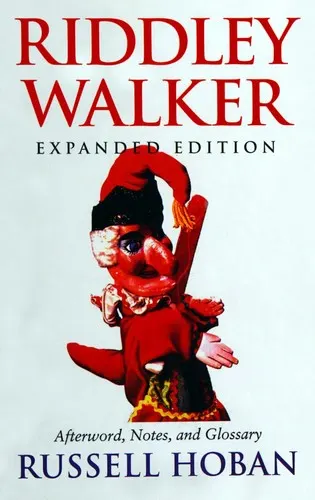
Read the first page aloud. Hoban’s shattered English initially looks forbidding, then begins to disclose its own wit, rhythm, and precision; before long, ordinary English can seem comparatively lifeless. Like Pynchon’s eighteenth-century idiom, Riddley’s voice is a complete theory of history: words preserve garbled memories, institutional power, old technologies, and dangers their speakers no longer understand.
This cult classic inhabits a broken future in which myth and science continually change places. Its affinity with Mason & Dixon lies less in encyclopedic scale than in its conviction that maps, stories, measurements, and performances are never neutral. Hoban also shares Pynchon’s rare tonal balance: bawdy comedy and linguistic play coexist with loneliness, violence, and an almost unbearable yearning for lost knowledge. Few novels so thoroughly rewire a reader’s ear—or inspire such devotion in those who surrender to them.
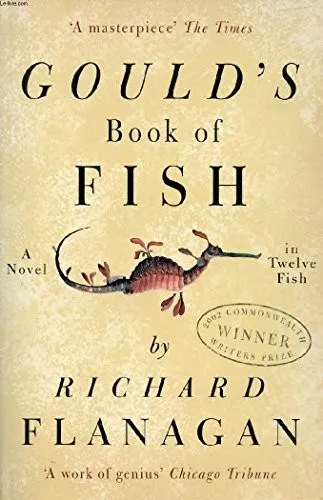
Flanagan offers history as a gorgeous, fraudulent artifact: a manuscript crowded with fish, convicts, officials, fantasies, erasures, and mutually incompatible versions of reality. The narrative keeps transforming under the reader’s hands, but its formal exuberance never insulates it from colonial brutality. As in Mason & Dixon, invention becomes a way to recover what official records suppress rather than an excuse to evade fact.
Winner of the Commonwealth Writers’ Prize, the novel has the reckless confidence of a tall tale and the grief of a witness statement. Flanagan’s sentences can be grotesque, ecstatic, tender, or furiously comic, sometimes within a single paragraph. What begins as an extravagant exercise in unreliable narration becomes a passionate argument about who gets classified, named, painted, imprisoned, and remembered. A reader drawn to Pynchon’s mingling of wonder and historical guilt should not miss it.
If you loved Bleeding Edge

Cayce Pollard is so sensitive to branding that logos can make her physically ill; when she is hired to investigate enigmatic film fragments circulating online, consumer culture begins to look like both a code and a haunting. Gibson’s prose is cooler and cleaner than Pynchon’s, but he shares Pynchon’s gift for making the internet feel at once ridiculous, intimate, and metaphysical.
Like Bleeding Edge, this is a novel about trying to read meaning from the debris of the early twenty-first century while grief distorts every signal. Cayce and Maxine are kindred investigators: professionally skeptical women whose real talent is recognizing the desires hidden inside information. Pattern Recognition became the book that proved Gibson did not need an invented future to write science fiction—the present was already strange enough. It is perhaps the closest spiritual sibling Bleeding Edge has.
Egan begins with a kleptomaniac assistant and an aging music executive, then sends connections branching across decades, countries, careers, marriages, and technologies. Characters who seem peripheral acquire whole inner worlds; apparent protagonists drift into someone else’s background. The resulting network feels uncannily like Pynchon’s New York: crowded with missed signals, compromised people, and unexpected loyalties.
What most strongly links the books is their emotional sleight of hand. Both arrive dressed as clever, formally playful portraits of contemporary culture, then reveal themselves as moving meditations on time, memory, family, and obsolescence. Egan even makes a PowerPoint chapter tender rather than gimmicky. Winner of both the Pulitzer Prize and the National Book Critics Circle Award, Goon Squad earned its acclaim by proving that experimentation and emotional generosity need not be opposites.