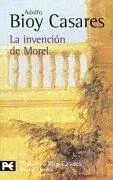
Books like The Invention of Morel
The Invention of Morel and Christopher Priest’s The Affirmation are rare labyrinths whose intellectual traps only intensify their emotional force.
If you liked The Invention of Morel, you’ll love these
Not lookalikes — kindred books. Each one shares something essential with The Invention of Morel, and we tell you exactly what.
After his life collapses, Peter Sinclair retreats to an English cottage and begins writing an autobiography—only to find that the invented islands entering his manuscript feel as substantial as the world around him.
Priest shares Bioy Casares’s gift for lucidly presenting an impossible situation, then altering one small premise at a time until reality has quietly turned inside out. Both novels bind their puzzles to longing: identity, memory, and love become inseparable from the mechanisms meant to preserve them. A cult favorite by one of speculative fiction’s great illusionists, The Affirmation is the closest thing to another encounter with Morel’s beautifully engineered vertigo.
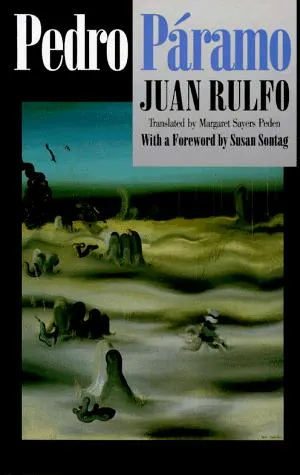
Juan Preciado comes to Comala to fulfill his mother’s dying request and search for his father. The town answers him in murmurs, recollections, and voices whose place in time—or among the living—cannot be securely fixed.
Like Bioy Casares, Rulfo creates a complete metaphysical world in barely more than a hundred pages. The reader must assemble it from fragments, while an absent woman and the desire surrounding her exert an almost gravitational force. Yet its strangeness never becomes a mere trick: every temporal fracture deepens its loneliness. This foundational Latin American masterpiece helped unlock García Márquez’s imagination; its haunted cadences and astonishing compression make it feel inexhaustible despite its brevity.
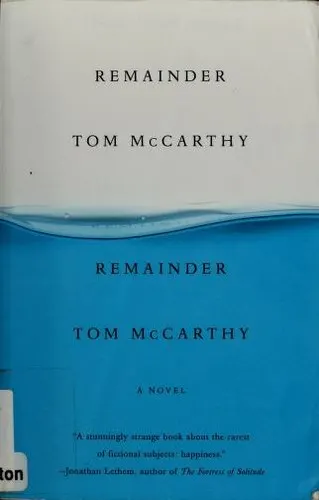
An unnamed man receives an enormous settlement after an accident he cannot remember. Instead of buying ordinary luxuries, he becomes obsessed with reconstructing a half-remembered scene in exact physical detail, hiring people to repeat gestures until reality feels properly real.
Here is Morel’s machinery of repetition translated into the contemporary world: rooms, bodies, sensations, and performances become components in an attempt to defeat mediation. McCarthy makes obsessive logistics hypnotic, then unsettling, while asking whether authenticity can be manufactured—and whether repetition preserves experience or empties it out. Initially rejected by major publishers, Remainder became a fiercely admired cult novel and a landmark of twenty-first-century experimental fiction. Its premise is so clean, its escalation so remorseless, that it permanently changes how reenactment and reality look.