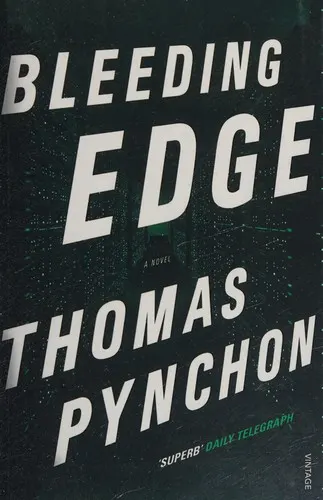
Books like Bleeding Edge
Bleeding Edge belongs to anyone delighted by wild connections, digital unease, comic voices, and the stubborn human tenderness surviving beneath systems designed to erase it. These three novels share that deeper circuitry.
If you liked Bleeding Edge, you’ll love these
Not lookalikes — kindred books. Each one shares something essential with Bleeding Edge, and we tell you exactly what.
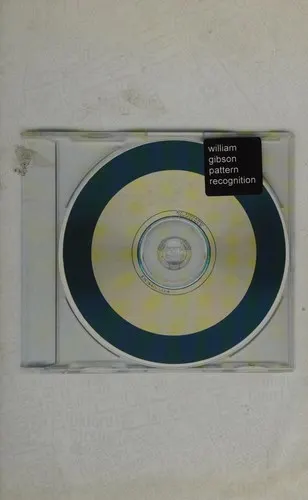
Cayce Pollard is so sensitive to branding that logos can make her physically ill; when she is hired to investigate enigmatic film fragments circulating online, consumer culture begins to look like both a code and a haunting. Gibson’s prose is cooler and cleaner than Pynchon’s, but he shares Pynchon’s gift for making the internet feel at once ridiculous, intimate, and metaphysical.
Like Bleeding Edge, this is a novel about trying to read meaning from the debris of the early twenty-first century while grief distorts every signal. Cayce and Maxine are kindred investigators: professionally skeptical women whose real talent is recognizing the desires hidden inside information. Pattern Recognition became the book that proved Gibson did not need an invented future to write science fiction—the present was already strange enough. It is perhaps the closest spiritual sibling Bleeding Edge has.
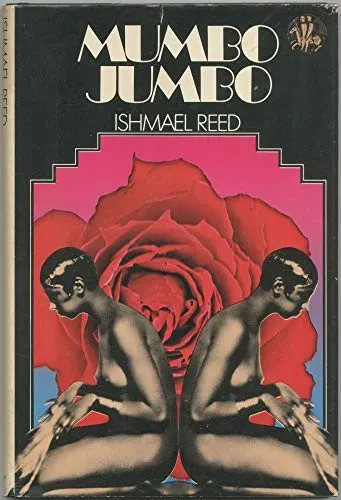
A mysterious phenomenon called Jes Grew is spreading through 1920s America, making people dance, improvise, and reject the culture imposed upon them. Institutions mobilize to suppress it; secret histories multiply; photographs, footnotes, advertisements, and occult scholarship invade the narrative.
Reed’s novel shares Pynchon’s conviction that conspiracy can be both a joke and a serious struggle over who gets to define reality. But its manic collage has a distinctive political purpose: official history itself becomes the supreme conspiracy, while disorder, pleasure, and vernacular culture become forms of resistance. A National Book Award finalist and a landmark of American postmodernism, Mumbo Jumbo remains startlingly alive. Anyone who loved Bleeding Edge at its most irreverent and suspicious should encounter one of the novels that helped make such fiction possible.
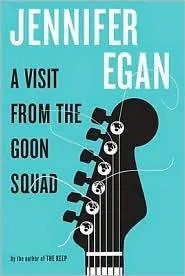
Egan begins with a kleptomaniac assistant and an aging music executive, then sends connections branching across decades, countries, careers, marriages, and technologies. Characters who seem peripheral acquire whole inner worlds; apparent protagonists drift into someone else’s background. The resulting network feels uncannily like Pynchon’s New York: crowded with missed signals, compromised people, and unexpected loyalties.
What most strongly links the books is their emotional sleight of hand. Both arrive dressed as clever, formally playful portraits of contemporary culture, then reveal themselves as moving meditations on time, memory, family, and obsolescence. Egan even makes a PowerPoint chapter tender rather than gimmicky. Winner of both the Pulitzer Prize and the National Book Critics Circle Award, Goon Squad earned its acclaim by proving that experimentation and emotional generosity need not be opposites.