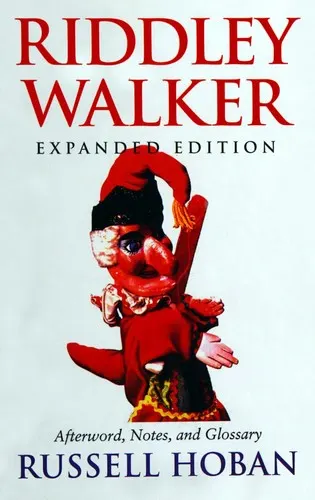
Books like Riddley Walker
Paul Kingsnorth’s The Wake makes broken language feel like a weapon; John Crowley’s Engine Summer makes it feel like a half-remembered song. Together with Anthony Burgess’s fiercest novel, these books share Riddley Walker’s deepest fascination: words do not merely describe a world—they determine what its people can imagine, preserve, and destroy.
If you liked Riddley Walker, you’ll love these
Not lookalikes — kindred books. Each one shares something essential with Riddley Walker, and we tell you exactly what.
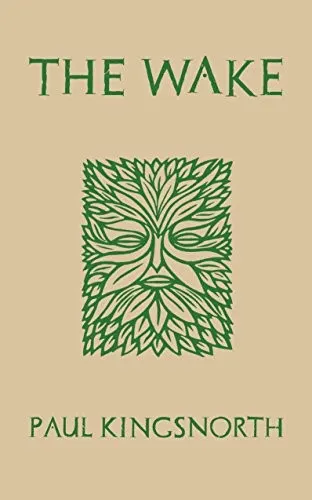
Buccmaster, a proud and increasingly unmoored English landowner, narrates the aftermath of the Norman invasion in a “shadow tongue” built from Old English and modern vocabulary. As with Riddley’s voice, the first pages demand adjustment; then the language becomes unnervingly immediate, exposing a mind trapped inside its own myths.
Kingsnorth also understands Hoban’s grim comedy. Buccmaster is compelling, ridiculous, frightening, and sometimes painfully lucid—a would-be hero whose stories about himself keep colliding with reality. Longlisted for the Booker Prize and winner of the Gordon Burn Prize, The Wake is no dutiful historical reconstruction: it is a raw, incantatory novel about cultural collapse and the dangerous comfort of believing the past chose you personally.
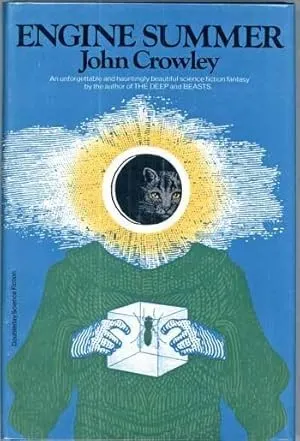
Rush That Speaks grows up in Little Belaire, a community whose customs, sayings, and ideas about becoming “transparent” have survived from a world its inhabitants only partly understand. Crowley lets that culture emerge through Rush’s intimate, guileless voice, making every familiar-looking word seem to hold buried meanings.
Where Riddley Walker is charred, percussive, and suspicious, Engine Summer is luminous and tender. Yet both novels make storytelling into technology: a means of storing a person, distorting history, and speaking across an abyss. Crowley is revered by fellow writers and devoted readers for precisely this kind of intricate, emotionally delayed magic. The book feels simple until its patterns begin closing around you; afterward, its title alone can summon the ache of an entire vanished civilization.
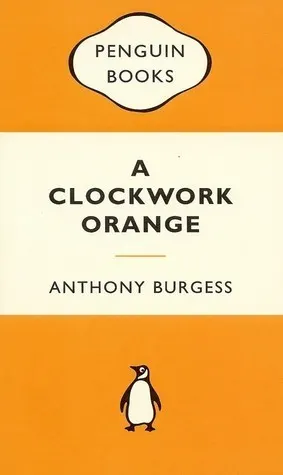
Few novels rival Riddley Walker in making the reader learn a consciousness from the inside. Alex’s Nadsat—an exuberant slang compounded from Russian, English, and schoolboy invention—initially obstructs understanding, then implicates you: soon you comprehend his brutal world without translation and may even catch yourself enjoying the music of his speech.
That seduction is the novel’s moral mechanism. Burgess uses linguistic pleasure to unsettle easy judgments about violence, punishment, and free will, while Alex’s verbal wit keeps the book viciously alive. Kubrick’s film made it notorious, but the novel is stranger, funnier, and more philosophically exact. Anyone captivated by the moment when Riddley’s difficult language becomes indispensable should experience Burgess performing that transformation at full voltage.