Author
Books like Thomas Bernhard
11 books we recommend to Thomas Bernhard readers, drawn from The Loser, Woodcutters, Correction, Extinction, Old Masters, The Lime Works and Yes — each with the reason why.
If you loved The Loser
Like Bernhard, Beckett makes consciousness both the prison and the entertainment. Molloy begins in his mother’s room, writing pages for a mysterious visitor; from there, every attempt to establish a fact produces qualifications, reversals, and magnificently pedantic digressions.
The kinship lies in the voice: relentless, self-cancelling, and very funny precisely because it refuses consolation. Yet Beckett is sparer and stranger than Bernhard, turning bodily inconvenience and logical collapse into metaphysical slapstick. This landmark of postwar fiction helped redefine what a novel could be. Anyone exhilarated by The Loser’s ability to make obsessive failure sing should experience Beckett at full force.
Erika Kohut is a formidable piano instructor whose discipline, thwarted ambition, and claustrophobic life with her mother have made mastery indistinguishable from punishment. The musical world matters, but the deeper link to The Loser is Jelinek’s pitiless understanding of excellence: the ideal does not ennoble those beneath it; it colonizes and deforms them.
Jelinek’s prose is colder than Bernhard’s torrent, slicing through romantic ideas about art, desire, and individuality until social cruelty appears to be speaking through the characters themselves. The result is vicious, unnerving, and mordantly comic. Jelinek later received the Nobel Prize, and this remains her defining novel—a book that makes artistic refinement feel as dangerous as any appetite.
A history professor sits down to write the introduction to his enormous study of guilt in Nazi Germany and instead begins excavating his own resentments, failures, evasions, and hatreds. The abandoned introduction swells into the novel itself: a verbal tunnel dug by a man who would rather burrow indefinitely than emerge into judgment.
Where Bernhard uses repetition like a musical motif, Gass builds a whole obscene symphony from rhetorical returns, typographical play, jokes, slogans, and sentences of astonishing polish. Its narrator is more morally repellent than Wertheimer, and the book demands stamina, but that difficulty is part of its singular power. Twenty-six years in the making and winner of an American Book Award, The Tunnel has inspired unusually fierce devotion. For readers who want the monologue-novel pushed toward its most audacious limit, it is unavoidable.
If you loved Woodcutters
If Woodcutters made you relish the collision between serious art and the people who use art as social currency, this is the grand feast. Gaddis fills studios, bars, and parties with critics, patrons, poseurs, and creators whose talk becomes a dazzling fugue of borrowed opinions. At its center is a painter confronting a culture that prizes authenticity chiefly as something to advertise.
Where Bernhard concentrates venom into one circling voice, Gaddis disperses it through a clamorous crowd: conversations overlap, pretension exposes itself, and comic details accumulate into an indictment of cultural life. Initially misunderstood, The Recognitions became a fiercely admired landmark of postwar American fiction. Its difficulty is part of its intoxication—you learn to hear the fraudulence in every voice.
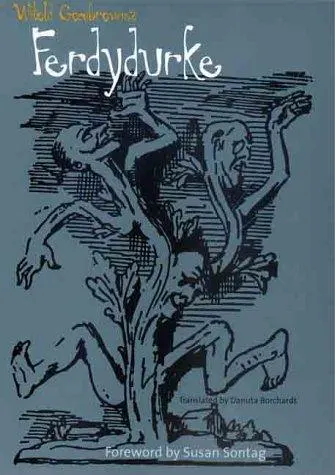
Bernhard attacks the performances of cultural sophistication; Gombrowicz attacks the very process by which other people force us into recognizable shapes. His thirty-year-old narrator is absurdly returned to school, where education, adulthood, rebellion, and refinement all reveal themselves as compulsory poses.
Ferdydurke is more antic than Woodcutters—full of grotesque reversals, verbal slapstick, and philosophical farce—but its laughter has the same destructive intelligence. Every attempt to appear mature or authentic becomes fresh evidence of dependence on an audience. A cornerstone of Polish modernism and a durable writers’ cult classic, it gives a name and comic logic to the social falseness Bernhard anatomizes. After reading it, ordinary conversation can start to look dangerously staged.
If you loved Correction
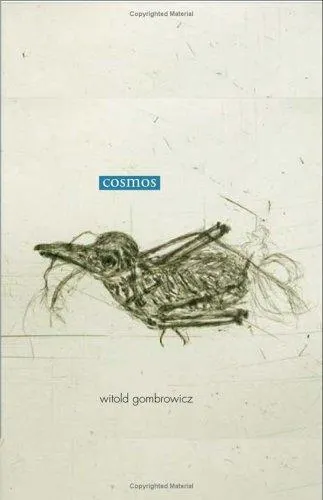
A young man notices a dead sparrow hanging from a wire, then begins connecting it to marks, objects, gestures, and accidents around a country house. What starts as attention becomes coercion: the mind cannot tolerate randomness, so it manufactures a design—and then finds itself trapped inside that design.
Like Correction, Gombrowicz’s late masterpiece makes obsession feel simultaneously rigorous, ridiculous, and lethal. Its repetitions do not clarify events; they contaminate them with possibility. The narrator’s intelligence is his instrument of discovery and his disease. Winner of the 1967 International Prize for Literature, Cosmos is one of the great novels about interpretation turning pathological. Few books so brilliantly reproduce the guilty thrill of watching a consciousness reason past the point of sanity.
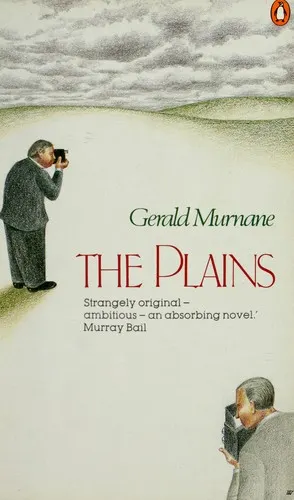
A filmmaker travels into an Australian interior unlike any recognizable Australia, hoping to secure a wealthy patron for an ambitious project. From that simple opening, Murnane constructs a hypnotic world of rival theories, private archives, cultivated distances, and artworks that may matter more as impossible intentions than as finished objects.
A lover of Roithamer’s Cone will recognize the severe romance of the absolute project: the desire to make a work whose perfection would justify—and perhaps obliterate—the life devoted to it. But Murnane’s prose is cooler and more spacious than Bernhard’s, advancing through poised qualifications rather than assaultive repetitions. Widely regarded as a masterpiece of Australian fiction, this short novel inspires unusually fierce devotion because it seems to contain an entire metaphysics of art, patronage, landscape, and longing. It is brief enough to read in an evening and strange enough to occupy the mind for years.
If you loved Extinction
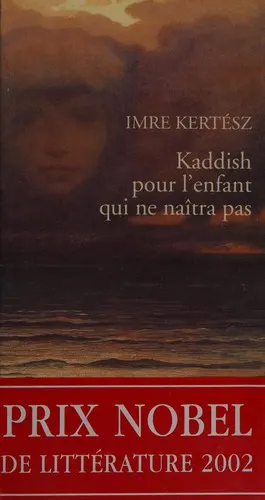
Kertész begins with a thunderous “No!”—the narrator’s answer when asked whether he has a child—and makes an entire novel unfold from that refusal. Like Murau, his speaker cannot state anything without reopening it, qualifying it and putting himself on trial. Every sentence seems to argue against the previous sentence while driving the argument deeper.
Where Bernhard accumulates, Kertész strips away. His dry, ferocious logic exposes how historical catastrophe has entered the most private ideas of family, inheritance and survival. The comedy is severe but unmistakable: reason becomes so exacting that it reveals its own madness. Kertész’s Nobel Prize recognized precisely this confrontation between individual life and the barbarism embedded in modern history. Few novels match Extinction’s sense that a monologue can be confession, indictment and act of resistance all at once.
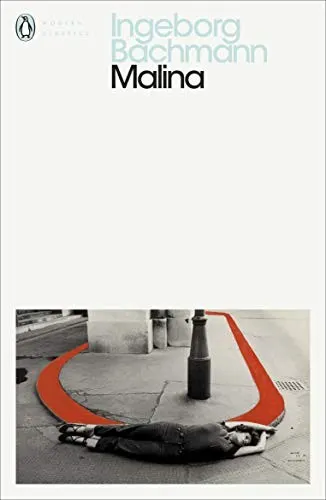
If Bernhard turns the sentence into a weapon, Bachmann asks what happens when that weapon is already lodged inside the speaker. Malina presents an unnamed “I” in Vienna among the enigmatic Malina and the desired Ivan, but its real action occurs in language: conversations fracture, letters fail, memories intrude and identity begins to look less like a possession than a contested space.
Bachmann’s only completed novel has become a cornerstone of postwar German-language literature and a touchstone for generations of feminist writers, including Elfriede Jelinek. Its kinship with Extinction lies not simply in Austrian darkness but in its ruthless understanding that public violence survives inside intimate speech. Yet Bachmann’s lyric radiance makes the experience entirely her own. Malina is one of those rare books that changes what psychological realism seems capable of containing.
If you loved Old Masters
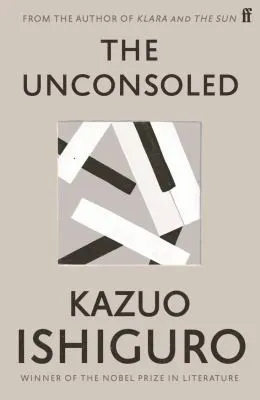
A celebrated pianist arrives in an unnamed European city and finds himself burdened with appointments, requests, and expectations he cannot quite understand. Around him, people speak as though a successful concert might repair marriages, redeem failures, and restore an entire community. Ishiguro lets that faith in culture become both absurd and heartbreaking.
Where Bernhard attacks through repetition, Ishiguro destabilizes through dream logic: corridors expand, obligations multiply, and solemn artistic talk keeps exposing private desperation. Initially notorious for baffling critics, The Unconsoled has become one of Ishiguro’s most passionately defended novels. Its strange comic pressure is unique—and its vision of art as an impossible burden is unforgettable.
If you loved Yes
An affluent sculptor enters the recently vacated room of her maid and finds its severe order—and an unexpected creature—profoundly destabilizing. From that small disturbance, Lispector creates one of modern fiction’s most radical descents into consciousness.
Where Bernhard’s sentences worry experience into merciless intellectual patterns, Lispector’s language presses against the point where identity, language and ordinary human distinctions begin to dissolve. Her narrator repeatedly approaches an insight, recoils, then approaches again; the repetitions feel less like explanation than exposure. The result is intimate, appalling and strangely ecstatic. Widely regarded as one of Lispector’s defining masterpieces, it offers the rare intensity of a book that seems to alter its reader’s metabolism.