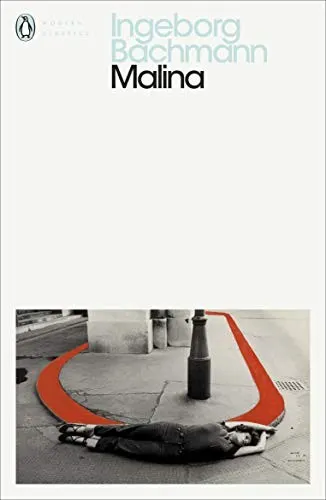
Books like Malina
You responded to Malina’s fractured voice, erotic desperation, black wit, and sense that language itself can become an instrument of erasure. These three novels pursue that danger with comparable formal daring.
If you liked Malina, you’ll love these
Not lookalikes — kindred books. Each one shares something essential with Malina, and we tell you exactly what.
A wealthy woman enters her maid’s room and undergoes a crisis so profound that ordinary identity, morality, and syntax begin to disintegrate. Like Bachmann, Lispector turns an apparently private breakdown into an inquiry about what a self is—and whether language can preserve it without falsifying it.
The novel’s intimacy is almost physical: G.H. repeatedly reaches for words, recoils from them, and tries again. Lispector’s 1964 masterpiece has become a cornerstone of Brazilian modernism and inspires unusually fervent devotion. For anyone haunted by Malina’s struggle between speech and annihilation, it is essential.
At a dance, Lol Stein watches her fiancé become absorbed by another woman. Duras does not treat this as a conventional scene of betrayal; she makes it an enigmatic vacancy around which memory, desire, and narration circle obsessively.
A lover of Malina will recognize the eerie uncertainty over who possesses a woman’s story. The narrator tries to imagine Lol from the outside, while her inner life remains both exposed and unreachable. Duras’s repetitions and silences create a hypnotic pressure unlike anyone else’s; Jacques Lacan famously paid homage to the novel because it seemed to know things psychoanalysis was still trying to articulate. It is slender, inexhaustible, and quietly devastating.
Erika Kohut, a conservatory teacher living under her mother’s ferocious control, enters the novel already trapped inside a life organized by discipline, surveillance, and thwarted desire. Jelinek’s sentences refuse to sentimentalize her: they cut, pun, double back, and expose the clichés through which family, romance, and culture disguise domination.
Where Bachmann makes psychic violence audible through fractured forms, Jelinek makes social language itself sound vicious. The result is uglier, more satirical, and savagely funny. Long regarded as one of the defining works of the future Nobel laureate, The Piano Teacher offers no consoling portrait of victimhood—only a brilliant anatomy of how power enters desire. After Malina, not reading it would leave one of the most formidable continuations of Bachmann’s project unexplored.