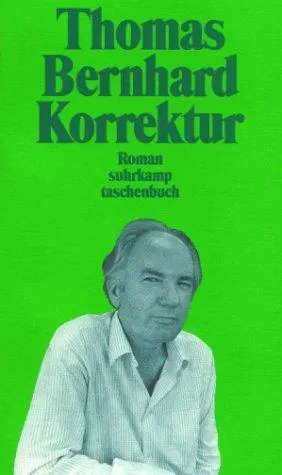
Books like Correction
Cosmos turns stray details into an inescapable system; The Plains makes systems dissolve into ever more elusive interpretations. Both offer the peculiar exhilaration of Correction: thought becoming so exacting that it starts to deform the world.
If you liked Correction, you’ll love these
Not lookalikes — kindred books. Each one shares something essential with Correction, and we tell you exactly what.
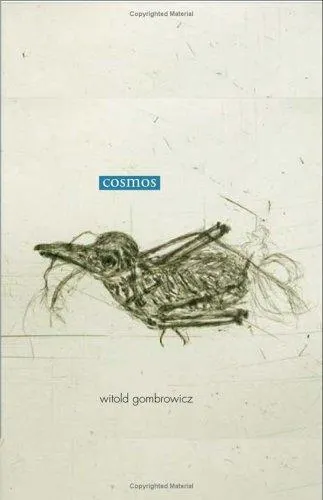
A young man notices a dead sparrow hanging from a wire, then begins connecting it to marks, objects, gestures, and accidents around a country house. What starts as attention becomes coercion: the mind cannot tolerate randomness, so it manufactures a design—and then finds itself trapped inside that design.
Like Correction, Gombrowicz’s late masterpiece makes obsession feel simultaneously rigorous, ridiculous, and lethal. Its repetitions do not clarify events; they contaminate them with possibility. The narrator’s intelligence is his instrument of discovery and his disease. Winner of the 1967 International Prize for Literature, Cosmos is one of the great novels about interpretation turning pathological. Few books so brilliantly reproduce the guilty thrill of watching a consciousness reason past the point of sanity.
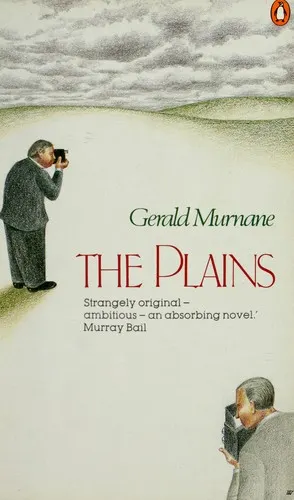
A filmmaker travels into an Australian interior unlike any recognizable Australia, hoping to secure a wealthy patron for an ambitious project. From that simple opening, Murnane constructs a hypnotic world of rival theories, private archives, cultivated distances, and artworks that may matter more as impossible intentions than as finished objects.
A lover of Roithamer’s Cone will recognize the severe romance of the absolute project: the desire to make a work whose perfection would justify—and perhaps obliterate—the life devoted to it. But Murnane’s prose is cooler and more spacious than Bernhard’s, advancing through poised qualifications rather than assaultive repetitions. Widely regarded as a masterpiece of Australian fiction, this short novel inspires unusually fierce devotion because it seems to contain an entire metaphysics of art, patronage, landscape, and longing. It is brief enough to read in an evening and strange enough to occupy the mind for years.
William Frederick Kohler, a historian of Nazi Germany, sits down to write the introduction to his life’s scholarly work. Instead, he begins producing a secret, monstrous manuscript about his resentments, failures, memories, and evasions. The result is not a confession that cleanses but a consciousness building elaborate verbal defenses around everything it cannot bear to know.
The kinship with Correction lies in the architecture of the voice. Clauses double back, judgments revise themselves, and intellectual mastery becomes indistinguishable from self-entombment. Gass is more typographically playful and sensually extravagant than Bernhard, but he shares Bernhard’s refusal to make brilliance morally reassuring. The Tunnel won the American Book Award and remains Gass’s most formidable achievement: huge, abrasive, darkly comic, and written sentence by sentence with almost frightening control. Readers willing to submit to its pressure often treat it not merely as a novel but as one of the supreme feats of postwar American prose.